



You're probably here because you've seen the same claim in Facebook groups, YouTube comments, or casino chats: someone says they've figured out the Super Ace Pattern, and if you follow the timing, symbols, or bet flow correctly, wins come easier.
That idea is easy to believe because slots are built around visible events. You see near-misses, clusters of similar symbols, and stretches where the game feels “hot” or “cold”. In a title like Super Ace, those moments can feel organised enough to study. Players start comparing notes, testing routines, and looking for a hidden edge.
The problem is that curiosity and control aren't the same thing. A pattern can feel real without being predictive. What helps is understanding what the game shows on screen, what the underlying math is designed to do, and how to manage your session so one run doesn't get away from you. For players who want a safer place to start learning the ropes, many first look at a PAGCOR-licensed platform such as Insta Play Online Casino, but the same core rule applies anywhere: know the game, and keep your limits clear.
Table of Contents
- The Search for a Secret Super Ace Pattern
- What Exactly Is the Super Ace Pattern
- The Reality of Slot RNG vs Player Patterns
- A Smarter Strategy for Playing Slots
- Practical Tips for JILI, Fa Chai, and Pragmatic Play Games
- Play Smart and Enjoy Your Time on Insta Play
The Search for a Secret Super Ace Pattern
A typical player story goes like this. Someone plays a short mobile session, hits a decent run after a few quiet spins, then starts replaying the sequence in their head. They remember the symbols that landed, the reels that seemed active, and the moment they increased or reduced the bet. By the next session, they're not just spinning. They're trying to recreate a method.
That's where the Super Ace Pattern idea gets its grip. It gives random results a narrative. Instead of saying, “I got lucky for a few minutes,” it's more satisfying to say, “I noticed the setup.”
Players don't chase patterns because they're irrational. They chase patterns because the game gives them a lot of visual information, and the brain wants that information to mean something.
In practice, pattern talk usually grows from community observation. One player notices a repeat. Another adds a betting routine. A third turns it into a “system”. Soon the discussion shifts from entertainment to prediction, even when nobody can prove a predictive edge.
That doesn't mean the conversation is useless. Far from it. Pattern talk often reveals what players care about most: feature triggers, reel behaviour, streaks, and session control. Those are real concerns. They just need to be sorted into two piles. One pile is folklore. The other is game structure and bankroll discipline.
Why players keep looking anyway
The appeal isn't hard to understand:
- Control matters: Slots move fast, so any routine can feel calming.
- Memory is selective: Players remember the session where the pattern “worked” and forget the sessions where it didn't.
- Community reinforces belief: Once enough people repeat the same cue, it starts to sound proven.
That's why dismissing players outright rarely helps. A better approach is to look carefully at what people mean when they say “Super Ace Pattern”, then separate description from prediction.
What Exactly Is the Super Ace Pattern
In Filipino gaming discussions, the Super Ace Pattern usually refers to a player-observed sequence inside the slot, not an official feature label. Community guides commonly describe Super Ace as a 4-row, 5-reel slot game with 1,024 ways to win, and those same player-facing discussions often cite an RTP of 97% while focusing on golden symbols appearing on reels 2, 3, and 4 that may transform into Jokers. That summary appears in a Philippine explainer at JohnnyBet's Super Ace pattern guide.
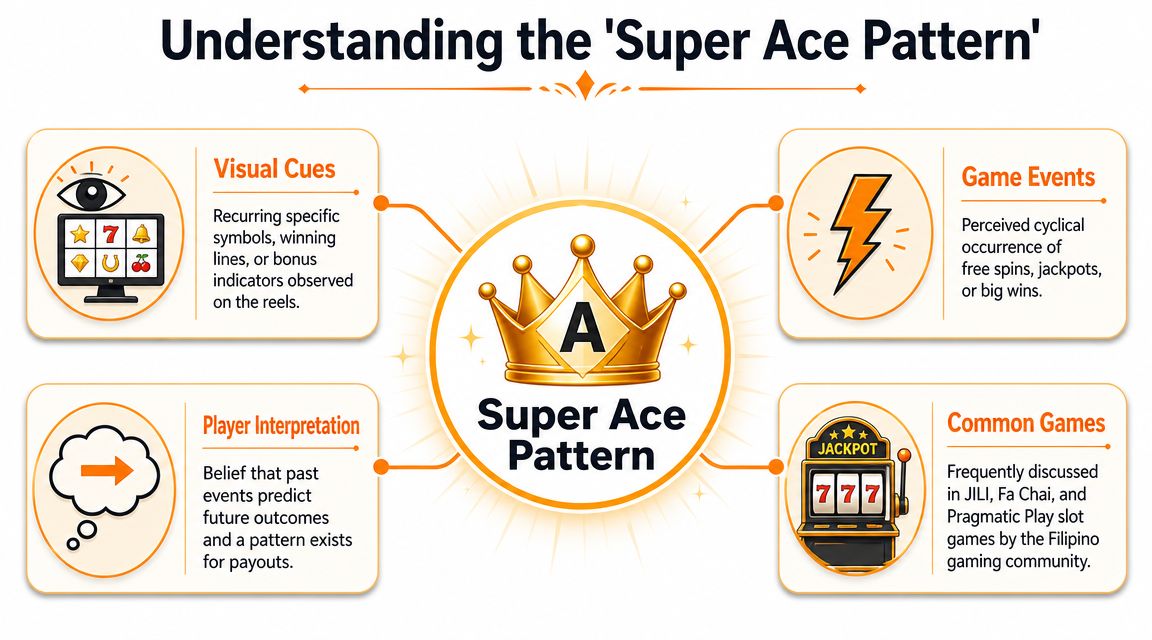
How players describe the pattern
Most player descriptions don't sound mathematical. They sound visual.
They watch for golden symbols on the middle reels. If those symbols appear in a certain rhythm, or if a sequence of eliminations seems to “build” towards a Joker transformation, some players treat that as a signal that the round is becoming more favourable.
A typical community interpretation looks like this:
- Spot the middle-reel activity: Attention goes to reels 2, 3, and 4.
- Watch the golden symbol: If it appears, players read it as a cue worth tracking.
- Wait for transformation behaviour: The idea is that a golden symbol can turn into a Little Joker or Big Joker after elimination.
- Adjust bets or continue the session: Pattern belief transforms into action.
That framework explains the folklore clearly. It doesn't prove it.
Why the reel layout matters to players
The structure of the game shapes the way pattern talk develops. A 5-reel, 4-row layout gives players enough on-screen movement to interpret streaks, while 1,024 ways to win makes the game feel active because wins can connect in many non-traditional ways. That's one reason players feel they're seeing “live behaviour” rather than isolated outcomes.
Practical lens: A pattern claim is most useful when it helps you understand what players are watching. It becomes risky when you start treating it like a guarantee.
The important distinction is this: the community version of the Super Ace Pattern is a descriptive model. It describes what players believe they see. It doesn't turn that belief into a verified edge.
The Reality of Slot RNG vs Player Patterns
The hard part about talking about slots is that random outcomes rarely feel random while you're inside a session.
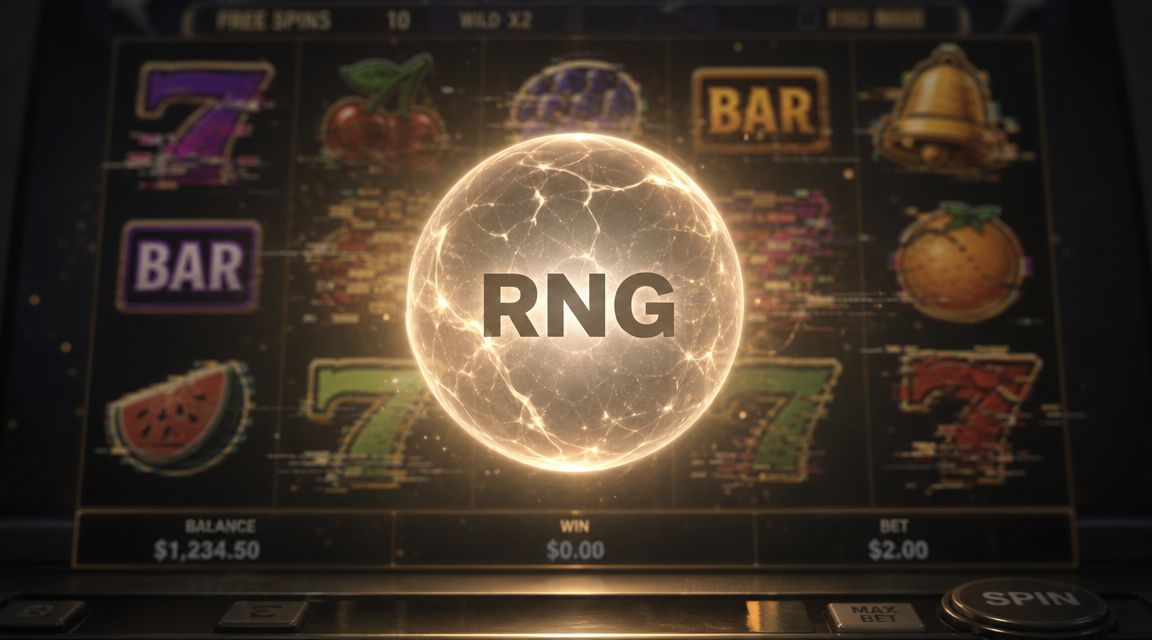
A player can go several spins with very little happening, then suddenly land a feature-like sequence that looks too neat to be accidental. That's the moment pattern belief becomes emotionally persuasive. The session feels like it has phases. It feels like the machine is “due”, “warming up”, or “following a script”.
Why patterns feel convincing
The brain is built to find order. That's useful in everyday life, but it creates trouble in gambling.
Two habits drive most pattern belief:
- Confirmation bias: players notice the spins that support their theory and downplay the spins that don't.
- The gambler's fallacy: after a dry stretch, it feels like a hit should be getting closer, even when the next spin doesn't owe you anything.
This is why a player can test a so-called pattern for several sessions and still come away convinced. The mind remembers the aligned moments. It edits out the noise.
A slot doesn't need to be predictable for it to feel predictable. It only needs to produce enough memorable sequences for the player to build a story around them.
What RNG changes
Licensed electronic games use certified RNG systems, and regulator-focused guidance discussed in Philippine-facing content makes the key point simple: each spin is statistically independent, so past results don't influence future ones. That means any perceived Super Ace Pattern is short-run variance, not a reliable sequence, as explained in this PAGCOR and RNG discussion video.
If you watch a dozen spins and see a few similar-looking outcomes, you've learned something about your recent session. You haven't learned what the next spin must do.
For players who still enjoy studying game flow, that doesn't mean all observation is pointless. It just changes what observation is for. Use it to monitor your emotions, your spending pace, and whether the session is still within plan. Don't use it to assume the next spin is more likely to pay.
Many players eventually discover that the most useful “system” isn't pattern reading at all. It's choosing a regulated site, sticking to a game plan, and treating bonuses or offers as extras rather than signals. That's why some players browsing Mega Panalo Casino options or similar pages are better served by checking game info and limits than by hunting for timing tricks.
A short explainer can help if you want the concept in video form:
A Smarter Strategy for Playing Slots
Once you stop asking whether a pattern can predict wins, better questions come into view. What kind of slot is this. How fast can it drain a bankroll. Is it built for long sessions or sharp swings.
Use game math, not folklore
For Super Ace-style discussions, the more useful benchmark is the game profile that reviewers commonly describe: 97% RTP, low-to-medium volatility, and a maximum win of 1,500x stake, with the long-run implication that 97% RTP corresponds to about a 3% house edge. Those details are summarised in this Super Ace profile reference.
That profile tells you more than a “secret pattern” ever will.
A practical reading looks like this:
- RTP is a long-run measure: It doesn't tell you what today's session will do.
- Low-to-medium volatility changes the feel: You're generally looking at smaller, more frequent returns rather than rare explosive spikes.
- Session planning matters more: This kind of profile suits controlled bet sizes better than emotional chasing.
Working rule: If you want longer play, the strongest move is usually to keep your stake stable and your session short enough that one bad run doesn't force bigger bets.
Pattern chasing vs smart bankroll management
The biggest shift is mental. Pattern chasing tries to control the game. Bankroll management tries to control your exposure.
| Aspect | Pattern Chasing | Smart Bankroll Management |
|---|---|---|
| Focus | Reading recent spins for clues | Controlling spend before the session starts |
| Decision basis | Visual streaks and “timing” | RTP, volatility, and personal budget |
| Bet changes | Often reactive after wins or losses | Usually fixed or pre-planned |
| Emotional impact | Can increase frustration and chasing | Reduces impulsive decisions |
| Best use | Entertainment discussion only | Real risk control |
A lot of new players look for a shortcut, especially when promos and free-spin offers make the first session feel low-risk. That's why it helps to treat offers like free spins on registration as a way to explore game behaviour, not as proof that a system works.
The edge available to a player is modest but meaningful. You can choose games more carefully. You can keep stakes aligned with your budget. You can leave while you're still in control.
Practical Tips for JILI, Fa Chai, and Pragmatic Play Games
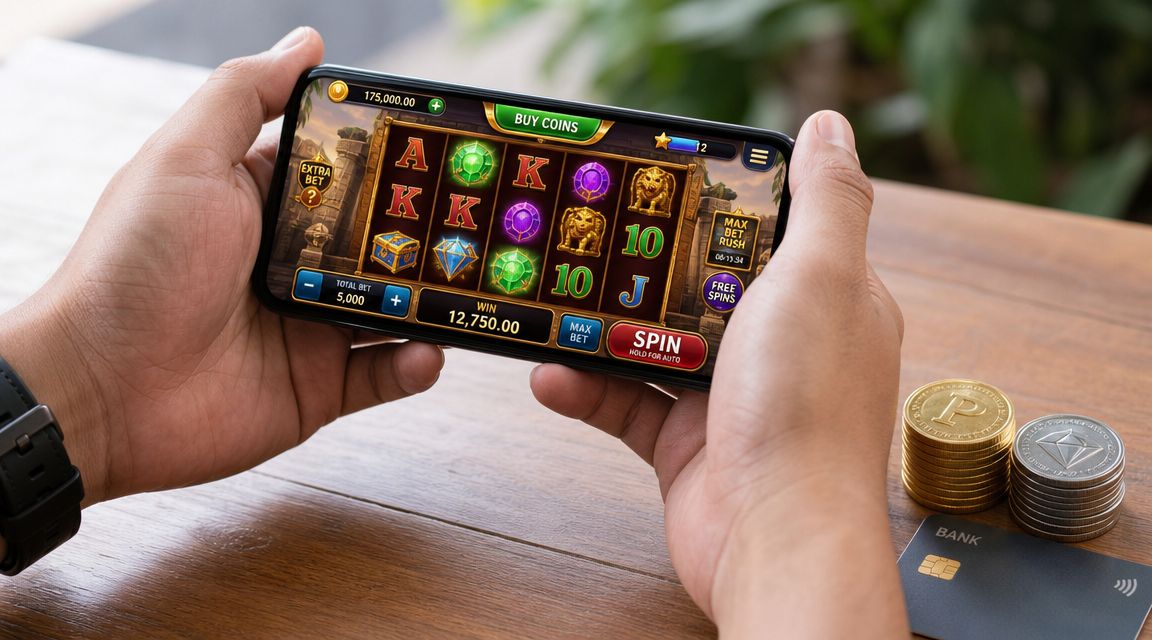
The most useful advice from Filipino community strategy videos isn't the pattern talk. It's the session discipline. One local guide recommends starting with ₱2,000 capital and ₱50 per spin, then cashing out around 10% to 30% profit. That same style of advice frames Super Ace as a bankroll-managed session game rather than a pattern-solving exercise, as shown in this Filipino YouTube strategy guide.
How to turn community advice into discipline
Those numbers shouldn't be treated as magic. They're examples of structure.
What makes them useful is the habit behind them:
- Set a starting bankroll: Decide what the whole session can cost before the first spin.
- Choose a base bet: Keep it fixed unless you had already planned a small adjustment.
- Define a stop-win point: If you hit your target, leave.
- Accept a stop-loss without debate: Don't negotiate with yourself in the middle of a losing run.
Community practice can be helpful without becoming superstition. A player who says, “I only bring this much, I spin at this level, and I cash out at this point,” is thinking more clearly than a player who says, “I'll know the right moment when I see the pattern.”
What to check before you spin
Different providers package information differently, but the habit is portable across JILI, Fa Chai, and Pragmatic Play games.
Check these items first:
- RTP display or info panel: If the game provides it, note it before you start.
- Volatility or game description: This helps you judge whether the slot fits your mood and budget.
- Paytable and features: Don't rely on chat comments to explain symbols or bonus behaviour.
- Session fit on mobile: Small screens and quick taps make overspending easier if you're not paying attention.
If you're using a mobile app, the same caution applies. Convenience can tighten the gap between impulse and action. Players exploring titles through a JILI-focused mobile page should treat app access as convenience only. It isn't a strategic advantage.
If your plan depends on the next spin behaving a certain way, the plan is weak. If your plan still works no matter what the next spin does, that's discipline.
Play Smart and Enjoy Your Time on Insta Play
The Super Ace Pattern remains popular because it gives players a story they can follow. That story can be fun to discuss, and it can even help you pay closer attention to how a game presents its features. But it doesn't change the core fact of slot play. A recent streak doesn't create a future obligation.
The stronger position is simpler. Learn what the game shows. Respect what RNG means. Use session limits that protect your budget and your mood. If a game's RTP, volatility, or pace doesn't suit you, switch titles or stop for the day.
That approach is less dramatic than a “secret pattern”, but it works better in real play because it keeps you in charge of the part you can control.
For players who want a regulated place to enjoy slots, e-games, and other favourites, Insta Play Online Casino presents itself as a PAGCOR-licensed option with recognised providers and a beginner-friendly entry point. The right mindset stays the same, though. Play for entertainment, use bonuses carefully, and know when your session is over.
If you want a safer and more organised way to explore online slots, Insta Play Online Casino offers a PAGCOR-licensed environment with games from recognised providers, plus a Free ₱3,000 Bonus for new users. Browse the platform, check the game details before you spin, and keep every session within limits you've already set.



[…] you're browsing provider-based game pages, even a themed page like Super Ace Pattern, remember that the game page itself doesn't tell you whether the full casino operation is […]