


A Philippine gaming operator can add players, hold revenue steady, and still watch margin slip month after month. Failed deposits push up acquisition waste, support queues grow during payout spikes, overlapping software tools keep billing, and compliance work expands as transaction volume rises. In this market, cost reduction is an operating discipline, not a finance exercise.
The pressure is real. The Philippine Statistics Authority reported high inflation through late 2022 and early 2023, including 8.7% year-on-year in January 2023, the highest rate in more than 14 years according to its inflation release from that period: Philippine Statistics Authority inflation reporting. For online businesses, that shows up in staffing costs, vendor renewals, hosting, fraud controls, and day-to-day service delivery. Small leaks stop being small once volume scales.
In the Philippine online operations and gaming sector, the waste usually sits in specific places. Payment stacks route too many transactions through high-fee channels instead of local options such as GCash. Infrastructure is hosted far from the user base, which hurts speed and raises delivery cost. Teams carry duplicate provider contracts, manual support work, and fragmented compliance processes tied to PAGCOR requirements. Even routine player questions around cash-out timing, such as those covered in this guide to Arena Plus withdrawal steps and processing, can become avoidable support cost if product flows and self-service content are weak.
The strongest savings usually come with trade-offs. Consolidating game providers can improve commercial terms but reduce content variety. More automation lowers handling cost but needs careful escalation rules for VIP players and dispute cases. Localizing payment processing can lift approval rates and trim fees, but it also adds reconciliation and risk controls that have to be managed properly.
The ten strategies below focus on those real operating choices. They are built for Philippine digital businesses, especially gaming and betting operations that need to reduce cost without hurting conversion, retention, uptime, or compliance.
Table of Contents
- 1. Payment Gateway Optimization and Local Processing
- 2. Content Delivery Network and Server Localization
- 3. Game Provider Licensing Consolidation
- 4. Customer Support Automation and AI Chatbots
- 5. Player Lifecycle Management and Segmentation
- 6. Affiliate and Referral Program Optimization
- 7. License and Compliance Consolidation
- 8. Operational Efficiency and Process Automation
- 9. Social Media and Community-Driven Marketing
- 10 Cost-Reduction Strategies Comparison
- 10 Cost-Reduction Strategies Comparison
- From Strategy to Action Implementing Your Cost-Saving Plan
1. Payment Gateway Optimization and Local Processing
Payment costs leak margin in ways many operators miss. The visible fee is only part of it. The bigger problem is failed deposits, delayed withdrawals, manual reconciliation, currency conversion drag, and support tickets created by payment confusion.
For Philippine-facing businesses, local rails usually outperform generic international setups. Customers already know GCash, Maya, and major bank transfer flows. When the payment experience feels familiar, fewer users abandon the transaction halfway through.

What usually works
A good operating model uses a small group of local processors instead of over-relying on a single international provider. That gives you fallback options when one route slows down and gives procurement an advantage when contracts come up for review.
- Prioritise local methods first: Put GCash, Maya, and bank transfer options near the top of the cashier flow.
- Automate reconciliation: Match deposits, withdrawals, and exception cases daily so finance isn't cleaning up transactions by hand.
- Review processor performance quarterly: Look at approval quality, payout speed, support burden, and dispute handling, not just headline fees.
One useful reference point is the withdrawal experience customers expect from guides like Arena Plus withdrawal steps for Philippine users. Speed and clarity matter. If your own cash-in and cash-out journey creates uncertainty, support costs rise immediately.
Practical rule: The cheapest processor on paper often becomes the most expensive one in operation if it causes failed top-ups and repeat support contacts.
This is especially relevant for online gaming and similar digital businesses in the Philippines. Published guidance on cost reduction often misses payment friction and compliance operations, even though those are major variable costs in local online platforms serving mobile-first users, as noted in this discussion of strategic cost reduction gaps for PH operators.
2. Content Delivery Network and Server Localization
Infrastructure waste doesn't always show up as an obvious server bill. It often appears as lag, retries, higher bandwidth use, abandoned sessions, and customer complaints that support teams have to absorb later. If your audience is in the Philippines, routing everything through distant infrastructure is an expensive habit.
Local or nearby regional delivery usually gives a better balance of cost and performance. You don't need to move every workload into one location. A hybrid setup often does the job better, with regional hosting for latency-sensitive functions and cloud backup for resilience.
Where localisation pays off
Game lobbies, static assets, promotional banners, help-centre files, and common mobile content should load fast and predictably. That's where a CDN and browser caching do real work. If you compress assets properly and stop shipping oversized files to repeat visitors, you reduce transfer waste without touching the customer experience negatively.
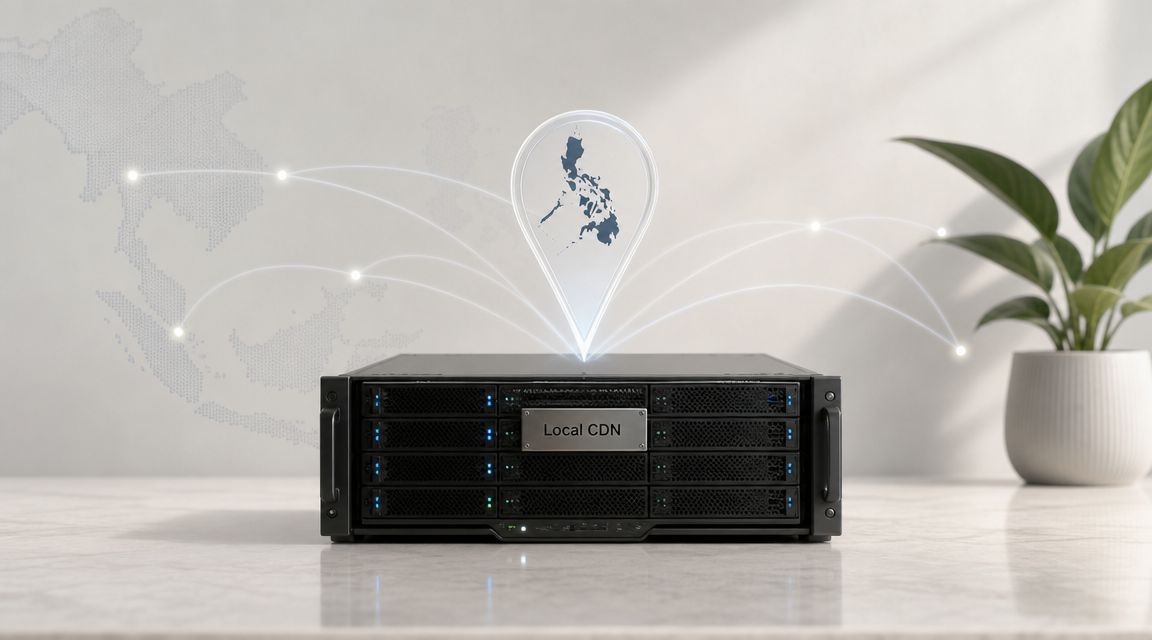
A practical setup often includes Cloudflare or a similar CDN for static delivery, regional app hosting in Southeast Asia, and monthly bandwidth reviews. Teams that skip the review step usually keep paying for bloated assets, duplicated requests, and poor cache policy long after the platform has scaled.
- Use regional hosting deliberately: Keep user-facing services close to where your traffic comes from.
- Cache repeat content aggressively: Banners, images, FAQs, and game thumbnails shouldn't reload from origin every time.
- Watch infrastructure by use case: Separate live game traffic, media traffic, and back-office traffic before deciding what to optimise.
In the Philippines, energy efficiency and operating discipline also matter at the infrastructure layer. The Department of Energy has pursued the Philippine Energy Efficiency and Conservation Plan under Republic Act No. 11285, signed into law in 2019, and the law requires designated establishments to appoint Energy Efficiency and Conservation Officers and report energy performance, reinforcing efficiency as a management practice rather than an optional extra in operations under the DOE-backed framework described here.
3. Game Provider Licensing Consolidation
Too many operators confuse variety with strength. A long list of providers can make the site look bigger, but it also creates overlapping catalogues, more vendor management work, more technical dependencies, and diminishes their negotiating power in contract discussions.
Consolidation usually improves both margin and control. If several providers deliver similar slot formats, table experiences, or promotional mechanics, you don't need all of them. You need the ones that perform, integrate cleanly, and support your market well.
How to trim the catalogue without damaging revenue
Start with actual usage. Look at session activity, retention by game family, support incidents by provider, promo dependency, and downtime history. Then group providers into three categories: core, replaceable, and under-review.
That approach is especially useful if you're already promoting recognised brands and specific content families, like the kind of player interest reflected in Fortune Ox legitimacy and provider-focused content. Players often return for trusted game experiences, not for a bloated list of barely differentiated titles.
Fewer providers often means better commercial terms, cleaner reporting, and less operational noise.
The strongest negotiation point isn't demand for a lower fee by itself. It's proof that you can direct meaningful traffic and merchandising support to a smaller set of strategic partners. In practice, that gives you more room to push for better release support, cleaner reporting, bundled content terms, and stronger service responsiveness.
A specialised market-data management source makes the same broader point for digital subscriptions and licensed tools. Firms are advised to maintain a clear inventory of users, vendors, usage, and spend, then reconcile entitlements against actual consumption to remove duplication and over-licensing. One provider in that space also reports delivering 5–30% savings for financial-services clients globally through cost-reduction work tied to visibility and rationalisation. The exact category differs, but the discipline transfers well to game and software vendor management.
4. Customer Support Automation and AI Chatbots
Support is one of the easiest places to save badly. If you cut headcount before fixing repeat queries, customers wait longer, trust drops, and the remaining team spends all day firefighting. The better move is to automate the repetitive layer first.
Most digital businesses get the same questions over and over. Deposit status, withdrawal timing, bonus conditions, password reset help, account checks, and basic game instructions don't need a human every time. They need a reliable workflow and clean knowledge design.
A support model like that also protects overnight coverage. Online customers don't care whether your staffing model is efficient. They care whether the answer arrives when they need it.
Here's a useful demo format for thinking about support automation in practice:
The right way to automate
Start with FAQ and account-status journeys, not complex dispute cases. Build escalation paths early, and make sure human agents can see the customer's prior bot interaction so the customer doesn't have to repeat everything.
- Automate narrow, high-volume tasks first: Bonus checks, withdrawal status, and common account questions are ideal starting points.
- Keep human review for exceptions: KYC mismatch, disputed balances, and fraud-related concerns need a trained person.
- Use support logs as an operations dataset: If customers keep asking the same question, something upstream is broken.
The technical case for this is straightforward. A business guide recommends using analytics and BI tools to isolate cost drivers, then automating repetitive workflows such as billing, payroll, and customer-service tasks to lower labour cost and improve speed and accuracy in Stripe's business cost reduction guide. In customer-facing operations, that combination works best when support automation is linked directly to transaction, account, and bonus data.
5. Player Lifecycle Management and Segmentation
Many businesses overspend because they market to everyone the same way. That isn't retention. It's blanket discounting with better branding. If you want cost reduction strategies that don't hurt revenue, segmentation is one of the first places to look.
Not every player or customer deserves the same incentive. Some respond to content, some to convenience, some to payment reliability, and some only to bonuses. If you treat all of them as one pool, you pay too much to retain people who would've stayed anyway and too much to reactivate users who were never profitable.

Where segmentation saves money
Use deposit history, frequency, preferred games, response to promos, and dormancy patterns to separate lifecycle groups. Then match offers to behaviour instead of broadcasting the same campaign to the whole database.
A welcome-offer page like this free sign-up bonus example shows why discipline matters. Introductory promotions can help acquisition, but if you don't segment follow-up campaigns properly, promo cost keeps expanding long after the first conversion.
The safest incentive is the one tied to a clear behavioural trigger, not the one sent to everyone because the calendar says it's time for a promotion.
This matters even more in the Philippines because generic cost-cutting advice often doesn't answer the question for regulated, customer-facing operators: which cuts are safe without hurting conversion or trust. Guidance focused on strategic cost reduction has highlighted that gap for Philippine online businesses, noting that inflation averaged 3.2% in 2025 while digital operating pressures remain important. In practical terms, segmentation helps you reduce promotional waste instead of cutting the customer experience across the board.
6. Affiliate and Referral Program Optimization
Paid acquisition gets expensive fast when the traffic quality is weak. You pay upfront, then discover later that a large share of clicks never deposit, never return, or create support and fraud issues you didn't budget for. That's why many operators shift more of the mix toward affiliate and referral structures.
Performance-based acquisition is cleaner because spend follows actual outcomes. You still need governance, but at least the economics are tied to users who complete the actions that matter. That's a much better starting point than broad paid campaigns with uncertain downstream quality.
What makes affiliate spend efficient
Good affiliate programmes aren't wide-open marketplaces. They're curated channels with clear terms, approved creatives, fraud controls, and regular traffic reviews. In the Philippine context, that often means local creators, community admins, niche Facebook groups, and messaging-based referrals that already have audience trust.
Three operating habits make a big difference:
- Rank affiliates by net value, not raw sign-ups: Deposits, retention quality, and chargeback or abuse patterns matter more than lead volume.
- Give top partners better assets: Clear landing pages, promo explanations, and payment information usually improve quality.
- Cut weak sources quickly: If a source creates noise, fake intent, or compliance headaches, remove it.
Referral structures can work especially well when the product already has strong local recognition and a simple onboarding path. The key trade-off is control. You lower upfront marketing waste, but you need tighter monitoring of message quality, brand claims, and incentive abuse. If your team doesn't have those controls, affiliate spend can become just another leak.
7. License and Compliance Consolidation
Compliance isn't optional spend. But duplicate compliance work is. Businesses often create extra overhead by running fragmented rules, fragmented vendors, and fragmented documentation across products that should be managed under one operating framework.
For Philippine online operators, keeping licensing and compliance under a disciplined local structure is often more efficient than layering multiple regimes without a clear commercial reason. One set of documented controls, one reporting calendar, one policy library, and one audit trail is easier to run well.
What disciplined compliance looks like
PAGCOR-facing operations need strong internal ownership. Compliance should sit with named people, documented workflows, clear escalation rules, and a complete record of customer due diligence, payment reviews, and operational exceptions. The expensive version of compliance is the one built from scattered spreadsheets and inbox searches.
A locally regulated positioning, like the one emphasised in Mega Panalo Casino platform content, shows why clarity matters commercially as well as operationally. Customers respond to visible trust signals. Regulators respond to consistency and traceability.
The broader operating environment supports this focus on efficiency as a formal discipline. Under Republic Act No. 11285, efficiency measures have been institutionalised across buildings, transport, and industry, and designated establishments are required to appoint Energy Efficiency and Conservation Officers and report energy performance, reinforcing the value of compliance-backed management practice in the Philippines. That same mindset applies well to gaming and digital operations. Build one strong framework, then run it consistently.
8. Operational Efficiency and Process Automation
At 10:15 a.m., support is chasing a stuck withdrawal, finance is reconciling yesterday's GCash settlements by hand, and compliance is waiting on a KYC exception that should have been routed automatically an hour ago. That is what operational waste looks like in a Philippine gaming business. It rarely appears as one large expense. It shows up as delay, rework, extra headcount, and preventable errors across the day.
For PAGCOR-facing operators, the best automation targets are usually the processes that touch money, identity, and reporting. Manual onboarding checks, bonus approval queues, payment matching, affiliate payout validation, vendor invoice entry, and end-of-day reporting all create recurring cost if teams still move data between systems by hand.
Start by examining one workflow at a time from trigger to completion. Look for repeated data entry, approval loops, spreadsheet workarounds, and cases that sit in an inbox waiting for the next shift. In practice, those friction points often matter more than the headline software cost.
A sensible rollout usually follows this order:
- Automate intake and routing first: Registration, document upload, basic KYC screening, and exception tagging are often the cleanest starting point.
- Link payment and finance records: GCash, Maya, bank transfer, bonus ledger, and settlement data should reconcile in one operating view.
- Standardise approval rules: Set thresholds for manual review so staff handle exceptions, not every routine case.
- Roll out in phases: Test with one payment channel, one provider group, or one support queue before expanding.
The trade-off is straightforward. Automation reduces labour hours and error rates, but weak process design just lets a bad workflow run faster. I usually advise operators to fix rules, ownership, and escalation paths before buying another tool.
This matters more in the Philippines because cost pressure is not theoretical. The Philippine Statistics Authority tracks inflation across core spending categories, and persistent price pressure on utilities, wages, and outsourced services can steadily raise operating costs for digital businesses over time. Small recurring efficiency gains protect margin better than one-off cuts when that pressure lasts, as shown in the PSA's inflation reporting at psa.gov.ph.
Measure the result with a short KPI set. Track average KYC handling time, withdrawal processing time, reconciliation backlog, cost per ticket, exception rate, and full-time staff hours spent on repeat admin. If those numbers do not improve after implementation, the issue is usually process ownership, not the automation tool itself.
9. Social Media and Community-Driven Marketing
Some of the worst marketing spend comes from trying to buy attention that a business could have earned through consistency. Organic social isn't free, but it is often cheaper and more durable than continuously paying for broad, low-intent reach.
In online gaming and digital entertainment, community has real economic value. Players watch winners, follow game releases, react to promo drops, and share platform experiences in public. If a brand handles those moments well, content starts doing part of the acquisition and retention work.
Where organic marketing beats paid media
Facebook, TikTok, YouTube, Instagram, and X can all support lower-cost growth when the content is native to the platform. Short clips, game highlights, promo explainers, community replies, and winner features usually outperform stiff corporate creatives.
The trade-off is effort. Community-led marketing saves budget only if someone owns it properly. Accounts that post irregularly, ignore comments, and recycle generic art won't build trust or momentum.
Strong community marketing reduces more than ad spend. It also cuts support load because customers can find updates, explanations, and reassurance in public channels before they open a ticket.
This is also where customer-facing caution matters. Cost reduction can't come from silence. If you cut paid media but fail to maintain visible communication, users assume the platform is unstable. The lower-cost path is active, responsive, localised publishing that keeps the brand present without forcing every interaction through paid acquisition.
10 Cost-Reduction Strategies Comparison
A Philippine gaming operator usually does not cut costs with one big move. Margin improves through a series of smaller decisions: routing more deposits through GCash or Maya instead of higher-fee channels, reducing duplicate provider contracts, localizing infrastructure where latency affects conversion, and automating repetitive support work without hurting player trust.
The comparison below is meant to help prioritize. Any savings ranges are illustrative examples for small to mid-sized online operators in the Philippines, and actual results depend on transaction volume, vendor terms, staffing model, current tech stack, and PAGCOR-related compliance scope.
| Strategy | Implementation complexity | Resource requirements | Expected outcomes | Ideal use cases | Key advantages |
|---|---|---|---|---|---|
| Payment Gateway Optimization and Local Processing | Moderate, integration plus compliance work | Local payment partners, developer time, finance and compliance support | Lower transaction fees, faster settlement, fewer payment drop-offs | PH-focused operators with high domestic transaction volume | Lower processing costs, familiar e-wallets such as GCash, faster withdrawals |
| CDN and Server Localization | High, infrastructure and operations effort | Local hosting or ISP partners, network engineering, deployment budget | Lower latency, better session stability, possible bandwidth savings | Real-time or latency-sensitive platforms with a concentrated PH user base | Better performance, stronger local traffic handling, easier alignment with data handling requirements |
| Game Provider Licensing Consolidation | Moderate, contract and portfolio review | Commercial lead, legal review, provider performance data | Lower licensing overhead, cleaner content mix, less duplicated inventory | Operators carrying too many underperforming providers | Volume pricing opportunities, simpler content management, clearer provider accountability |
| Customer Support Automation and AI Chatbots | Moderate, setup and training required | Chatbot platform, support playbooks, tagged ticket history, QA oversight | Lower ticket volume for repetitive queries, faster first response times, more consistent answers | High-volume support teams handling deposits, withdrawals, bonuses, and account questions | Scales support coverage, gives instant replies for routine cases, reduces agent load |
| Player Lifecycle Management and Segmentation | Moderate to high, depends on data maturity | CRM tools, analytics support, campaign operations, offer governance | Better bonus efficiency, lower churn, stronger retention targeting | Operators spending too much on broad promotions and untargeted reactivation | Better use of promo budget, more relevant messaging, improved player value tracking |
| Affiliate and Referral Program Optimization | Moderate, partner review and attribution cleanup | Affiliate platform, fraud checks, partner management, finance controls | Lower acquisition waste, better payout discipline, stronger ROI visibility | Brands with active affiliate channels and uneven partner performance | Cuts low-quality spend, improves partner accountability, supports cleaner CAC tracking |
| License and Compliance Consolidation | High, depends on entity structure and vendor footprint | Legal counsel, compliance team, audit coordination, document control | Lower administrative overhead, fewer duplicated reporting processes, reduced compliance friction | Multi-brand or multi-vendor operators with overlapping compliance tasks | Fewer duplicated workflows, easier audit preparation, lower governance burden |
| Operational Efficiency and Process Automation | Moderate, cross-team process work | Workflow tools, operations mapping, owner accountability, implementation time | Less manual rework, faster turnaround times, fewer avoidable errors | Teams relying on spreadsheets, manual reconciliations, and repeated handoffs | Lower labor waste, better process control, more predictable execution |
| Social Media and Community-Driven Marketing | Low to moderate, execution heavy | Content team, community manager, moderation tools, publishing cadence | Lower dependence on paid acquisition, stronger retention touchpoints, better player communication | Brands with active player communities and frequent promo or content updates | Lower media pressure, public trust signals, community content that supports retention |
| White-Label and Technology Platform Partnerships | Moderate to high, vendor selection and migration risk | Platform due diligence, implementation team, legal review, vendor management | Lower build and maintenance burden, faster launch cycles, reduced internal development demand | Operators without a strong case for custom platform ownership | Faster deployment, lower engineering overhead, access to proven modules |
Use this table as a shortlist, not a forecast. The right test is simple: identify the line item each strategy should reduce, define the KPI before implementation, and review the result after one or two reporting cycles. For Philippine operators, that often means tracking payment success rate, withdrawal turnaround time, support tickets per 1,000 players, provider revenue per title, and compliance hours per month.
10 Cost-Reduction Strategies Comparison
| Strategy | Implementation complexity | Resource requirements | Expected outcomes | Ideal use cases | Key advantages |
|---|---|---|---|---|---|
| Payment Gateway Optimization and Local Processing | Moderate, integration + compliance | Local payment partners, dev integration, compliance staff | Lower transaction fees, faster settlements, ₱500k–₱2M savings | PH-focused operators with high domestic volume | Reduced fees, familiar e-wallets, faster withdrawals |
| CDN and Server Localization | High, infrastructure + ops | Local servers/ISP partners, network engineers, capital | Lower latency, reduced bandwidth costs, ₱800k–₱3M savings | Latency-sensitive games and large local user bases | Improved performance, data residency compliance |
| Game Provider Licensing Consolidation | Moderate, contract negotiation | Legal/negotiation team, analytics, provider management | Lower licensing costs, simplified catalog, ₱1.5M–₱4M savings | Operators with many providers seeking cost reduction | Volume discounts, streamlined content management |
| Customer Support Automation and AI Chatbots | Moderate, AI training & integration | AI/chatbot platform, training data, initial investment ₱200k–₱500k | Reduced support costs, faster responses, ₱400k–₱1.2M savings | High-volume support environments, 24/7 service needs | Scalability, instant responses, consistent replies |
| Player Lifecycle Management and Segmentation | Moderate–High, analytics integration | Analytics tools, data engineers, cleanup budget ₱150k–₱400k | Lower CAC, improved retention, ₱600k–₱2M savings | Marketing optimization and retention-focused programs | Targeted spend, higher LTV, data-driven decisions |
| Affiliate and Referral Program Optimization | Low–Moderate, tracking & management | Affiliate platform, fraud tools, affiliate relations | Performance-based acquisitions, lower CAC, ₱500k–₱1.5M savings | Reducing paid ads and scaling via partners | Pay-for-performance, scalable acquisition |
| License and Compliance Consolidation | Moderate, regulatory alignment | Legal/compliance team, PAGCOR liaison | Lower compliance costs, simplified reporting, ₱800k–₱1.5M savings | Philippines-only operations seeking simplicity | Centralized KYC/AML, fewer audits, lower legal overhead |
| Operational Efficiency and Process Automation | Moderate–High, system integration | Automation software, integration specialists, ₱300k–₱800k | FTE reduction, faster processing, ₱700k–₱1.8M savings | High-volume manual operations (KYC, reconciliation) | Reduced errors, faster KYC, scalable operations |
| Social Media and Community-Driven Marketing | Low–Moderate, ongoing content effort | Content creators, community managers, time investment | Reduced paid ad spend, improved retention, ₱400k–₱1.2M savings | Brand building and organic acquisition strategies | Authentic engagement, cost-effective long-term growth |
| White-Label and Technology Platform Partnerships | Moderate, vendor selection & integration | Monthly fees/rev-share, integration, SLA negotiation | Faster launch, lower dev cost, ₱2M–₱5M+ savings | New operators or those avoiding custom builds | Rapid time-to-market, built-in compliance, lower dev risk |
From Strategy to Action Implementing Your Cost-Saving Plan
Most businesses already know where some waste sits. They can see it in duplicated tools, underused vendors, bloated promo spend, slow support queues, or manual back-office work that nobody has had time to redesign. The problem usually isn't awareness. It's execution. Teams try to fix everything at once, spread ownership too widely, and then wonder why costs barely move.
Start smaller and be stricter. Pick the two or three areas where savings are both realistic and repeatable. For one business, that might be payment routing and reconciliation. For another, it could be support automation and software licence governance. For a gaming operator, it may be provider consolidation, promo segmentation, and payment flow redesign. The right priority isn't the most fashionable initiative. It's the one that removes recurring waste without damaging trust, conversion, or compliance.
Treat cost reduction as an operating system, not a campaign. Every strategy in this list works better when someone owns it, measures it, and revisits it regularly. Payment teams should review approval friction and payout bottlenecks. Finance should audit subscriptions, vendor renewals, and duplicated spend. Operations should keep mapping manual work that can be automated. Marketing should separate efficient acquisition from vanity activity. Compliance should reduce duplicate checks while strengthening control quality.
It's also worth being honest about trade-offs. Some savings create hidden costs later. Cutting customer support excessively can increase churn. Moving to the cheapest vendor can raise incident volume. Adding too many bonus campaigns to force growth can inflate payment, fraud, and servicing costs. The strongest cost reduction strategies don't just ask, "What can we spend less on?" They ask, "What can we simplify, automate, consolidate, or renegotiate without creating new problems downstream?"
For Philippine businesses, discipline matters even more because local operating pressure has been real, not theoretical. Inflation and recurring digital operating costs have forced firms to look harder at process efficiency, procurement discipline, and recurring expense control. That environment rewards leaders who can separate strategic savings from cosmetic cuts. Waste reduction in recurring workflows, subscriptions, infrastructure, and payments usually beats dramatic one-time trimming.
A practical rollout often follows a simple sequence. Audit current spend and workflows. Identify the handful of categories with the clearest recurring leakage. Assign one accountable owner per initiative. Set review dates. Decide in advance what success looks like, whether that's lower manual workload, cleaner vendor coverage, fewer support contacts, better payment completion, or stronger retention efficiency. Then keep going. Cost control is rarely solved in one quarter. But it does improve fast when the business stops treating overhead as fixed.
Done well, this work strengthens the business beyond the P&L. It usually creates faster operations, cleaner customer journeys, better visibility, and stronger management habits. That's why experienced operators don't see cost reduction as defensive. They see it as one of the few reliable ways to protect margin while improving how the business runs.
If you're looking for a PAGCOR-licensed platform that combines trusted providers, a familiar local experience, and a beginner-friendly offer, Insta Play Online Casino is worth a closer look. It brings together recognised titles from JILI, Fa Chai, and Pragmatic Play, supports Filipino players with a convenient experience, and welcomes new users with a Free ₱3,000 Bonus.