

A payment gateway can have clean uptime, a solid merchant book, and a long-standing relationship with operators, then lose the deal because it can't prove Philippine accreditation. That's the practical shock many teams are facing now. PAGCOR payment gateway accreditation is no longer a background compliance task, it's a market-access gate for suppliers that want to keep serving PAGCOR-licensed operators.
The shift matters because PAGCOR's B2B regime, formalized on 2 October 2025, pulled payment gateways and other support-service providers into a mandatory approval layer instead of leaving them outside the operator's licence perimeter Chambers' 2025 practice guide. In other words, the vendor relationship itself now carries regulatory weight. For operators, that changes transaction continuity planning. For gateways, it changes how licensing, technical readiness, and routing architecture get built.
Table of Contents
- Why Payment Gateways Suddenly Need PAGCOR Sign-Off
- Who Qualifies and What Counts as a Payment Gateway
- Pre-Application Checklist Before You Touch a Form
- Technical and Security Requirements PAGCOR Actually Tests
- AML, CFT, and KYC Obligations Payment Gateways Cannot Skip
- The Two-Stage Walkthrough and Review Timeline
- Fees, Cash Deposits, and Post-Accreditation Monitoring
Why Payment Gateways Suddenly Need PAGCOR Sign-Off
A Southeast Asian PSP can already be live across several jurisdictions, connected to local wallets, and still lose a Philippine gaming mandate the moment the operator asks for PAGCOR proof. The old assumption no longer holds, the operator does not carry the entire regulatory burden while the vendor stays invisible. PAGCOR's support-service regime now reaches into the supply chain itself, and payment channels sit inside that perimeter.
The regulatory line moved from operator to vendor
The formal framework that took effect on 2 October 2025 broadened mandatory accreditation to cover game content providers, aggregators, payment channels, KYC vendors, marketing services, and other third-party suppliers Chambers' 2025 practice guide. That is a material shift in how PAGCOR treats the vendor stack, because a payments provider is no longer treated as a background utility if it is carrying gaming-related flows.
That distinction matters in practice. A supplier cannot lawfully service PAGCOR-licensed operators without accreditation, yet the accreditation itself is not the operator's licence. It is the approval that determines whether the vendor can sit in the transaction chain at all. Operators that miss that shift usually find out during procurement and integration reviews, not during policy discussions.
Why this is a payment-rail event, not just a compliance event
This is a payment-rail continuity problem because cross-border infrastructure cannot plug into Philippine gaming flows without local regulatory embedding. Chambers' gaming-law guide says foreign providers must establish a local presence or appoint an accredited representative, alongside SEC registration and tax compliance Chambers gaming law guide. That means gateway strategy now has to include entity structure, local accountability, and fallback routing, not only API integration.
Practical rule: if a gateway's commercial pitch rests on “we already support gaming elsewhere,” that is not enough in the Philippine market. PAGCOR wants a provider that is locally accountable, technically ready, and formally accredited before it can sit on the rail.
The commercial impact is immediate. Operators cannot treat payment routing as a hidden back-office function when supplier approval determines whether deposits and withdrawals stay live. If a gateway misses approval before the transition window closes, the operator has to keep contingency routes ready, either a pre-cleared alternative provider or a temporary change in flow design that preserves continuity without breaching the licensing perimeter.
For a useful operator-side context on the legality framework around Philippine online gaming, the market discussion around online casino Philippines legal status shows why suppliers are now being scrutinized as part of the licensed ecosystem, not outside it.
Who Qualifies and What Counts as a Payment Gateway
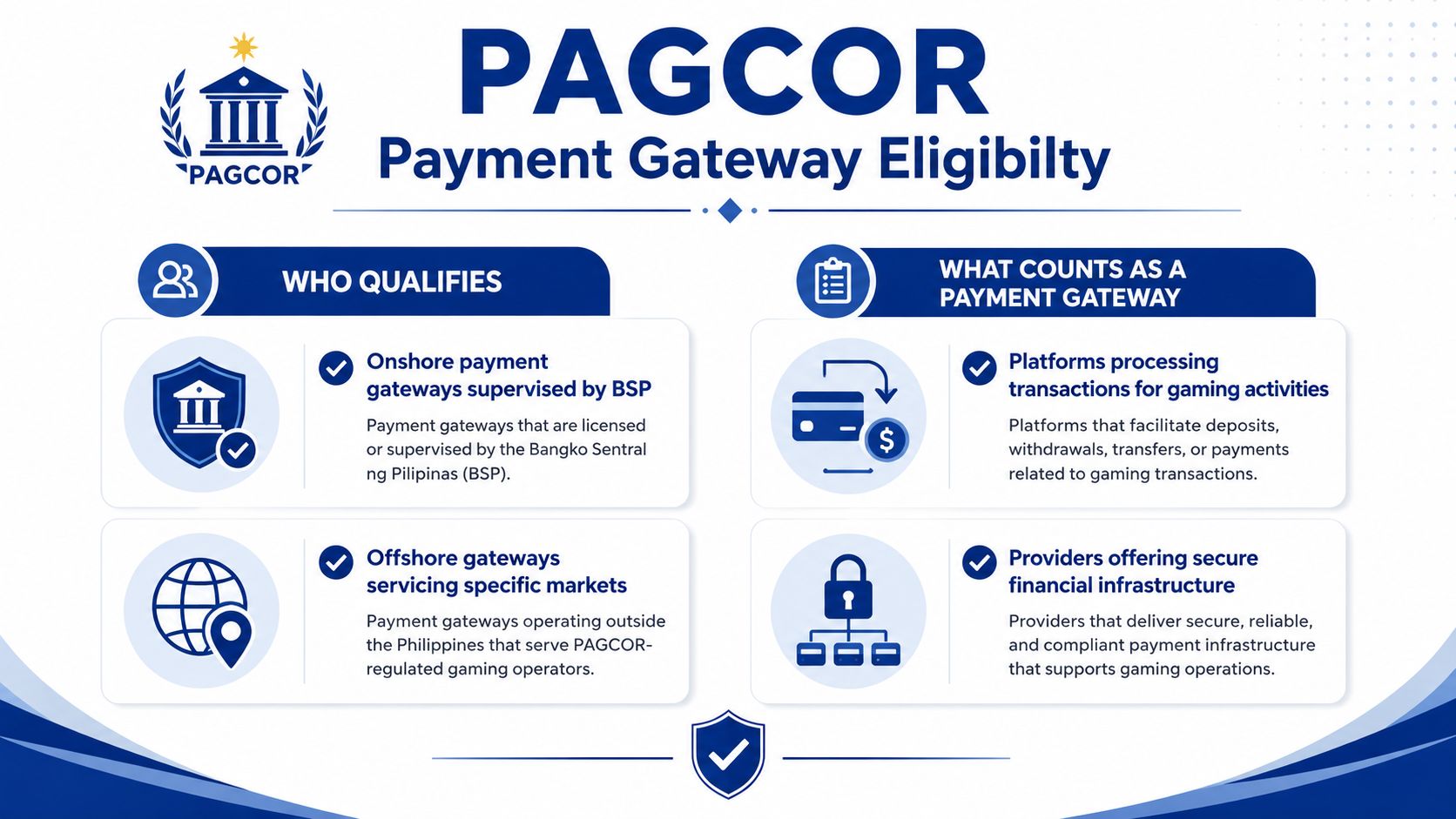
A compliance file often starts with the wrong question. Teams ask whether their product is a “gateway” in the commercial sense, then discover PAGCOR is looking at the payment rail itself, who controls it, and whether it touches gaming money for a licensed operator. If a service initiates, routes, settles, or supports the infrastructure behind gaming-related payments, it belongs in the accreditation review.
Local providers and foreign providers are screened differently
Onshore payment gateways already supervised by the BSP start with a clearer path, because PAGCOR's newer framework is meant to rely on existing central bank oversight instead of running a second, overlapping probity review. A recent MB report on PAGCOR and BSP monitoring points to that division of labor, with BSP supervision carrying weight on the prudential side while PAGCOR still checks whether the provider fits the gaming use case and the licensing perimeter MB report on PAGCOR and BSP monitoring. That does not remove PAGCOR review. It only changes the proof set.
Foreign gateways are handled more tightly. Chambers' gaming-law guide notes that foreign providers need local presence or an accredited representative, with SEC registration and tax compliance part of the operating picture for cross-border providers Chambers gaming law guide. In practice, that means an offshore team cannot treat Philippine gaming support as a remote integration exercise and expect approval without local accountability.
The trade-off is straightforward. A local entity usually has a smoother filing position, but it also has to show real operational substance. A foreign provider may bring stronger product depth, yet it must build the local structure that PAGCOR and other regulators can supervise.
Self-screening checklist before a team spends time on the file
A fast internal triage saves weeks. The usual failure points show up before technical review begins.
- Fit-and-proper evidence is thin. If the provider cannot show regulatory cleanliness, beneficial ownership clarity, and current licences, the file tends to sit in limbo.
- There is no staffed operating footprint. PAGCOR wants proof that the business is active and capable of running the service, not just incorporated on paper.
- There is no live environment. The review is about readiness, not promises, so the gateway needs a demonstrable system.
- The model is only adjacent to payments. If the business cannot explain how it processes gaming transactions or supports the financial rail, scope questions start immediately.
- The applicant cannot show local accountability. A foreign entity without a local presence or accredited representative is already behind before filing.
The phrase “payment gateway” also extends to payment channels and e-wallet-linked infrastructure when those components support gaming transactions. For a filing-oriented overview of the support-service pathway, the PAGCOR B2B accreditation requirements guide is useful for framing the commercial and compliance logic without treating the gateway as exempt from local approval.
In practice, the accreditation question is not just who can sell a payment product. It is who can stay on the rail if PAGCOR asks for proof, BSP asks for supervision support, or an operator needs a backup route because the primary gateway has not cleared review.
Pre-Application Checklist Before You Touch a Form
The file usually stalls before anyone reaches technical review. Teams often assemble a compliance deck instead of a licensing package, and that difference shows up fast once PAGCOR opens the support-service form. One missing core item can send the submission back into back-and-forth mode while the operator waits for a clean read on the payment rail.
Build the file in the same order PAGCOR will inspect it
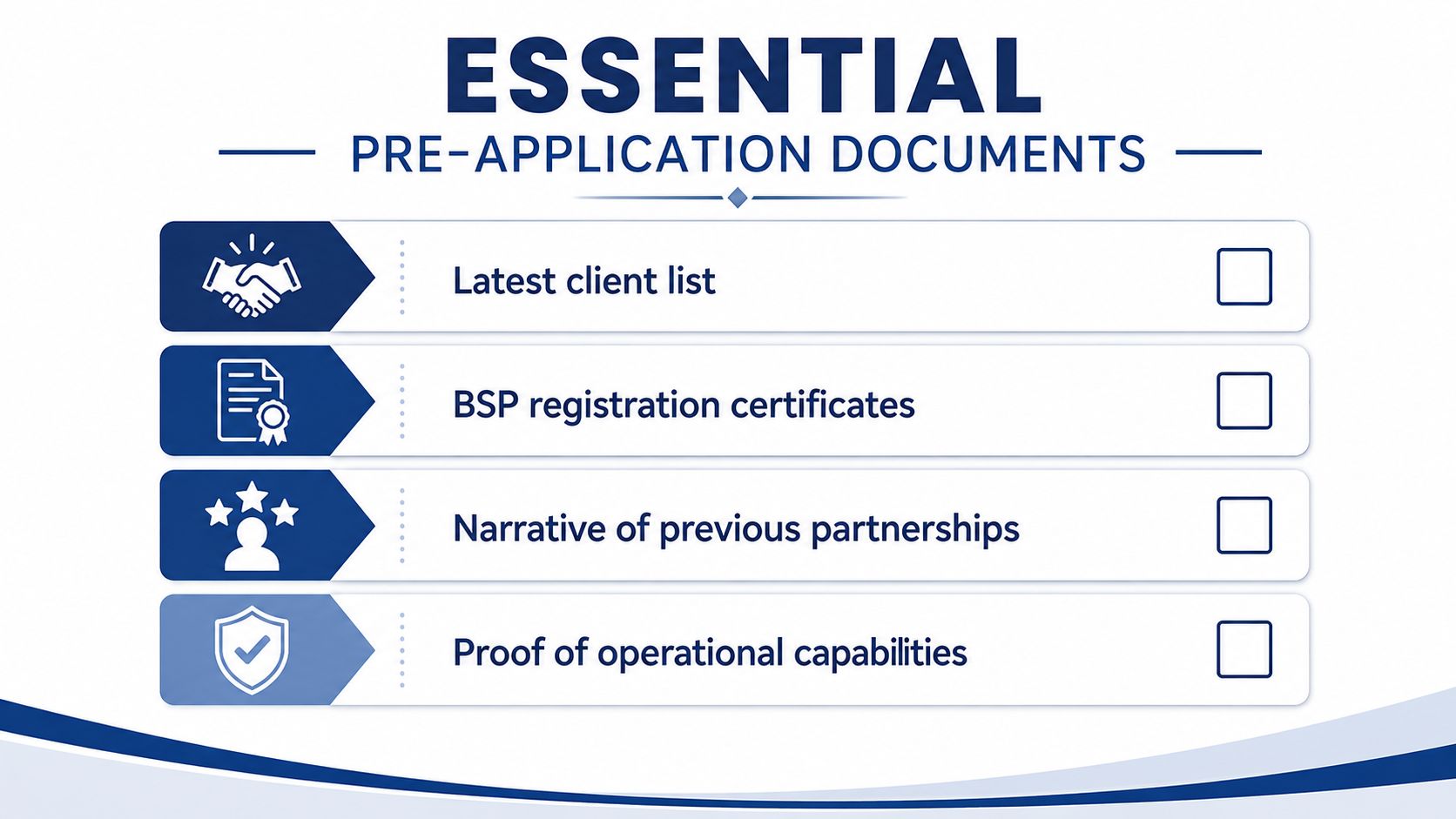
PAGCOR's support-service application form asks for a latest client list, BSP registration certificates, a narrative of previous partnerships, and proof of compliance with BSP's National Retail Payment System or Designated Payment System, if applicable PAGCOR support-service form. The filing package goes to PAGCOR's Electronic Gaming Licensing Department, and the form also gives a dedicated email for advance copies. Treat that as a sign that the agency expects a formal licensing workflow, not a casual business inquiry.
That workflow matters because the review is not only a corporate registration check. PAGCOR wants corporate filings, bank certification, and inspection-ready documents before the file moves forward. When those items sit in different folders across legal, finance, compliance, and engineering, the submission usually arrives incomplete, even if each team believes its part is finished.
What operational readiness looks like on day one
Applicants should test the file against four practical points before they pay the fee:
- A staffed office. PAGCOR expects evidence that the provider is operating and has people who can answer questions and handle remediation.
- A demonstrable live environment. A sandbox does not answer the readiness question once the review turns technical.
- A compliance owner. Someone inside the business has to own filings, responses, and inspection follow-up.
- Consistent corporate records. The legal name, registered address, licences, and bank records need to match across the file.
A weak submission usually fails for boring reasons, not dramatic ones. Missing attachments, mismatched names, stale certificates, and unclear ownership chains slow the file more often than hard legal objections.
For teams building the player-facing side of gaming payments, a practical operator reference on GCash withdrawals in Philippine online casinos helps show why payment UX and compliance evidence cannot be separated. The gateway has to prove that it can support the flow, and the operator has to prove that the flow will hold up during regulatory review.
Technical and Security Requirements PAGCOR Actually Tests
A gateway can have tidy policies and still fail PAGCOR if the live setup looks fragile. The review is about whether transactions are segmented correctly, whether the hosting model can handle Philippine gaming traffic, and whether the production environment can stand up to inspection without hand-holding.
Live-system readiness beats paper compliance
PAGCOR's own walkthrough materials point applicants toward compliance evidence, operational staffing, and a demonstrable live environment before accreditation moves ahead PAGCOR walkthrough FAQ. The initial walkthrough checks whether the provider is a staffed business with a credible system, while the final walkthrough goes deeper into the actual setup before PAGCOR recommends accreditation for Board approval.
That pushes the file toward proof, not theory. If the gateway says it can route payments securely, the submission should show logs, access controls, process controls, and production-like test flows. If the business says it can keep gaming transactions separate from non-gaming flows, the architecture should make that separation visible without guesswork.
Where PAGCOR and BSP overlap
The cleanest files reuse the same evidence where both regulators are asking similar questions, then add targeted material only where the regimes diverge. That matters because PAGCOR's support-service review now sits alongside BSP expectations for online gambling payment services, and providers often get caught between the two.
| Requirement Area | PAGCOR Expectation | BSP Expectation | Reusable Evidence |
|---|---|---|---|
| Licensing basis | PAGCOR accreditation for support-service providers | Prior authority for online gambling payment services | Corporate licence pack, board resolutions |
| Financial integrity | Valid BSP license or equivalent proof, fit-and-proper evidence | Composite rating and capital thresholds for covered entities | BSP licence, audited corporate records |
| Security controls | Demonstrable live environment, system credibility, hosting readiness | Strong AML/CTF and fraud controls | Security architecture, control narratives |
| Data and system oversight | Walkthrough-based inspection of the real system | Board-level oversight and monitoring expectations | Governance charts, monitoring logs |
The BSP exposure draft on online gambling payment services proposes prior authority, a composite rating of at least 38, minimum capitalization of PHP 300,000,000, strong AML/CTF and fraud controls, and a board-level AML/CTF committee. That creates a dual-regulator reality. A gateway can clear one set of checks and still need more work for the other.
Practical rule: if a control cannot be demonstrated in a live environment, PAGCOR will treat it as aspirational, not compliant.
For teams tightening account integrity and user verification, the guidance on how to avoid phishing scams is relevant because payment gateways are increasingly judged on whether fraud controls hold up outside the slide deck.
AML, CFT, and KYC Obligations Payment Gateways Cannot Skip
A gateway can pass the technical gate and still fail the commercial one if its financial-crime controls are weak. Operators and sponsors look at whether the rail can stay open under scrutiny, because a payment path that cannot explain its AML posture becomes a continuity risk, not just a compliance gap.
The compliance program has to work on player flows and operator flows
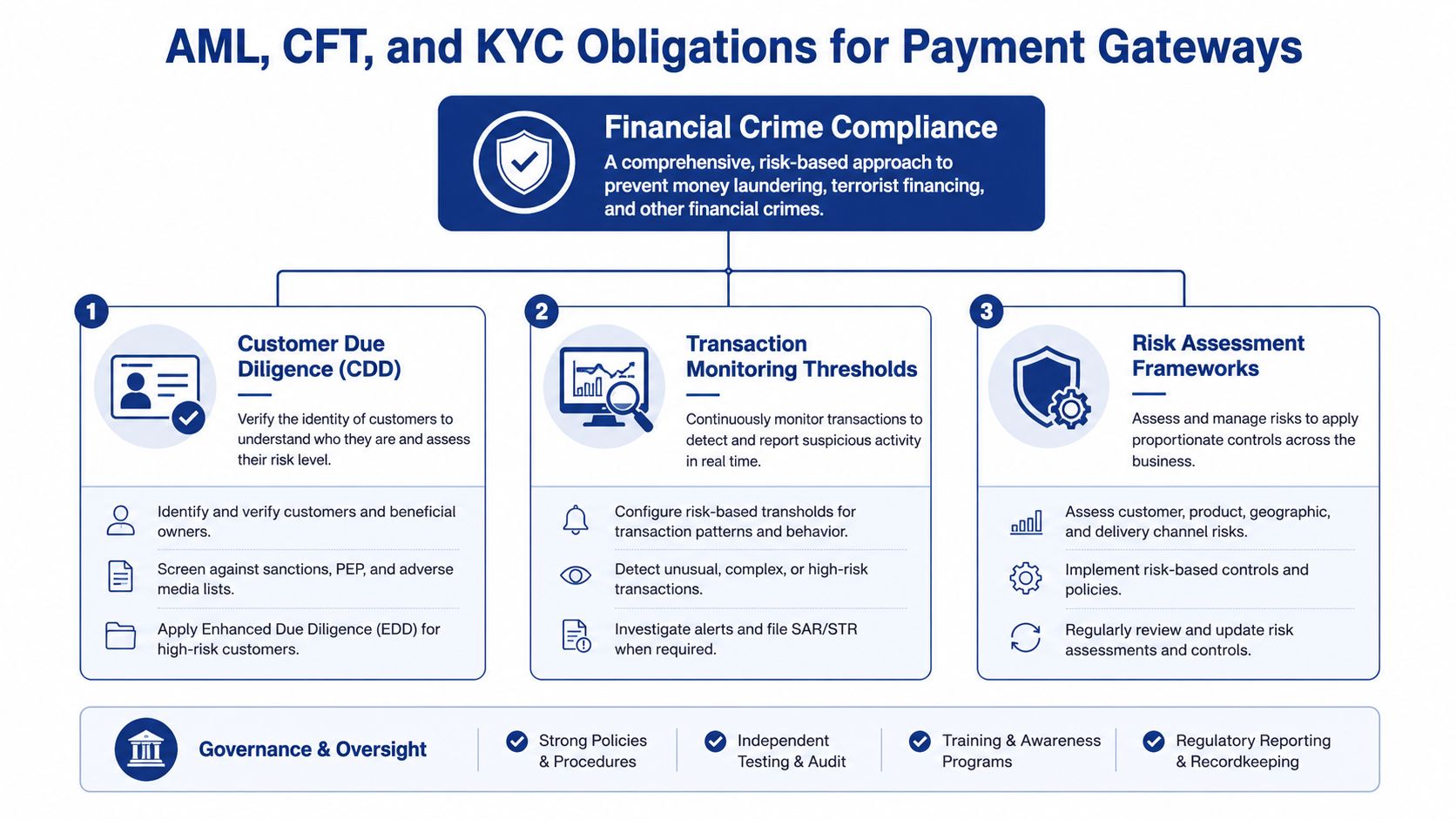
A Philippine gaming gateway needs separate logic for onboarding, monitoring, and escalation. Player-side KYC, operator-side merchant diligence, and transaction monitoring are different controls, and each has to answer a different regulatory question. Gaming volume patterns also matter, because generic e-commerce rules rarely catch the transactions that raise concern in this sector.
The BSP exposure draft sharpens that expectation by pointing toward prior authority, a composite rating of at least 38, minimum capitalization of PHP 300,000,000, stronger AML/CTF and fraud controls, and a board-level AML/CTF committee. Even though that draft sits in the BSP lane, it still matters for PAGCOR readiness, because the two approval tracks are increasingly hard to separate in practice. A gateway that cannot show how its controls work in live traffic will have trouble keeping both regulators comfortable, and operators will look for a contingency route if approval slips past the transition window.
Where gateways usually fall short
Most failures come from control gaps that only appear once the file is tested against real operations. The policy may look fine on paper, but the review stalls when the team cannot show how the controls work.
- Weak customer due diligence. KYC vendors may be in place, but the gateway still has to show how vendor outputs feed its own risk decisions and escalation rules.
- No clear escalation path. Suspicious activity handling needs named roles, response timing, and a clear route for filing and review, not vague compliance language.
- Poor transaction monitoring logic. Thresholds copied from non-gaming businesses often miss gaming-specific behavior and create blind spots.
- Board oversight that exists only on paper. A board-level AML/CTF committee has to produce minutes, ownership, and follow-through, not just a governance chart.
For providers building a gaming-facing stack, Perya registration guidance is a useful market reference because it shows how quickly formal compliance expectations attach once a service starts touching regulated gaming flows.
The Two-Stage Walkthrough and Review Timeline
The review sequence is where many PAGCOR payment gateway accreditation projects lose time. Teams budget for document drafting and forget to hold engineering, compliance, and operations staff in reserve for walkthroughs and follow-up questions. That creates avoidable delay, especially once the file has already been submitted and is moving through review.
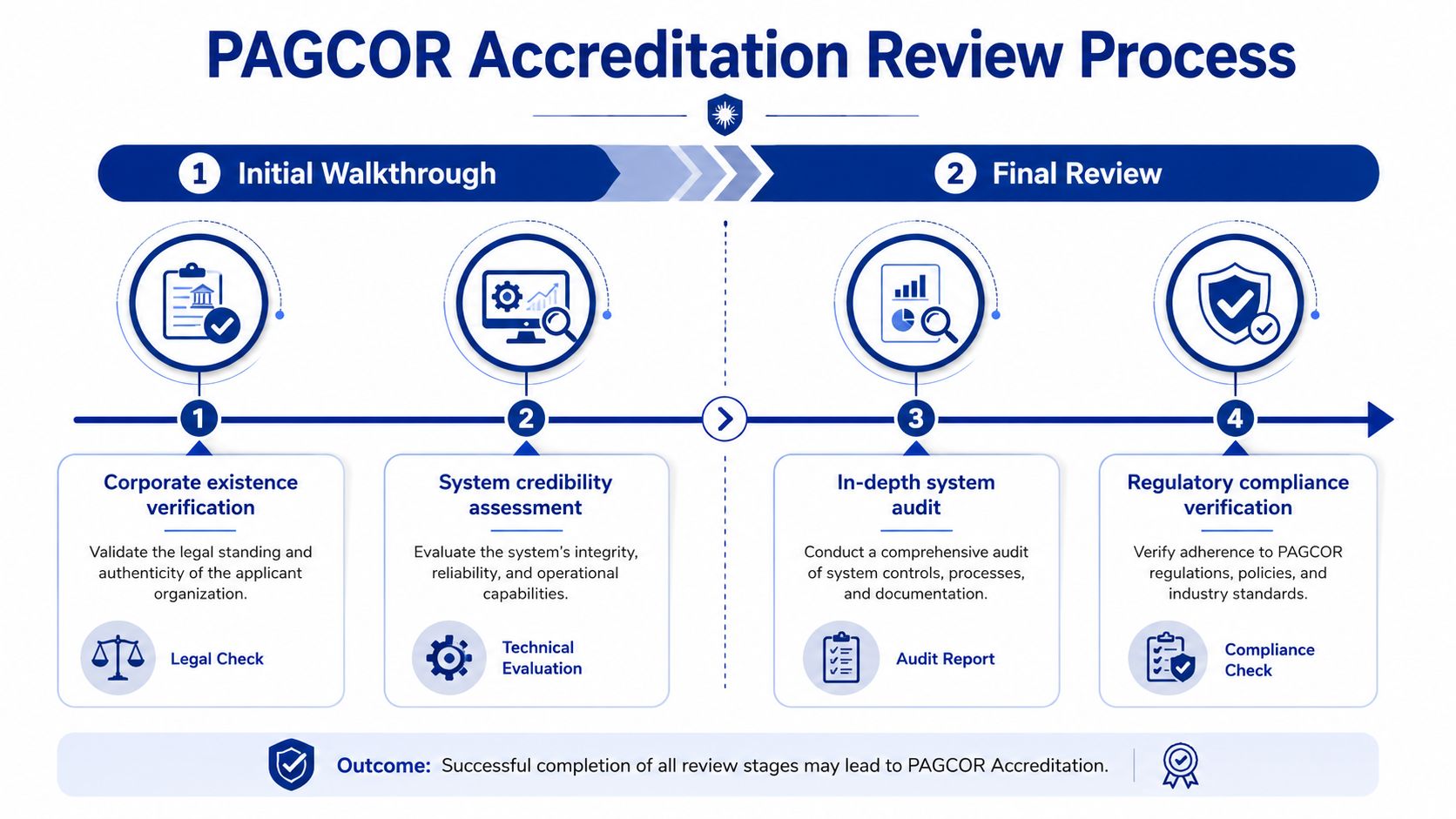
The first walkthrough is about existence, the second is about proof
The initial walkthrough checks whether the provider is a genuine staffed business with a credible system. The final walkthrough is the deeper test, where PAGCOR reviews the live environment before it recommends accreditation for Board approval PAGCOR walkthrough FAQ. That sequence means the file needs to be operationally ready before every attachment is perfect.
A workable project plan needs room for pre-screening, document review, walkthrough scheduling, inspection outcomes, and Board endorsement. The elapsed time varies with file quality and readiness, but the sequence itself is fixed. If the engineering team is still tuning production controls during the walkthrough window, the schedule slips.
Deadlines change the routing strategy
The transition window now matters commercially. Recent reporting says PAGCOR extended the B2B supplier accreditation deadline to September 30, 2026 amid documentation delays, while earlier coverage said non-accredited suppliers risked shutdown or disconnection from August 1, 2026 SCCG Management coverage. That makes deadline management a payment continuity problem, not just a regulatory calendar issue.
Operators that rely on a single gateway should work backward from that window. Dual-run architectures, contingency PSPs, and local accredited distributors become the obvious mitigation tools when approval timing is uncertain. The right answer depends on commercial volume and risk tolerance, but the mistake is the same in every case, assuming approval will land on schedule.
Planning rule: filing late creates pressure on the payment rail, not only on the compliance team. If the gateway misses approval, the operator inherits interruption risk.
The cost stack also belongs in this timeline. PAGCOR requires a non-refundable PHP 5 million accreditation fee for each gaming activity and a PHP 1 million performance cash deposit per accredited provider or service category. Those figures make it hard to justify a casual submission or a “we'll sort it out later” filing posture.
Fees, Cash Deposits, and Post-Accreditation Monitoring
A gateway approval is the start of a controlled operating relationship with PAGCOR. Payment providers need to plan for monitoring, remediation, and the possibility that their operating model will be reviewed again if the service changes, the control environment weakens, or the live setup drifts from what was filed. Accreditation is recurring oversight, not a one-off filing outcome.
Budget for approval, then budget for staying approved
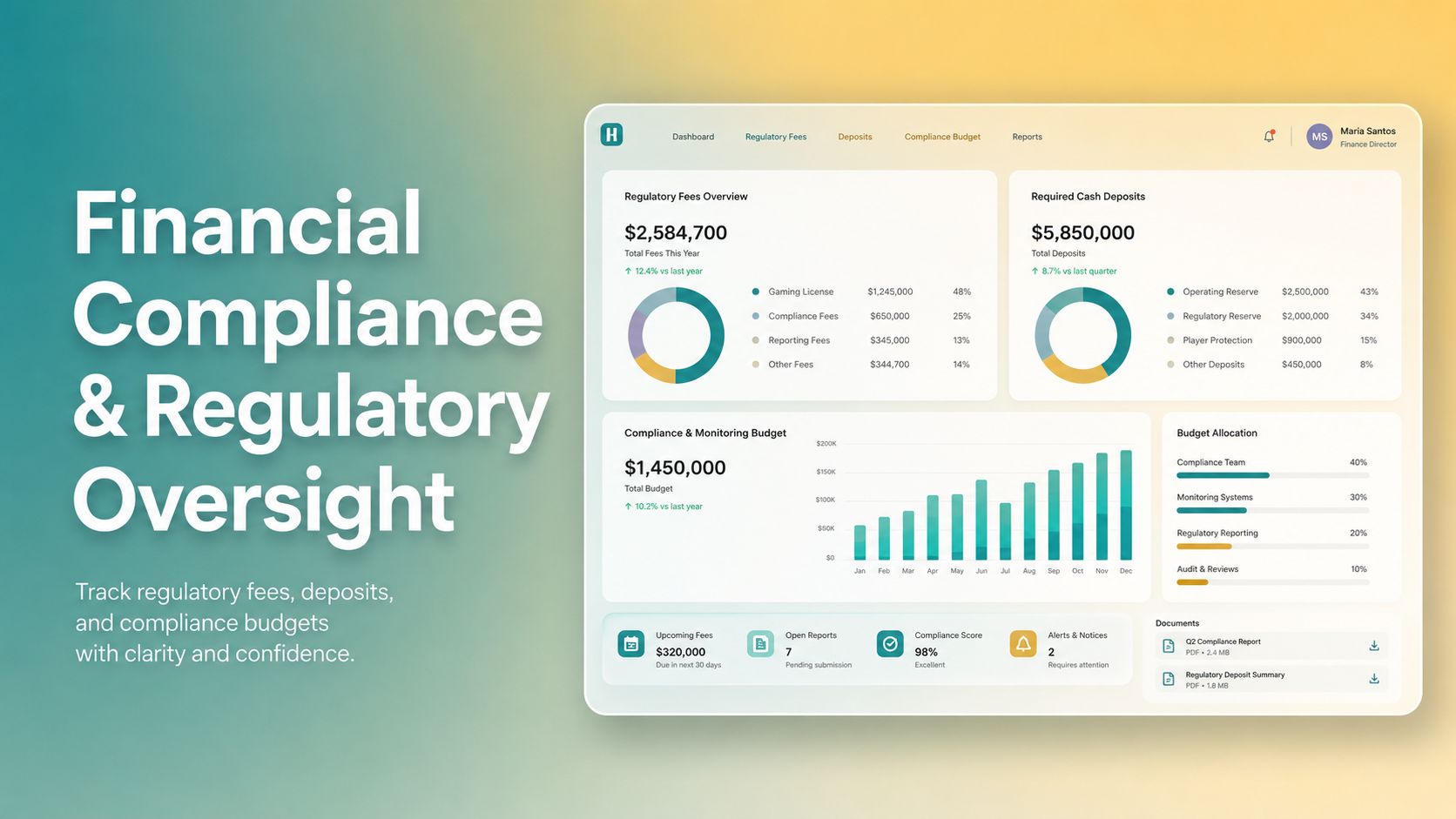
The formal cost base is clear. PAGCOR requires a PHP 5 million non-refundable accreditation fee per gaming activity and a PHP 1 million performance cash deposit per accredited provider or service category. Those figures sit alongside legal review, technical remediation, hosting adjustments, evidence preparation, and inspection support, so the actual budget is wider than the filing fee alone. Operators that underfund the process usually end up paying for the delay later, either through rework or through temporary routing changes.
That cost profile should shape the contract from day one. Vendor agreements need to address accreditation timing, who bears remediation work, and what happens if approval slips while the operator is still trying to keep payment flows live. If the gateway is close to the transition cutoff and the file is still moving, the operator needs a fallback rail and a clear commercial exit path, not hopeful wording.
Monitoring doesn't stop after Board approval
PAGCOR's support-service framework is built for ongoing supervision. The newer approach reduces duplicated checking for BSP-supervised providers, but it still keeps the gateway tied to compliance evidence, inspection findings, and the condition of the live environment. If the service changes materially, or if controls no longer match what was approved, the file can come back under review.
A practical risk register for gateways should include:
- Incomplete documentation. Fix this with a controlled application pack and one owner for every appendix.
- Weak technical readiness. Test the production-like environment before the walkthrough, not during it.
- Missed transition deadlines. Work backward from the extended transition window and keep filing milestones visible to both compliance and operations.
- Overreliance on one PSP. Build contingency routing and approval-based exit clauses before the approval decision arrives.
A gateway that cannot prove continuity under regulatory pressure is exposing the operator's payment rails.
For operators and suppliers comparing settlement options and withdrawal flows, the discussion around PAGCOR-compliant GCash withdrawals is a reminder that customer experience, approval status, and routing resilience now move together.
If a gateway supports Philippine gaming traffic, the next board deck should ask whether the file is ready, whether the live environment can survive the walkthrough, and whether the operator has a fallback route if approval slips. The practical next step is to build the document pack, confirm BSP and PAGCOR alignment, and line up contingency PSPs before the transition window tightens.



Join thousands of gaming professionals receiving the latest iGaming news, regulatory updates, and market insights.
