


Casino companies' ability to deploy AI is outpacing their ability to govern it. A 2026 UNLV International Gaming Institute and KPMG study, surveying 83 gambling companies and 113 regulators, rated AI governance the weakest maturity category at 30 out of 100, according to the published account of the research. That gap makes oversight, not innovation, a central casino technology story.
The technologies reshaping casino operations connect product development, payments, player protection, data management, and regulatory compliance. A wallet integration affects account security. A recommendation engine affects commercial targeting and customer safety. A shared customer record affects both risk detection and privacy.
Top 1 Rank's assessment is that implementation quality deserves more attention than product novelty. Operators need evidence that a system works within their licensed activities; suppliers need to explain its dependencies; investors need to distinguish a scalable capability from an expensive integration burden.
The following casino technology news developments therefore pair commercial opportunities with implementation challenges and decision criteria. Some involve documented research or regulatory guidance. Others require particular caution because a technology's availability doesn't establish its legal acceptability, commercial performance, or suitability across jurisdictions.
Table of Contents
- 1. AI-Driven Player Protection and Behavioural Monitoring
- 2. Stablecoin and Crypto Payment Rails Under the EU MiCA Framework
- 3. EU Anti-Money Laundering Regulation Brings Gambling Operators Under a Single Rulebook
- 4. Live Casino Studio Technology and Multi-Camera Game Show Formats
- 5. US State Crackdowns on Sweepstakes Casinos and the Compliance Technology Response
- 6. Cashless and Mobile Wallet Play in Land-Based Casinos
- 7. Generative AI in Game Development, Localisation, and Content Production
- 8. Single Customer View Requirements and Cross-Product Data Integration in the UK
- Casino Technology News: 8-Point Comparison Guide
- Turn Technology Signals into 2026 Action Plans
1. AI-Driven Player Protection and Behavioural Monitoring
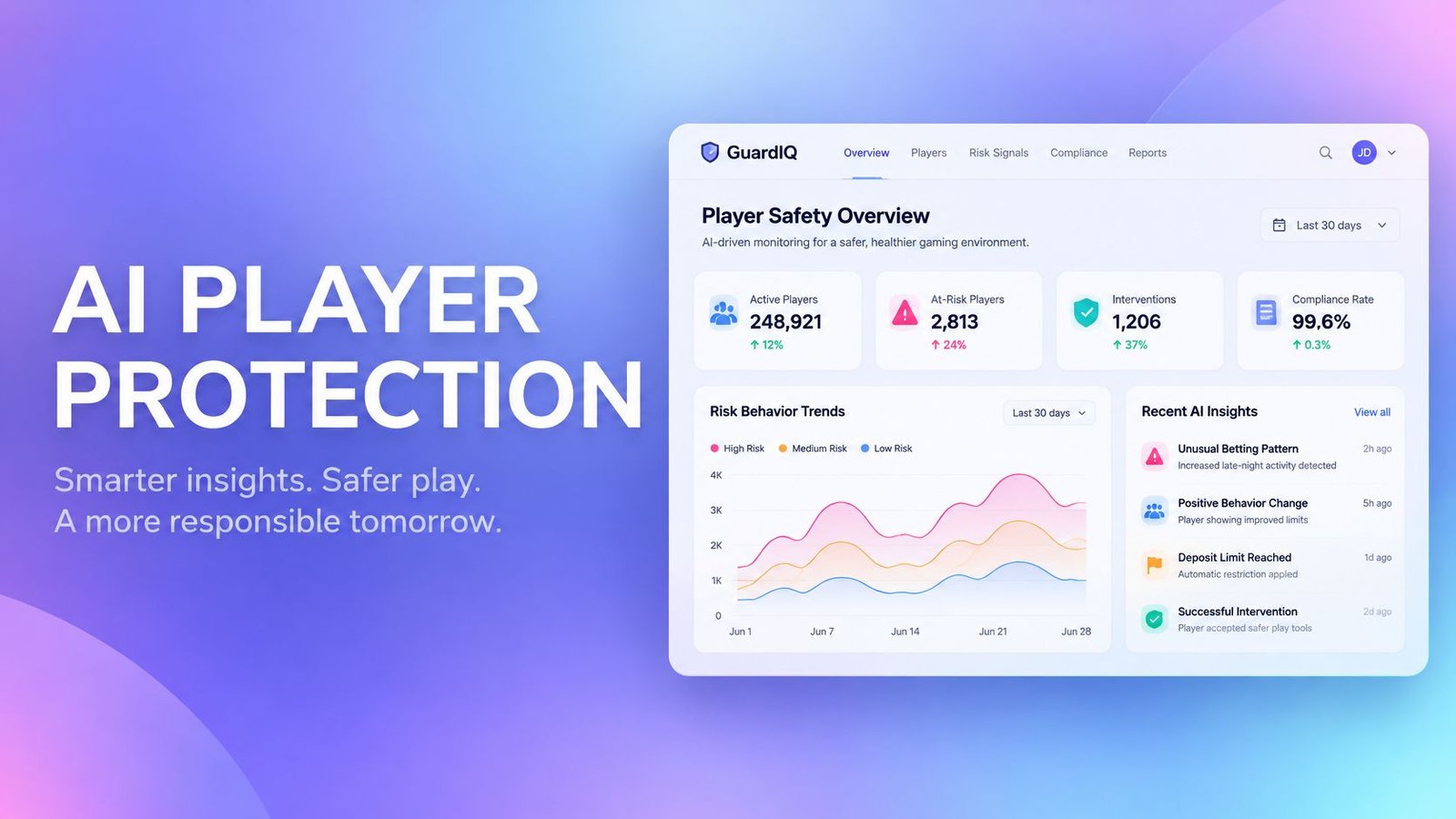
AI creates a difficult operational tension: an operator can use customer data to identify possible harm or to intensify commercial targeting. A University of Florida analysis of AI in gambling identifies that contradiction and notes that gambling-specific AI regulation remains limited internationally.
The same analysis describes the International Gaming Standards Association's ethical-AI framework work beginning in 2025 and discusses behavioural markers including losses, cancelled withdrawals, deposit behaviour, speed of play, and stake volume. Those signals provide a more defensible starting point for risk assessment than treating engagement alone as evidence of customer wellbeing.
Separate Detection From Intervention
Top 1 Rank's operational interpretation: identifying unusual behaviour and choosing an appropriate response are different tasks. A model can flag a pattern, but responsible-gambling teams still need a documented basis for customer contact, account restrictions, or escalation.
For example, an abrupt change in deposits could justify investigation without proving gambling harm. The operator should examine context, record the decision, and provide human review rather than allowing an unexplained score to determine the outcome.
- Validate outcomes: Assess whether interventions identify meaningful risk, not merely whether the model predicts continued play.
- Document accountability: Record thresholds, overrides, review ownership, and the evidence supporting decisions.
- Protect account access: Keep player-safety communications distinguishable from fraudulent messages, supported by clear phishing-scam prevention guidance.
Practical rule: A player-protection model should be evaluated by the quality of its interventions, not the sophistication of its dashboard.
The next step for operators is a controlled evaluation with responsible-gambling specialists. Suppliers should provide explainable outputs and usable audit records rather than asking customers to accept a proprietary risk score without context.
2. Stablecoin and Crypto Payment Rails Under the EU MiCA Framework
A payment provider's regulatory status isn't a substitute for gambling permission. For operators assessing stablecoins under the EU Markets in Crypto-Assets framework, that distinction should govern procurement before settlement speed or wallet convenience enters the discussion.
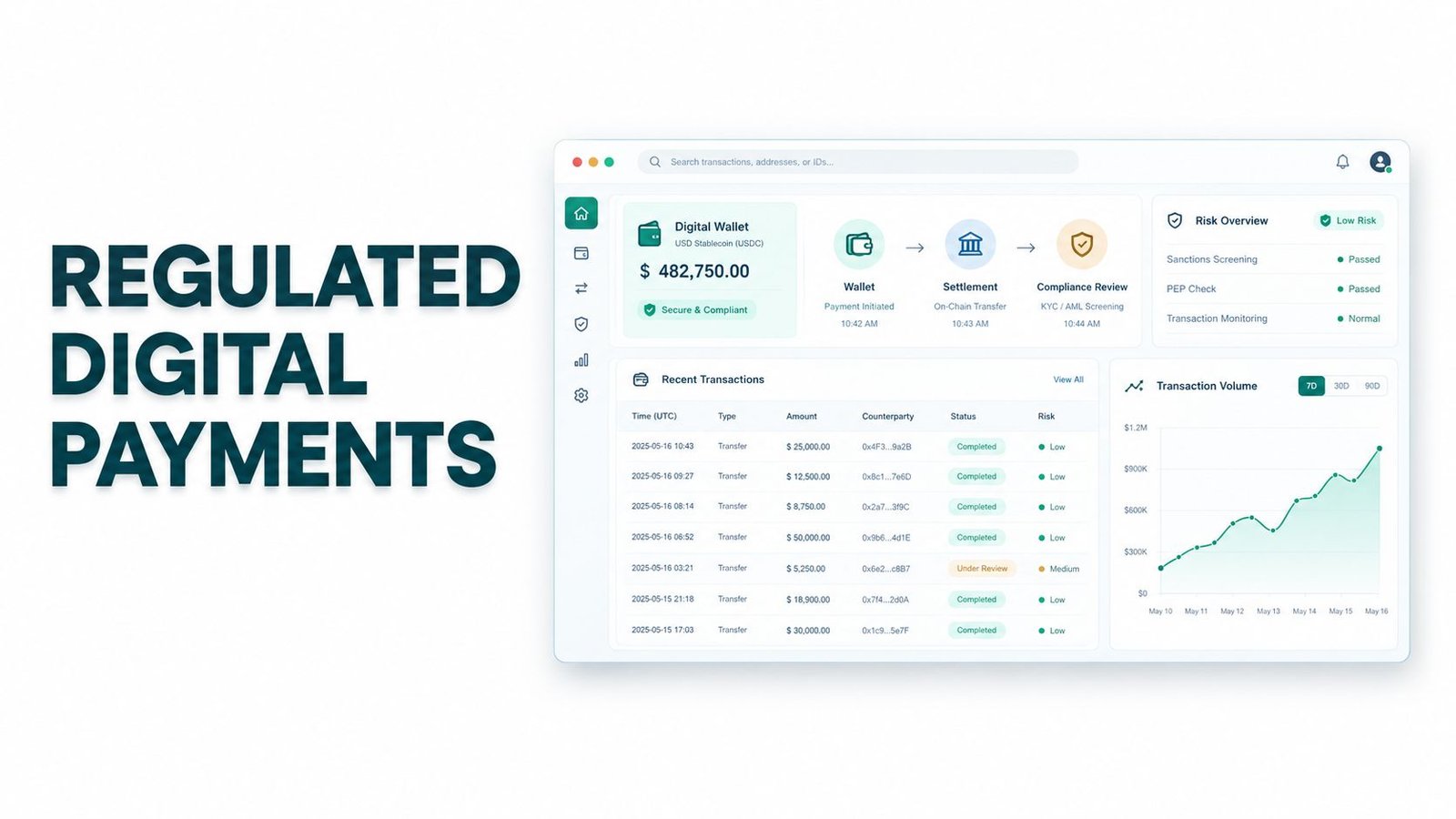
USDC and EURC can serve as concrete candidates for a payment assessment, but naming a token doesn't establish that an operator may accept it. Counsel must verify the applicable issuer, service-provider, gambling, and anti-money-laundering requirements before integration; this assessment shouldn't rely on a processor's marketing description.
Evaluate the Complete Funds Journey
A useful implementation scenario follows a deposit through wallet screening, customer-account crediting, gameplay eligibility, withdrawal approval, and reconciliation. The operator should establish who controls funds at each stage, which records remain available, and what happens when screening or settlement fails.
The prospective commercial benefit is payment flexibility, not an assumed performance improvement. Treasury teams should test reconciliation effort, funding availability, conversion costs, and customer support requirements against existing methods before accepting claims of superior efficiency.
A cross-border comparison can help define evaluation questions, including those discussed in see how Suby compares payment methods. It shouldn't be treated as evidence of gambling-specific authorisation.
- Verify permissions: Obtain current documentary evidence for the relevant issuer and service provider.
- Map obligations: Confirm local gambling restrictions, screening requirements, and any applicable Travel Rule duties.
- Test exceptions: Rehearse rejected deposits, unsupported networks, disputed ownership, and delayed withdrawals.
For suppliers, the implementation challenge is producing transaction-level evidence that compliance and finance teams can use. The decision gate should be a documented legal and operational assessment, followed by a restricted pilot, not a payment button added directly to production.
3. EU Anti-Money Laundering Regulation Brings Gambling Operators Under a Single Rulebook
For a multi-market gambling business, regulatory harmonisation and technical standardisation are different projects. An assessment of the EU Anti-Money Laundering Regulation should distinguish the legal obligations requiring confirmation from the customer-data architecture needed to implement them.
Operators shouldn't treat the phrase single rulebook as evidence that every local licensing obligation, supervisory expectation, or implementation question has disappeared. Applicability, commencement, exemptions, and supporting technical standards need verification against current official materials before a delivery schedule is approved.
Build Evidence Before Buying Another Platform
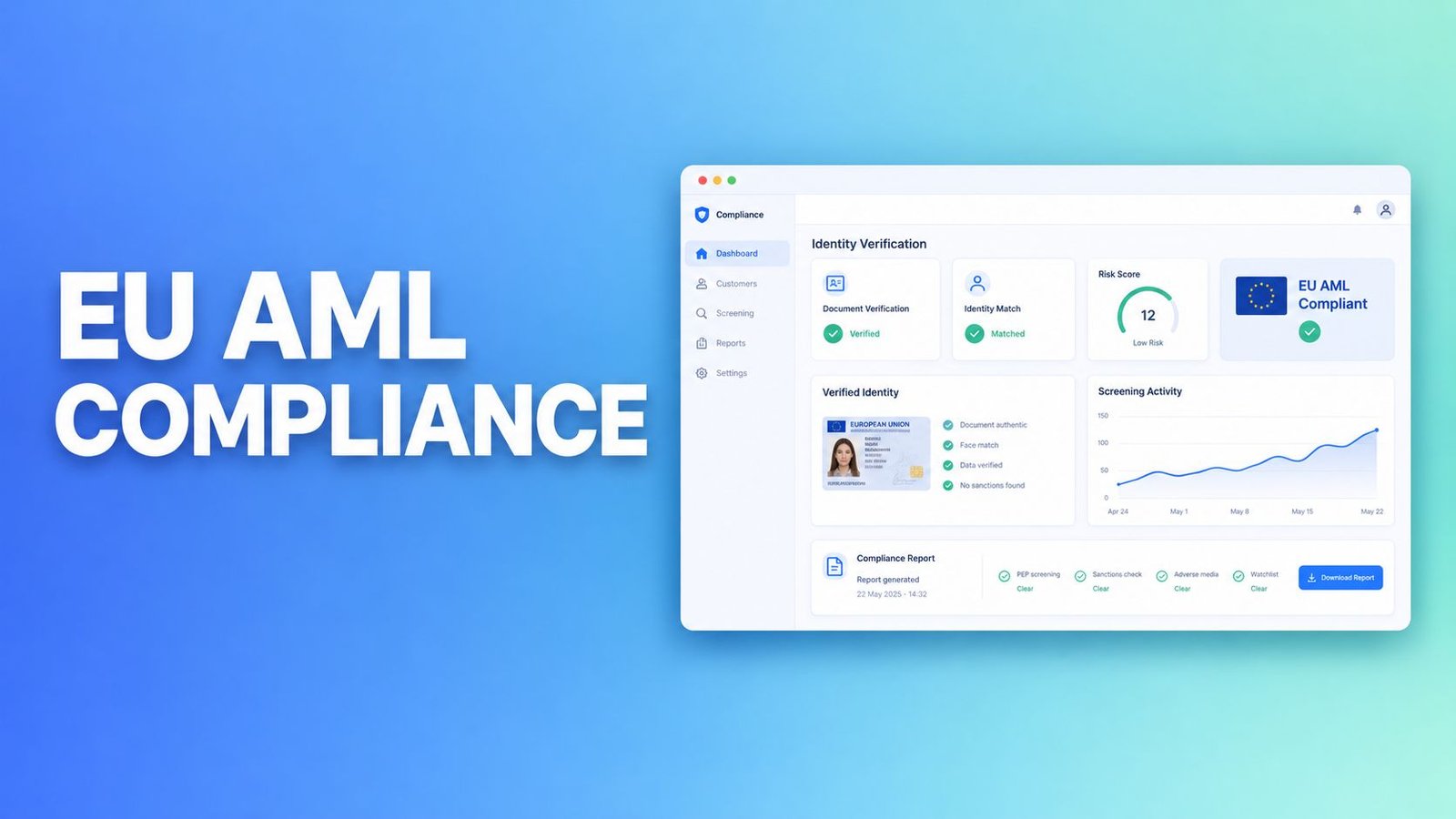
Consider an operator with separate casino and sportsbook systems. A customer might have consistent identity records but disconnected payment histories, leaving investigators to assemble the relationship manually; this is an implementation scenario, not a reported incident.
The proposed benefit of a common customer model is a more coherent investigation record. That benefit should be tested through case completeness, alert quality, retrieval speed, and the amount of manual reconciliation required, rather than assumed from a vendor's unified-platform label.
- Legal mapping: Assign each verified requirement to an accountable owner and the relevant operating entity.
- Data lineage: Record where identity, payment, screening, and case-management information originates.
- Retention controls: Establish justified retention periods, access permissions, and defensible deletion processes.
Top 1 Rank's coverage of PAGCOR regulatory updates offers a separate jurisdictional reference point. Philippine regulatory reporting shouldn't be used to infer European obligations, but the distinction illustrates why global operators need market-specific control mappings.
The investment priority should be evidence continuity. Before replacing an entire compliance stack, operators should determine whether existing systems can produce complete, reviewable customer histories. Suppliers should demonstrate that capability with realistic investigation scenarios, including conflicting records and incomplete identity information.
4. Live Casino Studio Technology and Multi-Camera Game Show Formats
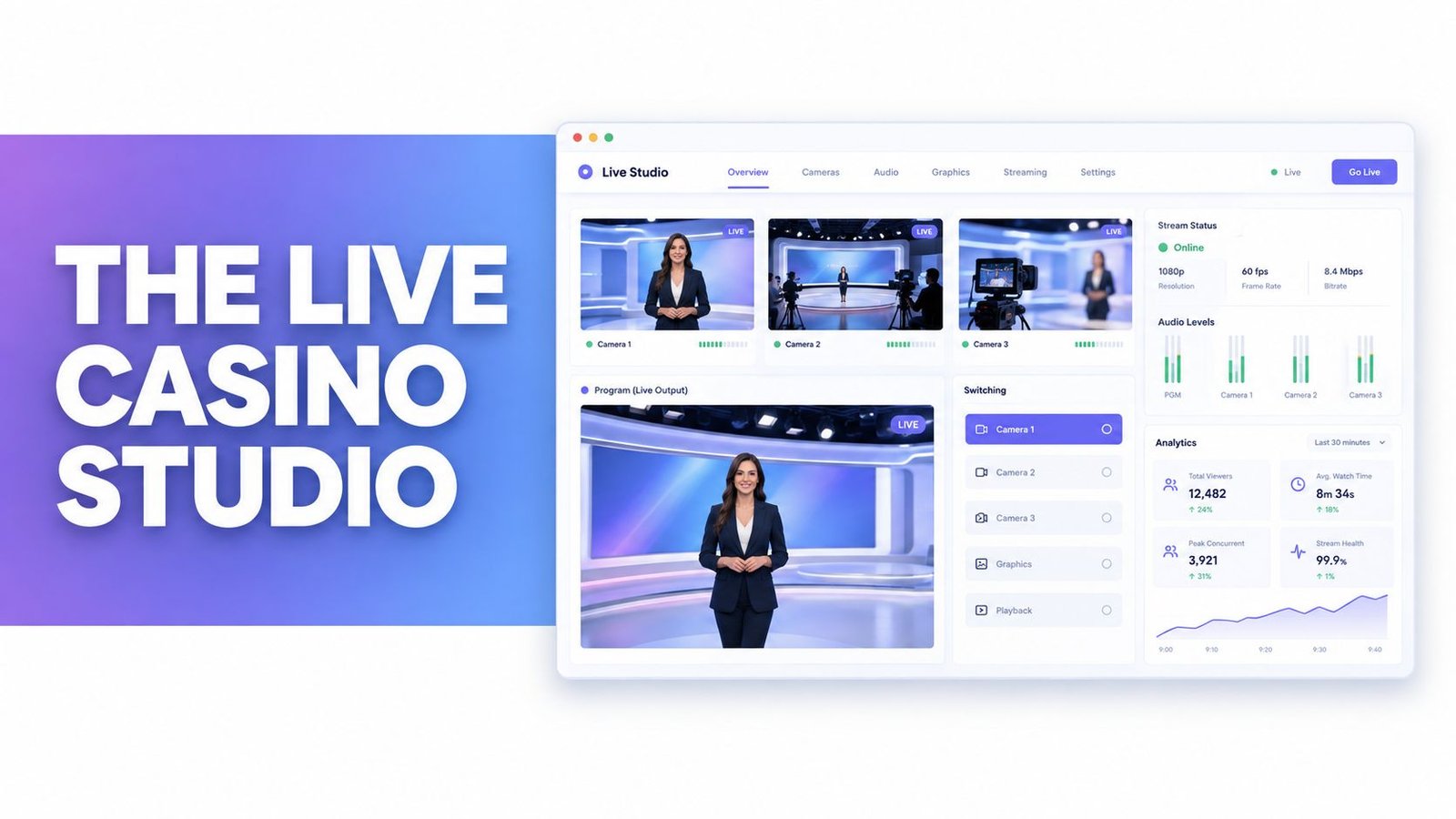
A live casino product should be assessed as a delivery chain, not a video stream. Camera output, game-state messages, betting interfaces, account balances, and settlement records must remain understandable to the customer throughout the session.
Mobile delivery makes that assessment commercially relevant. Mobile and tablet platforms represented 57.14% of global online-gambling revenue in 2025, according to Grand View Research's online-gambling market assessment. That is a broad online-gambling measure, not a live-casino market-share statistic.
Test Synchronisation, Not Just Picture Quality
Evolution's Crazy Time and Monopoly Live provide recognisable product references for a game-show-format evaluation. Their inclusion isn't evidence of comparative performance; an operator still needs to examine the current rules, permitted markets, technical documentation, and customer experience for the particular integration.
A practical test should introduce a connection interruption during a betting window. Reviewers should determine whether the customer can distinguish an accepted wager from an unaccepted selection, recover the session, and retrieve an intelligible settlement record.
A visually impressive studio doesn't compensate for uncertainty about whether a wager was accepted.
The implementation trade-off is production complexity versus operational clarity. Additional camera views and graphics should be judged by whether they help customers understand the game, not by presentation alone.
Operators evaluating live dealer casino games should track stream interruptions, reconnection outcomes, disputed bets, and support contacts by device and network condition. Compliance teams should separately review game rules, return-to-player disclosures, betting limits, and bonus mechanics.
The next procurement step is a market-specific acceptance test with product, engineering, and compliance sign-off. Suppliers should provide incident evidence and reconciliation capabilities alongside their studio demonstrations.
5. US State Crackdowns on Sweepstakes Casinos and the Compliance Technology Response
Geolocation can enforce an access decision; it can't establish that a business model is lawful. That distinction is central when operators and suppliers assess sweepstakes casinos, virtual currencies, and redeemable prizes against state gambling rules.
Any account of a US state crackdown needs current, state-specific evidence. Claims about New Jersey Division of Gaming Enforcement actions, enacted prohibitions, or pending legislation shouldn't be converted into a nationwide legal conclusion without checking the underlying official records.
Treat Product Mechanics as Compliance Inputs
A useful scenario involves a customer travelling between jurisdictions while retaining an existing account balance. The operator must decide which activities remain available, whether redemption can proceed, and how account access changes when location cannot be established reliably.
Those decisions require counsel's assessment of the actual product. Promotional language, currency acquisition, redemption conditions, age restrictions, and geographic availability should be reviewed together rather than assigned to unrelated teams.
- Location assurance: Test conflicting device and network signals, unavailable permissions, and suspected location manipulation.
- Currency accounting: Maintain clear records of balances, adjustments, eligibility, and redemption decisions.
- Marketing review: Check whether promotional claims accurately describe the product and its restrictions.
The broader security environment strengthens the case for layered controls. A report covering analysis of online transactions states that attacks against gaming and gambling sites increased 76% in 2025; that figure concerns the wider sector, not sweepstakes platforms specifically.
Top 1 Rank's reporting on PAGCOR gambling advertising rules concerns a different jurisdiction and shouldn't be substituted for US legal analysis. Its relevance is the need to connect advertising controls with the underlying permission to offer a product.
The next step is a documented state-by-state legal assessment translated into testable system rules. The measurable operational objective is accurate restriction and consistent redemption handling, not an unsupported promise that technology eliminates legal exposure.
6. Cashless and Mobile Wallet Play in Land-Based Casinos
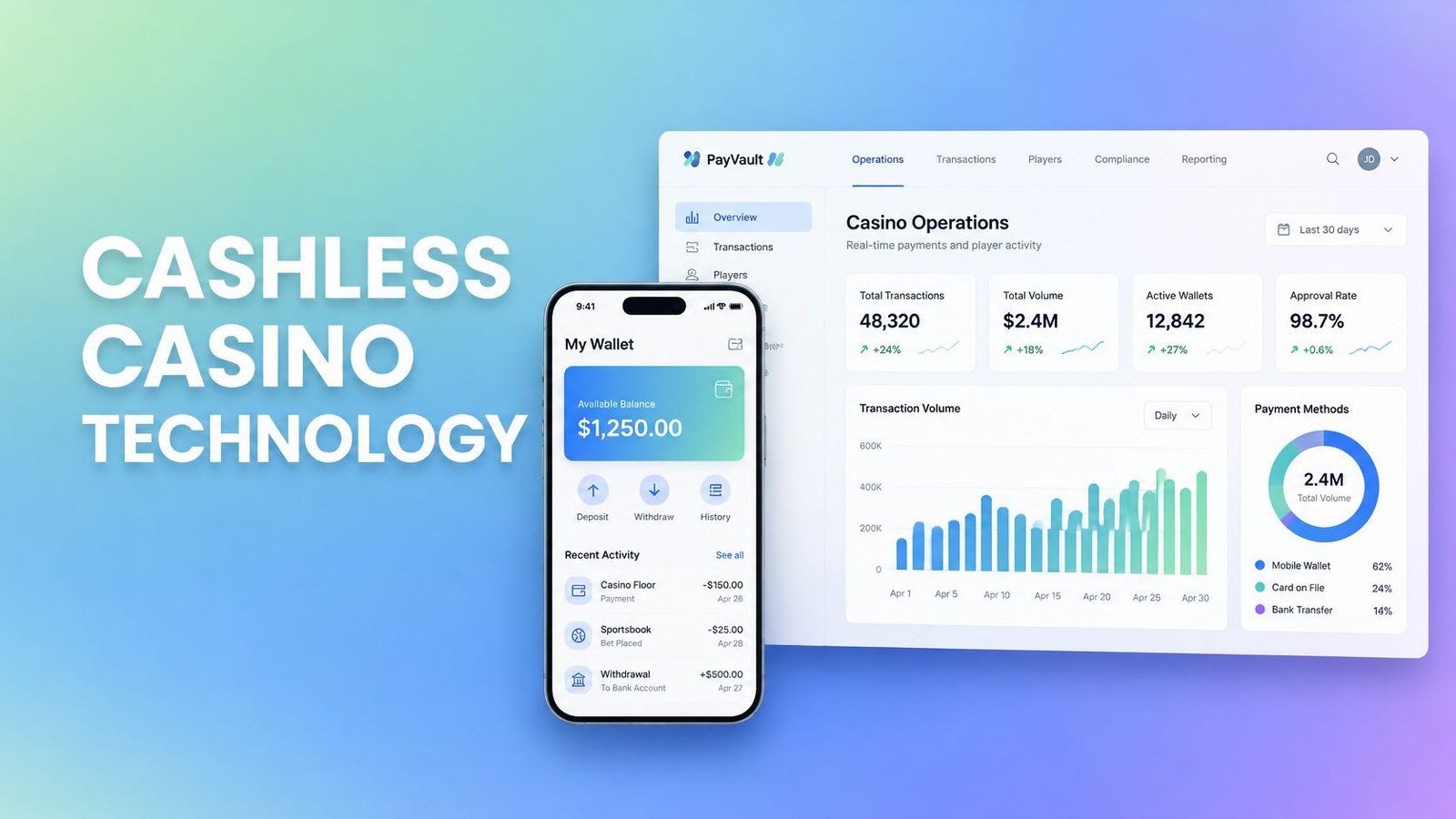
Cashless casino technology is a regulated funds-management system, not merely a more convenient cashier interface. The Gambling Commission's guidance on cashless payment technologies says systems in Great Britain must account for the Gaming Machines (Circumstances of Use) Regulations 2007, including restrictions and prohibitions concerning debit and credit cards.
The regulator expects developers and operators to explain compliance with card-use rules, payment limits, and committed payment limits. Consequently, the funding source and transaction logic deserve the same procurement attention as the mobile application.
Follow the Account, Not Just the Credential
A Kansas Racing and Gaming Commission publication incorporating GLI-16 v2.0 describes a magnetic-strip player card accessing an account maintained on the casino host system in its cashless-systems standard. That architecture makes host-account controls central to the assessment.
Consider a lost player credential. The operator should be able to suspend access, verify ownership, reconcile transactions, and restore legitimate access without creating a duplicate balance or losing the audit trail.
Deployment test: A cashless pilot should demonstrate recovery from failed transactions as clearly as successful funding.
The potential business benefit is reduced payment friction, but the pilot must establish it. Relevant measures include transaction completion, reconciliation exceptions, support workload, and the time required to restore access.
Consumer interest in options such as casino payments through GCash shouldn't be confused with permission to use a particular wallet on a regulated casino floor. Approval depends on the system, jurisdiction, and transaction design.
Operators should begin with a contained deployment covering finance, floor operations, security, and compliance. Suppliers should document the complete path from funding source to host account and gaming device, including failure handling and limit enforcement.
7. Generative AI in Game Development, Localisation, and Content Production
Content production is a documented gambling-sector AI application, but that doesn't establish a performance benefit for every game studio. The Australian Communications and Media Authority's report on AI and interactive gambling identifies content creation, design, and new product features among AI applications used by licensed wagering providers.
The scope matters: evidence about wagering providers shouldn't be presented as proof that every casino supplier uses generative AI. It does provide a basis for examining production use cases while separating those from promotional targeting, fraud detection, and harm monitoring.
Keep Creative Assistance Separate From Game Integrity
A studio could evaluate AI-assisted concept art, localisation drafts, sound proposals, or test-case generation. These are candidate workflows, not claims that a named supplier has achieved a particular cost saving or development-time reduction.
For example, an AI-generated localisation draft might shorten initial preparation while introducing ambiguity into game rules. Human reviewers should compare terminology, payout descriptions, and player instructions against the approved source material before release.
- Asset provenance: Preserve records of generated material, human edits, permissions, and supplier terms.
- Technical accountability: Assign qualified reviewers to code, mathematical behaviour, payout implementation, and test results.
- Release control: Check target-market certification requirements before changing production assets or game logic.
Top 1 Rank's analysis is that net review effort matters more than generation speed. A studio should measure accepted output, rejected material, rework, legal review, and defects rather than counting how much content a tool produces.
A framework covering generative AI ROI metrics for enterprises can support that measurement discussion, but gambling-specific certification and player-information controls require separate treatment.
The next step is a bounded production experiment with an approved baseline. A useful result would demonstrate acceptable quality and traceability without weakening mathematical review, intellectual-property checks, or release accountability.
8. Single Customer View Requirements and Cross-Product Data Integration in the UK
A single customer view can describe very different arrangements. Combining records across an operator's own brands isn't the same as sharing customer information between independent businesses through a central platform.
For UK procurement decisions, claims of a universal Gambling Commission requirement should be verified against current official obligations and the scope of the particular initiative. Operators shouldn't infer mandatory participation, data fields, lawful sharing arrangements, or implementation deadlines from the phrase single customer view alone.
Resolve Identity Before Automating Decisions
Consider an operator whose casino and sportsbook records contain different addresses for the same customer. A matching system must distinguish an ordinary account update from a genuine identity discrepancy, while avoiding the incorrect merger of unrelated customers.
The proposed benefit is a more complete basis for reviewing customer risk across products. The corresponding risk is that inaccurate matching spreads an error into restrictions, communications, or interventions across multiple accounts.
The broader demand for AI-enabled customer services is evident in an industry survey reported by The Winning Edge, which states that 68% of casino operators use AI to improve customer experience. That adoption figure doesn't establish that identity matching or inter-operator sharing is accurate, authorised, or effective.
- Matching quality: Test duplicate records, changed names, shared addresses, and conflicting identity attributes.
- Privacy boundaries: Establish the lawful basis, access controls, retention rules, and permitted purposes for each data flow.
- Correction procedures: Make erroneous matches reversible and preserve the reasoning behind consequential decisions.
More complete customer data is useful only when the operator can explain whose data it is, why it is available, and how it affects a decision.
The next step is an identity-quality assessment before broader integration. Operators should evaluate missed matches, incorrect matches, correction effort, and human-review outcomes, then approve automation only where the evidence supports it.
Casino Technology News: 8-Point Comparison Guide
| Technology or Initiative | Implementation Complexity | Resource Requirements | Expected Outcomes | Ideal Use Cases | Key Advantages |
|---|---|---|---|---|---|
| AI-Driven Player Protection and Behavioural Monitoring | High: requires validated models, reliable data, and intervention workflows | Consolidated player data, analytics tools, compliance and support staff | Earlier identification of harm indicators and timely interventions | Licensed operators monitoring player risk in near real time | Supports proactive harm prevention and regulatory compliance |
| Stablecoin and Crypto Payment Rails Under EU MiCA | High: requires authorised providers and jurisdiction-specific controls | Licensed payment partners, wallet screening, AML and Travel Rule systems | Faster settlement and improved transaction traceability | Cross-border payments where crypto payments are legally permitted | Can reduce settlement times and expand payment options |
| EU Anti-Money Laundering Regulation | High: requires upgrades to customer checks, monitoring, and records | KYC systems, integrated customer data, compliance staff | More consistent AML controls across EU operations | Operators preparing for EU-wide AML requirements applying from 2027 | Harmonised obligations can simplify cross-border compliance |
| Live Casino Studio Technology and Multi-Camera Formats | High: involves specialised production and streaming infrastructure | Studios, cameras, streaming technology, hosts, and technical teams | More engaging live content and differentiated game offerings | Operators seeking live, interactive formats for mobile and desktop | Rich production and certified outcome tracking |
| US State Crackdowns on Sweepstakes Casinos | High: legal interpretation and technical controls vary by state | Geolocation, age and identity verification, legal review | Better enforcement readiness, but continued legal uncertainty | Sweepstakes platforms assessing state access and redemption rules | Geofencing and verification can help restrict access where required |
| Cashless and Mobile Wallet Play in Land-Based Casinos | Medium to high: depends on regulatory approval and legacy-system integration | Wallets, kiosks, gaming-system integration, security and compliance controls | Faster transactions, reduced cash handling, and improved player data | Casinos modernising payments across gaming floors | Convenience, operational efficiency, and loyalty integration |
| Generative AI in Game Development and Content Production | Medium to high: requires workflow controls and human review | AI tools, creative and technical staff, testing and certification processes | Faster production, localisation, and test cycles | Studios producing and adapting games for multiple markets | Can reduce iteration time and broaden testing coverage |
| Single Customer View and Cross-Product Data Integration | High: requires identity matching and secure data sharing | Data platform, consistent identifiers, governance, and integration teams | Improved detection of risks spanning multiple operators or brands | UK-licensed operators implementing shared customer-risk checks | Provides a broader view of customer activity and supports consistent checks |
Turn Technology Signals into 2026 Action Plans
The strongest casino technology strategies begin with regulatory and customer realities rather than a shopping list of products. Across these developments, the central management question is whether an operator can demonstrate that a deployment is permitted, effective, secure, and accountable.
Top 1 Rank's assessment is that connected controls deserve priority over disconnected features. A payment system that cannot explain rejected transactions, an AI model without review ownership, or a customer-data platform without correction procedures creates an incomplete operating capability, regardless of presentation quality.
Operators should translate technology proposals into specific decisions about revenue, operating cost, player protection, data governance, and certification. Suppliers should explain integration boundaries and provide evidence that customers can retain and inspect. Investors should examine implementation dependencies and ongoing control costs alongside prospective commercial benefits.
Establish a Cross-Functional Decision Process
Technology, compliance, product, finance, security, and customer-safety teams should review the same deployment proposal. Each team needs a clear account of what changes, which customers are affected, and who can stop or reverse the rollout.
A practical approval process should contain:
- A verified baseline: Record existing performance, known control gaps, applicable permissions, and unresolved legal questions.
- A bounded pilot: Define the participating products, customer groups, environments, and rollback conditions.
- A measurement plan: Select commercial, operational, security, and customer-safety indicators before deployment.
- An accountable decision: Name the owner responsible for accepting evidence, resolving exceptions, and approving expansion.
The measurements should reflect the use case. Payment teams need transaction and reconciliation evidence; game-delivery teams need session and settlement evidence; responsible-gambling teams need intervention quality and human-review outcomes.
Not every initiative should proceed. A pilot that exposes unreliable matching, unacceptable customer friction, weak documentation, or unresolved permissions can justify redesign or rejection. Treating that result as useful evidence prevents sunk costs from becoming a reason to expand a flawed system.
An operational plan template guide can help organise ownership, dependencies, and delivery milestones. The substance must still come from the operator's actual obligations, technical environment, and approved risk appetite.
Operators and suppliers should convene a cross-functional review of these developments, select the most material control gap, and assign an accountable owner to a documented pilot. The immediate deliverable should be a decision-ready plan containing verified permissions, baseline measures, acceptance criteria, and rollback procedures, not another untested technology commitment.





Join thousands of gaming professionals receiving the latest iGaming news, regulatory updates, and market insights.
