

The European market was projected to generate 49.25% of global online gambling revenue in 2025, equivalent to USD 52.15 billion, according to Grand View Research's online gambling market analysis. That figure reframes gambling industry news. The sector is no longer a collection of local casino announcements and sportsbook promotions. It's a global intelligence environment where a licensing amendment in Dublin, a product restriction in Germany, or a platform decision in the United States can influence investment priorities across several markets.
For executives, the value of news lies in what happens after the headline. A regulatory notice can change onboarding requirements. A supplier partnership can reveal where platform architecture is heading. A handle report can expose changing customer economics, but only if analysts separate volume from profitability. Passive reading records events. Active intelligence gathering connects those events to exposure, opportunity, and decisions.
Table of Contents
- The Scale and Scope of Global iGaming Intelligence
- Core Beats Driving Gambling Industry News
- Interpreting Regulatory and Compliance Updates
- Analyzing Market Data and Financial Performance
- Tracking Technology and Product Innovations
- Evaluating Sources for Credible iGaming Intelligence
- Turning Industry News into Strategic Business Decisions
The Scale and Scope of Global iGaming Intelligence
The online gambling market has reached a scale that makes structured monitoring essential. One 2025 estimate placed the market at USD 88.0 billion, with projected growth to USD 202.8 billion by 2033, while another estimated USD 87.7 billion in 2025 and projected USD 217.7 billion by 2033, as reported in Grand View Research's market overview. The variation between forecasts matters as much as the headline values. It shows that market size depends on definitions, geographic scope, product categories, and forecasting assumptions.
That uncertainty creates a strategic requirement. Operators, suppliers, affiliates, regulators, and investors need to understand not only what gambling industry news says, but also which measurement framework supports the claim. A forecast about online casino revenue answers a different question from a forecast about total gambling activity. A sports betting handle figure measures wager volume, while gross gaming revenue reflects the amount retained before relevant costs and taxes.
The intelligence perimeter
Modern iGaming coverage extends across several connected domains:
- Regulation and licensing: Legislative proposals, licensing frameworks, tax changes, enforcement decisions, and responsible gambling requirements can alter market access and operating costs.
- Market performance: Handle, gross gaming revenue, customer participation, margins, and regional mix indicate whether expansion reflects broad adoption or more concentrated spending.
- Technology and suppliers: Platform migrations, payment integrations, game launches, data systems, and artificial intelligence initiatives reveal infrastructure priorities.
- Competition and capital: Mergers, acquisitions, partnerships, market entries, and withdrawals show where companies are allocating resources.
- Distribution and customer economics: Affiliate arrangements, media rights, bonus policy, retention practices, and acquisition costs influence the route from product availability to profitable demand.
The critical distinction is between news as an event log and news as an early-warning system. A single announcement rarely proves a structural shift. Several related announcements across regulators, suppliers, operators, and public filings can form a signal.
Practical rule: Every material headline should be tagged by jurisdiction, product, stakeholder, effective date, financial mechanism, and likely decision owner.
This classification helps management teams avoid treating every development as equally urgent. A proposed rule may require monitoring, while an effective licensing obligation may require immediate product and compliance work. A supplier press release may have limited significance until it affects data ownership, integration costs, or market access. Gambling industry news becomes commercially useful when those distinctions enter the operating rhythm of the business.
Core Beats Driving Gambling Industry News
The most effective news operation begins with a map of the industry rather than a stream of unrelated alerts. Operator expansion, supplier relationships, affiliate distribution, sports betting, online casino, payments, regulation, and investment each produce different signals. Their importance also changes by business model.
A sportsbook operator may prioritize market access, pricing technology, customer retention, and product restrictions. A game provider may focus on certification, distribution agreements, platform compatibility, and studio capacity. An affiliate publisher needs to monitor licensing status, commercial terms, search visibility, and changes in advertising rules. Investors often need all of these categories, but with greater emphasis on earnings quality, capital intensity, and regulatory risk.
The conventional beats
Operator expansion deserves more scrutiny than a launch announcement. Analysts should identify whether an entry represents a new licence, a white-label arrangement, a platform migration, or a reallocation of existing customers. Each structure carries a different implication for capital requirements and control over the customer relationship.
Supplier partnerships can signal more than a new content deal. The important questions concern exclusivity, integration depth, data access, compliance responsibilities, and whether the partnership supports one jurisdiction or a broader rollout. A game launch is a product event. A change in platform infrastructure can be a competitive event.
Affiliate and media developments reveal how operators acquire demand. Changes to commercial agreements, advertising restrictions, ranking strategies, or attribution models can affect acquisition economics even when the operator's product remains unchanged.
Sports betting coverage remains central, but it shouldn't be treated as the only growth narrative. A Mordor Intelligence market analysis reported that U.S. gross handle rose from USD 93 billion in 2024 to USD 110 billion in 2025, attributing the increase to twelve states approving mobile sports wagering. The same source cited EKG data in an SEC filing showing online casino and online sports betting revenue increasing 25% from USD 22.5 billion in 2024 to USD 28.2 billion in 2025.
The under-covered overlap
Prediction markets create a more difficult analytical problem. Statista's sports betting outlook indicates that regulated sportsbooks still command nearly four out of every five dollars wagered, with estimated NFL handle of USD 31.7 billion, while prediction markets are projected to add activity equivalent to USD 8.4 billion in NFL wagering and could represent about 21% of the combined market.
The strategic issue is not just whether prediction markets grow. It's whether they attract a different customer, redirect existing sportsbook activity, or create new demand around events that conventional operators currently serve poorly. Regulation will determine whether the products compete under similar rules, while acquisition teams will determine whether customers encounter them as substitutes or adjacent products.
A useful news filter asks three questions: What changed, who bears the cost, and which incumbent assumption does the change challenge? That approach moves coverage beyond daily product announcements and toward competitive intelligence.
Interpreting Regulatory and Compliance Updates
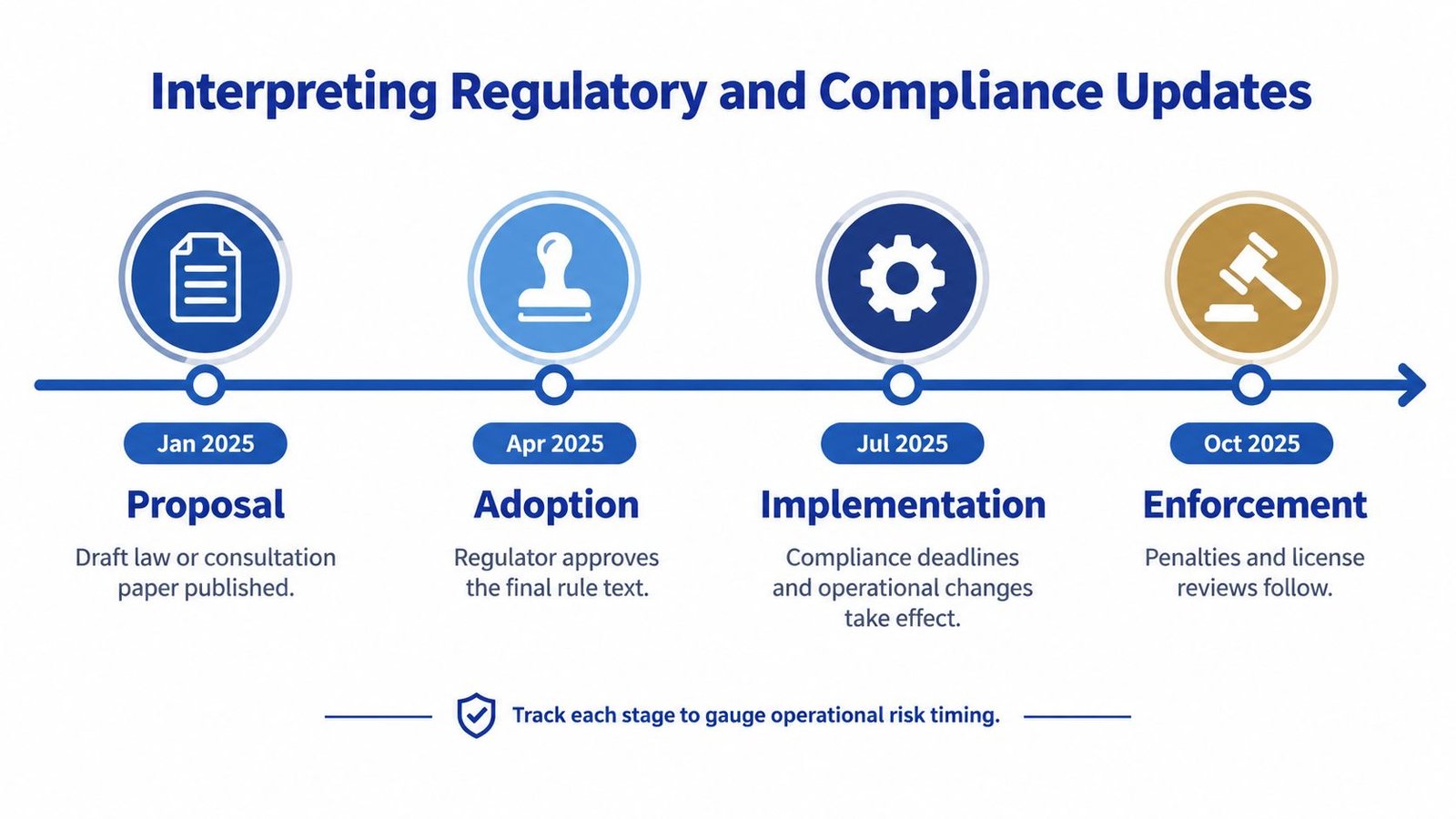
Regulatory headlines often compress several distinct events into a single sentence. A proposal isn't an adopted rule. An adopted rule may not yet be effective. An effective rule may still depend on guidance, technical standards, or enforcement practice. Operators that fail to separate those stages can either spend too early or react too late.
The first task is to establish the legal status and operational clock.
A four-stage reading method
Locate the proposal. Identify the draft law, consultation, bill, or regulatory paper. At this stage, the commercial impact remains uncertain, but the document can reveal the direction of travel and the provisions most likely to affect product design or market access.
Confirm adoption. Check the final rule text, commencement order, or regulator decision. Compare it with the proposal rather than relying on a summary. Wording changes can alter the obligation, affected products, exemptions, or implementation period.
Map implementation. Translate the effective date into workstreams for legal, compliance, product, engineering, payments, marketing, and customer support. The question isn't merely whether a rule exists. It's whether systems and teams can demonstrate compliance by the required date.
Monitor enforcement. Track sanctions, licence reviews, regulator guidance, and supervisory statements. Enforcement shows how authorities interpret ambiguous provisions and which failures they consider material.
Ireland provides a clear example of why dates matter. The Irish Statute Book commencement order states that multiple provisions of the Gambling Regulation Act 2024 began coming into force on 5 February 2026. That date marks a transition from legislative preparation to an operating regulatory framework, affecting operators, suppliers, and compliance teams serving the Irish market.
The licensing cycle also has direct planning consequences. Under the Irish Gambling Licensing Regulations 2026, a business-to-consumer gambling licence has a three-year term from its date of issue. That fact should enter renewal calendars, market-entry models, legal budgets, and investment committee materials.
Distinguishing administrative from structural change
A fee amendment may require budget revisions without changing the product. A licence condition, deposit control, game-speed requirement, or advertising restriction can require technical and commercial redesign. The 2026 European regulatory analysis from iGaming Business described tighter rules including Germany's five-second spin delay and a €1,000 monthly cross-operator deposit limit across 30 European jurisdictions.
The correct response is an impact matrix. Each rule should be assessed against customer journeys, game mechanics, payment flows, promotional design, reporting, data retention, and responsible gambling controls. Legal interpretation remains important, but the initial triage should be operational, not purely doctrinal.
For a jurisdiction-specific example of how compliance changes can affect market planning, teams can review these PAGCOR regulatory updates for 2026. The purpose of such monitoring isn't to collect legal summaries. It's to identify the earliest point at which a headline should become a funded project.
Analyzing Market Data and Financial Performance
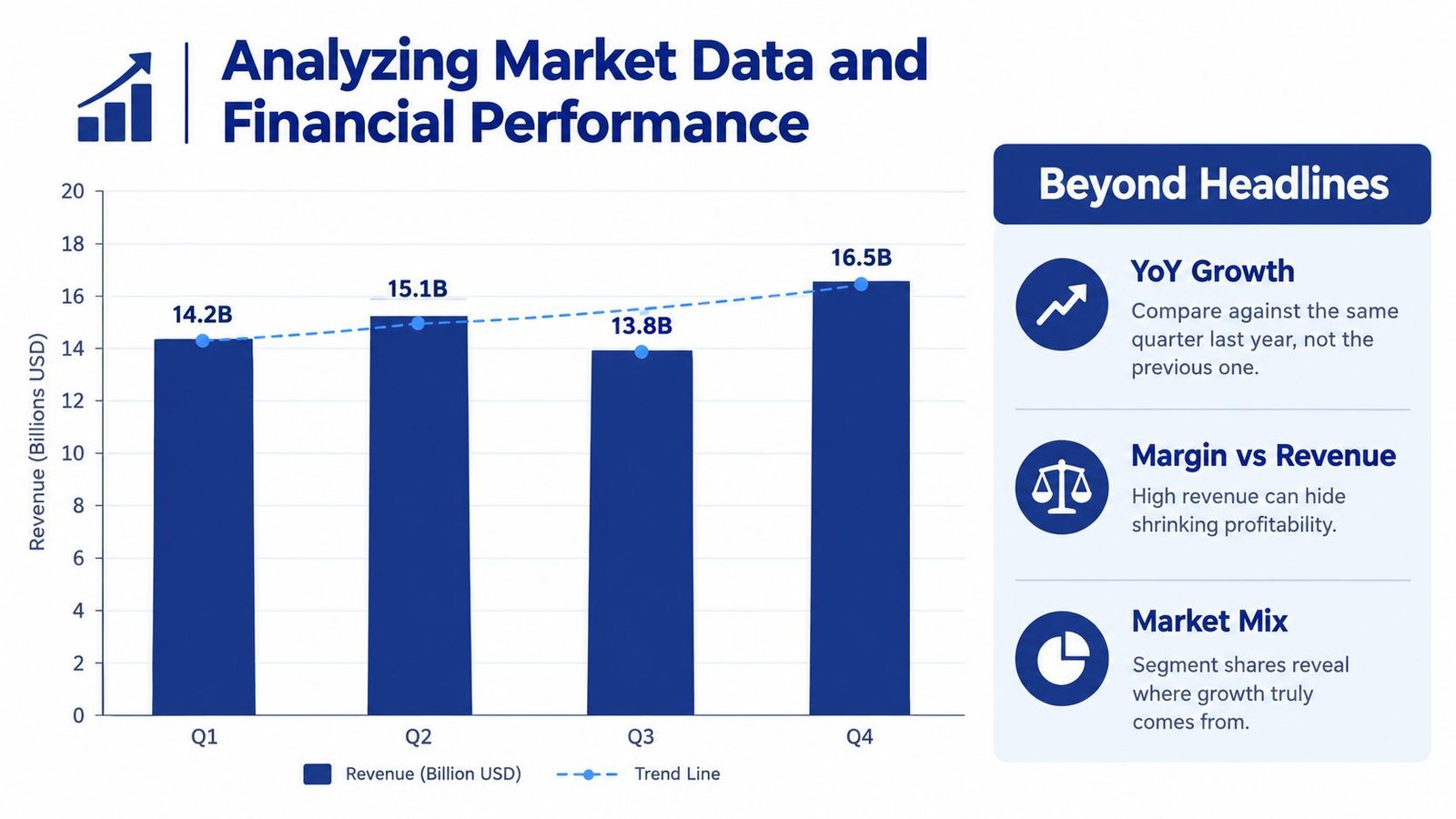
Market growth can conceal a weakening customer base. Gambling News' industry roundup cited Gallup data showing that 45% of U.S. adults gambled in 2026, compared with 64% in 2016, while forecasts still project global sports betting revenue growth from about USD 125.12 billion in 2026 to more than USD 200 billion by 2030 or 2034, depending on the forecast source.
Those figures don't resolve the central question. They sharpen it. If participation declines while revenue expands, growth may be coming from heavier spending among fewer users, changes in product mix, improved monetization, or a combination of these factors. Executives shouldn't treat market expansion as proof of broad-based adoption.
Read the mechanism behind the number
A disciplined analyst separates four measures:
- Handle: The amount wagered, useful for understanding activity but insufficient for judging profitability.
- Hold or win rate: The share retained by the operator before relevant costs. Small changes can materially affect results in high-volume businesses.
- Gross gaming revenue: A closer measure of gaming revenue than handle, but still not equivalent to operating profit.
- Acquisition and retention cost: The commercial spend required to generate and preserve activity.
The distinction is visible in the U.S. sportsbook market. By the first quarter of 2026, operators had processed more than USD 40.47 billion in handle and generated USD 3.82 billion in gross gaming revenue, according to Responsible Gambling's U.S. market statistics. At that scale, changes in hold, promotional efficiency, tax liability, or acquisition spend can materially affect absolute earnings.
Test whether growth is durable
A market report becomes strategically useful when management can answer:
- Is revenue rising because more customers are active, or because existing customers spend more?
- Is the improvement concentrated in one product, jurisdiction, channel, or event type?
- Does higher revenue arrive with stronger margin, or with greater promotional and compliance expense?
- Are new customers retained after incentives decline?
- Does the market support organic demand, or does it depend on increasingly expensive acquisition?
Regional comparison requires the same discipline. A forecast that ranks Europe above North America may reflect different regulatory structures, product definitions, or reporting conventions. The analyst's task is to compare like with like, not to select the most optimistic figure.
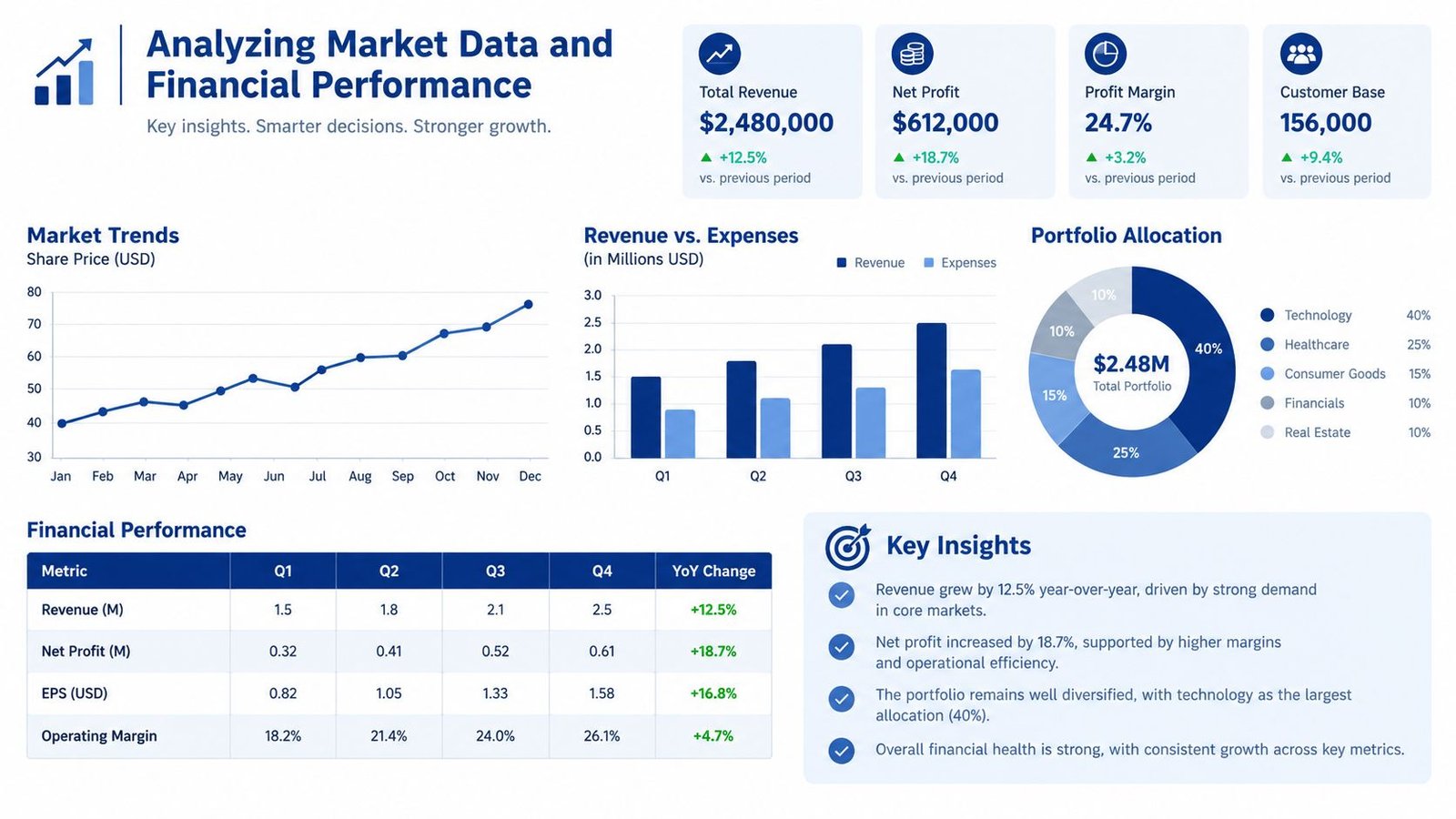
Customer acquisition deserves its own operating view. A user acquisition cost analysis can help teams connect media spend, bonuses, affiliate fees, and conversion performance to cohort economics. The key conclusion is uncomfortable but valuable: a larger market can still become less attractive for undisciplined operators if participation narrows and the cost of reaching valuable customers rises.
Tracking Technology and Product Innovations
Technology headlines often emphasize visible features, but competitive advantage usually sits deeper in the stack. A new live casino table, crash game, peer-to-peer format, or personalization layer matters only when it changes customer experience, operating efficiency, compliance capability, or distribution reach.
Product leaders should therefore read supplier announcements as evidence of infrastructure direction. The relevant questions concern integration effort, data control, scalability, certification, reporting, payment compatibility, and the ability to deploy across regulated jurisdictions.
Separate launch activity from platform change
A game launch may expand content breadth without altering the operator's core economics. A platform migration can affect wallet architecture, identity verification, risk controls, bonus management, analytics, and reporting across the business. Those developments deserve different levels of executive attention.
A practical assessment can rank a technology announcement by:
- Operational dependency: Does the product require a new platform, data layer, payment rail, or studio workflow?
- Regulatory surface: Does it change how the operator records bets, verifies customers, manages limits, or reports activity?
- Distribution advantage: Is the supplier offering exclusive content, superior integration, or access to a new market?
- Economic effect: Could the change improve conversion, retention, content utilization, or infrastructure efficiency?
- Reversibility: Can the operator switch vendors without losing customer data or disrupting the wallet?
Live casino illustrates why presentation and infrastructure must be assessed together. A review of live dealer casino games may focus on tables and formats, but an operator's technology decision also involves studio capacity, streaming reliability, latency, localization, game integrity, and regulatory records.
Read M&A through capabilities
Acquisitions and strategic investments should be analyzed as capability purchases, not merely brand transactions. A buyer may be seeking a proprietary risk engine, a payments relationship, a game portfolio, a distribution network, or engineering talent. The announcement becomes more informative when those assets are mapped against the buyer's existing gaps.
AI claims require the same restraint. Personalization can support merchandising and segmentation, but it also raises questions about explainability, responsible gambling controls, data governance, and regulatory scrutiny. No feature should be treated as strategically valuable until the business can identify its data inputs, decision rights, measurable commercial purpose, and control environment.
Technology news deserves executive attention when it changes the cost, speed, control, or regulatory reliability of delivering gambling products.
That filter protects product teams from chasing novelty. It also helps procurement distinguish a genuine platform shift from a marketing message attached to a familiar capability.
Evaluating Sources for Credible iGaming Intelligence
Reliable intelligence begins with source hierarchy. A regulator's published order, a government legislation database, or a public company filing carries a different evidentiary weight from an anonymous market rumour or a supplier's promotional statement. Secondary journalism remains valuable because it adds context and speed, but it should rarely be the final authority for a licensing, financial, or legal conclusion.
The source should match the decision.
| Source Type | Reliability | Best Use Case |
|---|---|---|
| Official regulator decision or government legislation database | Highest for legal status and effective dates | Confirming rules, licences, commencement, fees, and enforcement |
| SEC filing or other public company filing | High for disclosed corporate and financial information | Verifying revenue, transactions, material risks, and management disclosures |
| Audited results and investor materials | High for company-reported performance | Tracking segment results, strategy, guidance, and capital allocation |
| Established trade publication | Useful for speed and sector context | Identifying emerging developments and locating primary documents |
| Independent analyst or specialist newsletter | Variable, often valuable for interpretation | Testing scenarios, contrarian views, and market structure hypotheses |
| Operator, supplier, or affiliate announcement | Reliable for the stated announcement, limited for broader conclusions | Confirming launches, partnerships, product positioning, and stated intentions |
| Anonymous social post or unattributed market rumour | Low until independently verified | Generating a lead, never closing a decision |
Build a verification chain
A strong workflow captures the original document, publication date, jurisdiction, affected entity, and effective date. The analyst then compares the primary material with the news report and records any difference in wording or interpretation.
This process is particularly important for M&A rumours and licensing claims. A company may announce an intended transaction before completion. A regulator may approve an application subject to conditions. An operator may describe market entry in promotional language even though the legal structure is a supplier or white-label relationship.
Source diversity also matters. A feed dominated by bullish operator commentary can hide margin pressure. A regulator-only feed can reveal risk without explaining competitive consequences. A balanced intelligence set should include commercial announcements, legal documents, company filings, market data, and critical analysis.
Casino news coverage can serve as one input into that wider system, but it shouldn't replace primary verification. The strongest analysts don't ask whether a source is generally “good.” They ask whether the source is appropriate for the specific claim.
Guard against echo chambers
Teams should actively search for disconfirming evidence. If an article presents market growth, analysts should inspect participation and margin indicators. If a supplier announces innovation, technology leaders should examine deployment constraints. If a regulator announces reform, compliance officers should read the final legal text and implementation guidance.
The result is slower than headline consumption, but faster than correcting a strategic decision based on an unverified assumption.
Turning Industry News into Strategic Business Decisions
News creates value only when it changes a decision, a risk assessment, or a resource allocation. A practical operating model turns each material item into a short record containing the event, evidence, exposure, owner, deadline, and recommended action.
The process can run across daily monitoring and quarterly planning without turning every headline into a project.
A decision workflow
Capture the event. Record the original document, publication date, jurisdiction, product category, and affected entities. Separate confirmed facts from interpretation.
Classify the impact. Mark the item as commercial, regulatory, financial, technological, reputational, or operational. Some events fit several categories, but one primary classification improves accountability.
Assign an owner. Compliance should own rule interpretation. Product should assess customer and game changes. Finance should model tax, fees, and margin effects. Commercial teams should review acquisition, retention, and partnership consequences.
Set a trigger. A proposed rule may trigger monitoring. An adopted rule may trigger legal review. An effective rule should trigger implementation tracking. An enforcement action may require an executive risk review.
Model scenarios. Management should test the base case, an adverse interpretation, and a competitive response. The model needn't pretend to predict the future. Its purpose is to expose dependencies before the deadline arrives.
Feed the conclusion into planning. The final output should appear in the risk register, quarterly plan, product roadmap, market-entry schedule, or capital allocation discussion.
The UK Gambling Fees Regulations 2026 show how a seemingly administrative development can affect operating economics. The regulations were made on 14 July 2026, laid before Parliament on 16 July 2026, and came into force on 1 October 2026. Fee changes can influence compliance budgets, launch timing, and the cost model for operating across England, Wales, and Scotland.
Tax reporting also belongs in the same workflow. The IRS 2026 gambling reporting guidance set the reporting threshold for winnings from bingo, keno, and slot machine play at USD 2,000 for calendar year 2026, with inflation adjustments in subsequent years. Operators and payment teams need to translate that threshold into reporting logic, customer communications, reconciliation, and control testing.
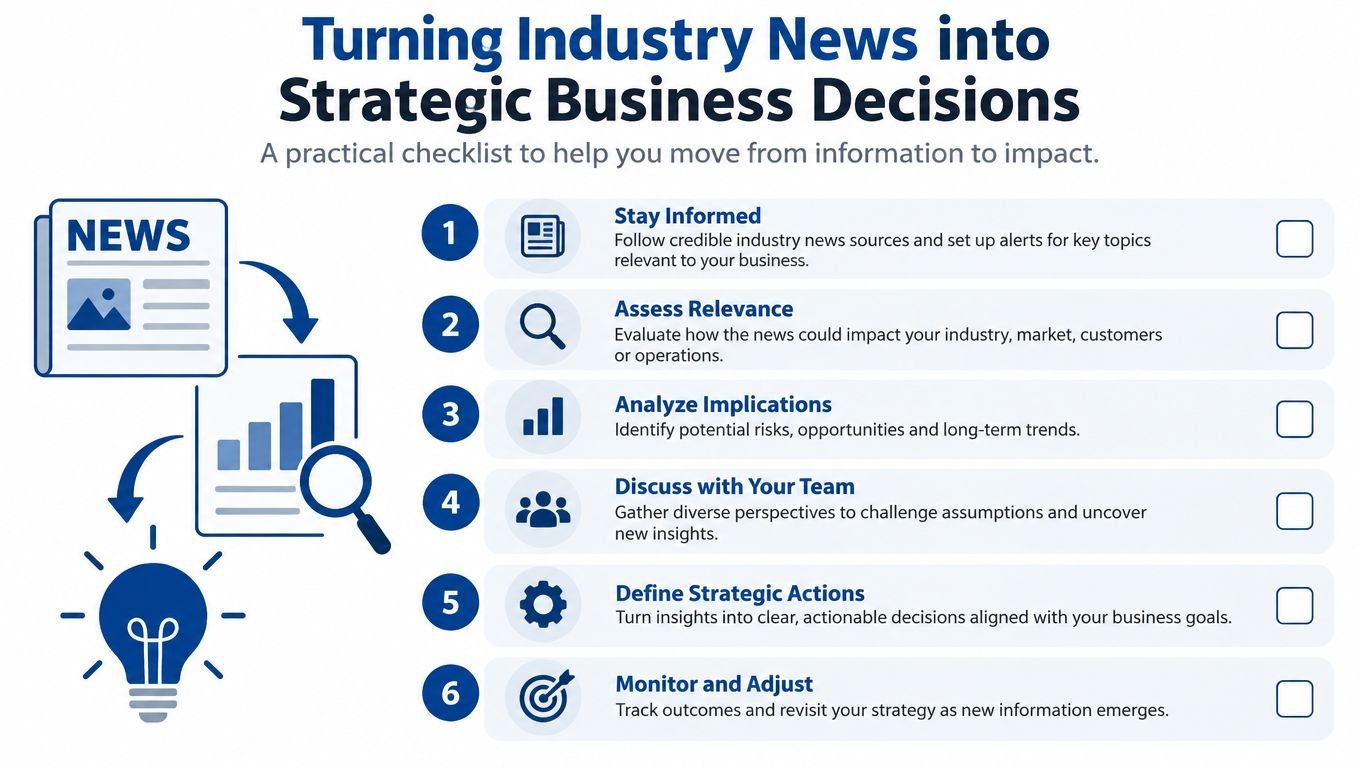
Executive test: If a headline doesn't have an owner, an evidence record, and a decision trigger, it's information, not intelligence.
Cost discipline should be part of the response. A review of cost reduction strategies can help teams assess whether compliance, technology, and market-entry changes should be funded through reprioritization rather than uncontrolled expansion. The best gambling industry news operation doesn't maximize reading volume. It identifies the few developments capable of changing the company's next decision, then moves those developments into accountable execution.
Top 1 Rank gives operators, suppliers, affiliates, investors, regulators, and gaming professionals a focused way to monitor global iGaming news, regulation, market performance, technology, and competitive strategy. Explore the latest analysis at Top 1 Rank and turn major industry developments into a more disciplined intelligence workflow.





Join thousands of gaming professionals receiving the latest iGaming news, regulatory updates, and market insights.
