

You're at a table with a friend, the dealer has already turned over two cards, and everyone's leaning in for the third. That's the whole tension of In Between, a game that looks simple because it is simple, but still has enough rule wrinkles to trip up first-timers. If you've ever wondered which cards matter, what the bet is judging, or why one table pays differently from another, the in between card game rules are easier to learn than you might think.
Table of Contents
- What In Between Actually Is and Why Players Love It
- Setup, Card Values, and the Dealing Sequence
- Betting Mechanics, Wins, Losses, and Payouts
- Common Rule Variations You Will Actually Encounter
- Basic Strategy and Reading the Exposed Cards
- Etiquette, House Rules, and Playing Online
- Quick Reference, Common Mistakes, and Next Steps
What In Between Actually Is and Why Players Love It
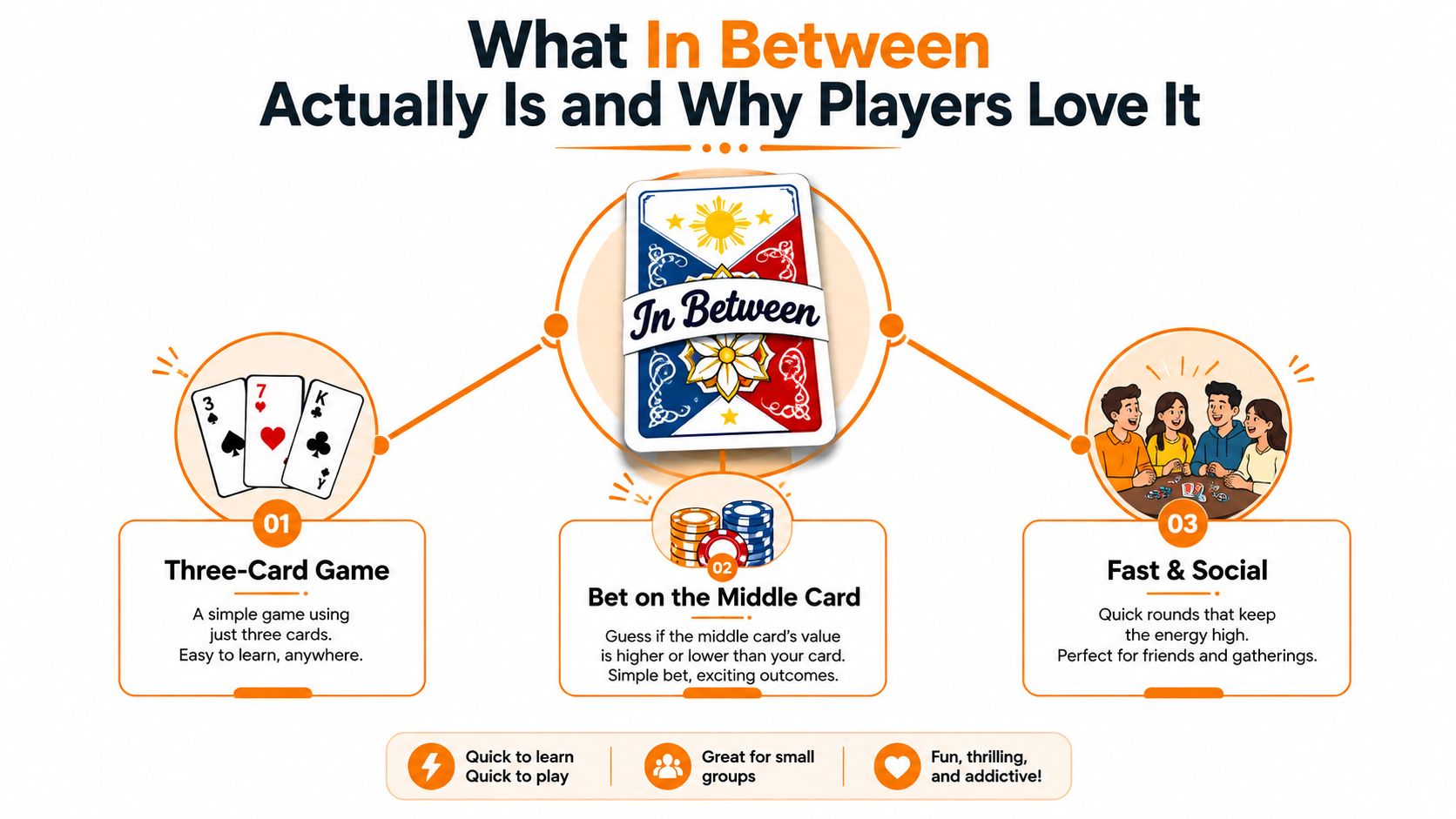
A lot of Filipino players meet In Between the same way they meet most card favourites, through a casual table, a phone screen, or a friend who says, “It's easy, just watch.” The game earns that reputation because it strips card play down to one question, whether a third card lands strictly between two exposed ranks in a single 52-card deck. Suits don't matter, only rank does, which is why the game feels immediate even to someone who barely plays cards. For a quick comparison with another straightforward rank-based game, see this Pusoy guide in English.
The whole game hangs on rank, not suits
Think of In Between as a rank comparison, not a hand-building game. The dealer shows one card, the player sees another, and the third card decides everything. If that third card falls between the first two ranks, the bet wins. If it matches either card exactly, it loses, and in casino-style rules that match can cost double the bet, which makes the game sharper than it first looks.
That simplicity is a big part of its appeal. You don't need to memorise long combinations, flush rules, or complicated side pots. You just read the gap between the two cards and decide whether that gap is worth betting on.
Why the format fits short sessions
The game also works well in short sessions because each hand resolves quickly. That makes it popular in casual circles and easy to translate into online play, where players want fast decisions and clear outcomes. The pace is one reason the game sits comfortably beside other easy-to-learn titles such as Lucky 9, especially for players who like games with simple flow and visible card action.
Practical rule: if you can tell at a glance which two ranks are showing, you already understand the core of the game.
That's the reason people keep coming back to it. In Between is not about outsmarting the table with hidden information. It's about reading a visible gap, making a clean bet, and living with the result.
Setup, Card Values, and the Dealing Sequence
A clean table setup helps players read In Between fast. The game uses a single 52-card deck, and the casino-style rule set treats Aces high, with rank order following the usual poker-style sequence described in the rule sources. Suits do not matter at all, so the Ace of hearts and the Ace of spades carry the same value here. What matters is simple, whether the third card's rank falls between the two exposed ranks.
How the Deal Unfolds
The sequence is straightforward:
- The dealer places the first card face up.
- The player places or receives the second card face up, depending on the table format.
- The third card comes off the deck and resolves the bet.
That third card is the whole reveal. The player is not building a poker hand, and the game is not asking for a suit pattern. The only question is whether the middle card lands between the two shown ranks.
A simple example clears up the rank order. If the exposed cards are the Ace of hearts and the 7 of spades, the table is really checking whether the third card sits between Ace high and 7 under the active house rule set. Because suits are ignored, the visual look of the cards does not change the result. Only the ranks do.
Stakes and Table Limits
Every table still needs betting limits, even in a game this fast. Minimum and maximum stakes define how much a player can risk on a single hand, and they matter because the wager is made before the third card appears. That means the player has to choose a stake from the visible gap, not after the outcome is known.
Clean table habit: confirm the limit before the first deal, because a good read still fails if the bet sits outside the house range.
The timing matters here. The player watches the first two cards, reads the spread, then chooses a stake. For a similar example of a simple card game setup, the Lucky 9 rules page shows how a clear structure makes the action easy to follow from the start.
Betting Mechanics, Wins, Losses, and Payouts
A hand in In Between is simple at the surface, but the payout rules change the feel of each wager. You are backing the chance that the third card lands between the two exposed ranks, and the table's version of the game decides how that bet pays. In the common casino-style rule set, a clean in-between win pays 2 to 1, while a hand that also hits the pocket pair condition pays 4 to 1. If the third card matches one of the exposed ranks exactly, the player loses double the bet in that rule set. The In Between reference guide lays out the probability structure behind those outcomes.
A useful way to read the hand is to separate the result from the table rule. The result can be a normal win, a loss, or a special payout tied to pairs, but the exact treatment depends on the house. That is why two tables can look the same and still handle the same turn very differently.
The three outcomes that matter
Every hand ends in one of three basic ways.
- In-between win: the third card lands strictly between the first two ranks.
- Exact match loss: the third card equals one of the exposed ranks, and the casino-style rule set treats that as a double loss.
- Outside the range: the third card falls above or below the interval, so the main bet loses.
The pocket pair side condition is the wrinkle people forget. In some versions, if the exposed cards form a pair, the game resolves immediately with a two-times minimum bet payout under one rule summary. That makes pairs feel special, but they are table-dependent, so you cannot assume every game handles them the same way.
A pair can feel like a free bonus in one room and a dead hand in another. That is why players who move between live tables and online tables should ask about pair payouts before the first wager, not after the cards are already out.
Two hands, two very different feelings
A narrow hand like 4-5-6 is basically dead on arrival under the standard strict-between logic, because there is no room for a card to land between adjacent ranks. A wide hand like Ace-King-Queen has a much better shape for the player because the interval is broad enough to create a strong in-between opportunity. That is why the game feels so swingy, even when the rules are short.
| Hand Outcome | Condition | Standard Payout |
|---|---|---|
| In-between win | Third card falls strictly between the two exposed ranks | 2 to 1 |
| In-between plus pocket pair | The in-between condition and pocket pair condition both land on the same hand | 4 to 1 |
| Exact match loss | Third card matches one of the exposed ranks | Double loss in the casino-style rule set |
The player's real job is not to guess the next card, it is to judge whether the exposed ranks leave enough room to justify the stake.
For players comparing these payouts with other simple betting games, the color game probability guide gives a helpful contrast in how risk and reward are framed.
Common Rule Variations You Will Actually Encounter
Most confusion starts here. A lot of guides describe the basic bet, then skip the parts that cause arguments at real tables. The biggest differences show up in how tables treat pairs, consecutive cards, and exact-match losses. If you want the in between card game rules to feel predictable, you have to know which version the table is using before anyone starts betting.
Where the casino-style version tightens the rules
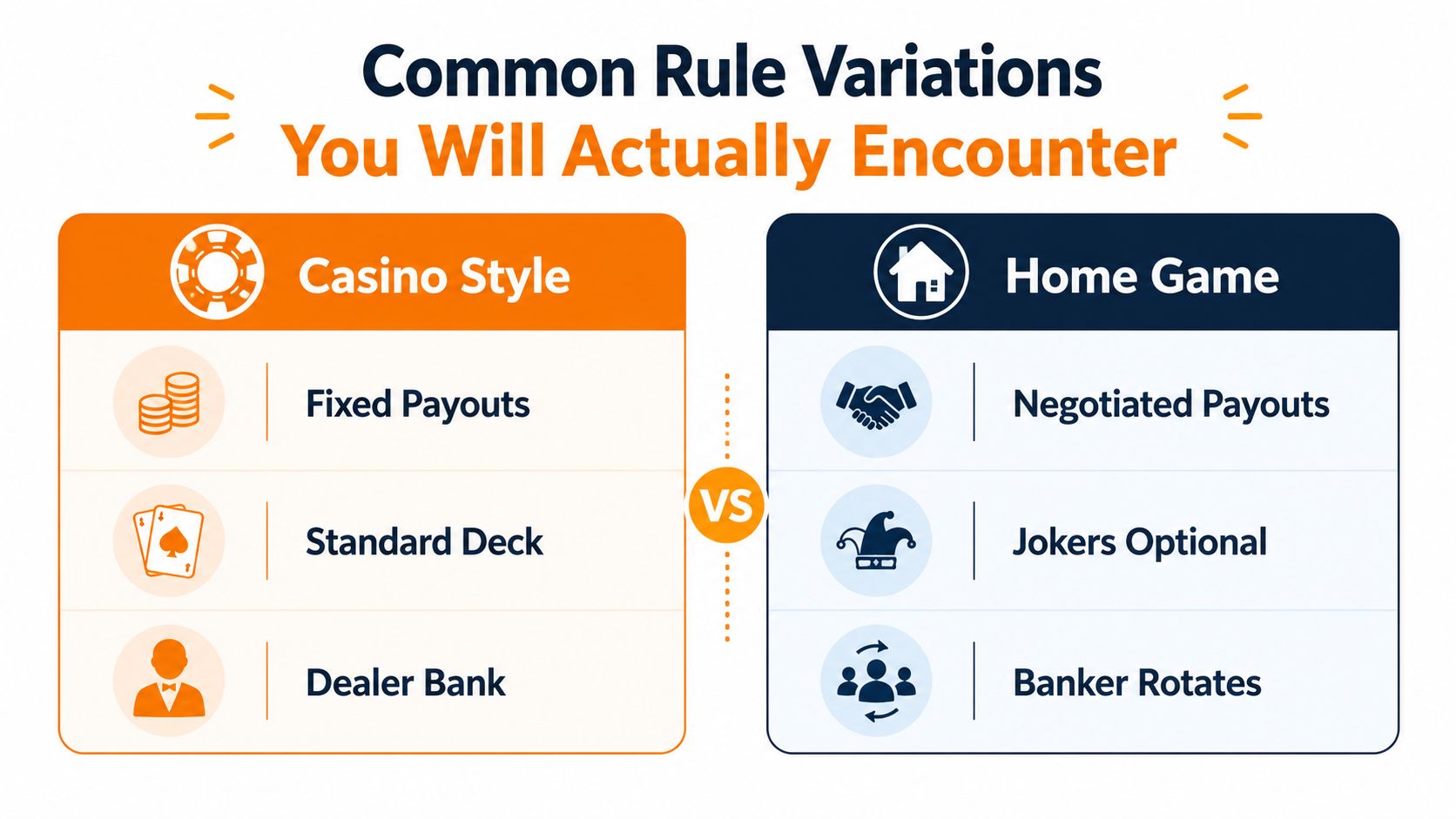
In the casino-style rule set, the game is rigid. The deck is standard, the dealer banks the action, and the rules around exact matches are harsher because a match can cost double the bet. That changes the feel of the hand, since an exposed pair or a close gap can mean very different things depending on the house.
Where home games drift
Home games usually drift because players remember the basic idea but not the fine print. One table may pay on exposed pairs right away, another may ignore them, and a third may treat consecutive cards as an immediate loss with no third card dealt. That's why house-rule clarity matters more than people expect. If nobody writes it down, the rule set changes every time somebody “remembers” it differently.
The version I'd recommend for consistency
For Filipino groups playing both live and online, the cleanest approach is to agree on one house rule card before the first hand:
- Use one 52-card deck.
- Treat suits as irrelevant.
- Make Aces high only.
- Resolve exact matches as a double loss.
- Treat consecutive exposed cards as an automatic loss.
- Decide in advance whether pairs pay immediately or only through the normal in-between resolution.
That set keeps the game consistent across tables and makes it easier to compare live and digital play. For a related look at how Filipino players often move between card variants, the Tongits rules page shows why rule clarity matters in shared-table games.
If the table can't explain the rule in one sentence, stop and write it down before the first bet.
Basic Strategy and Reading the Exposed Cards
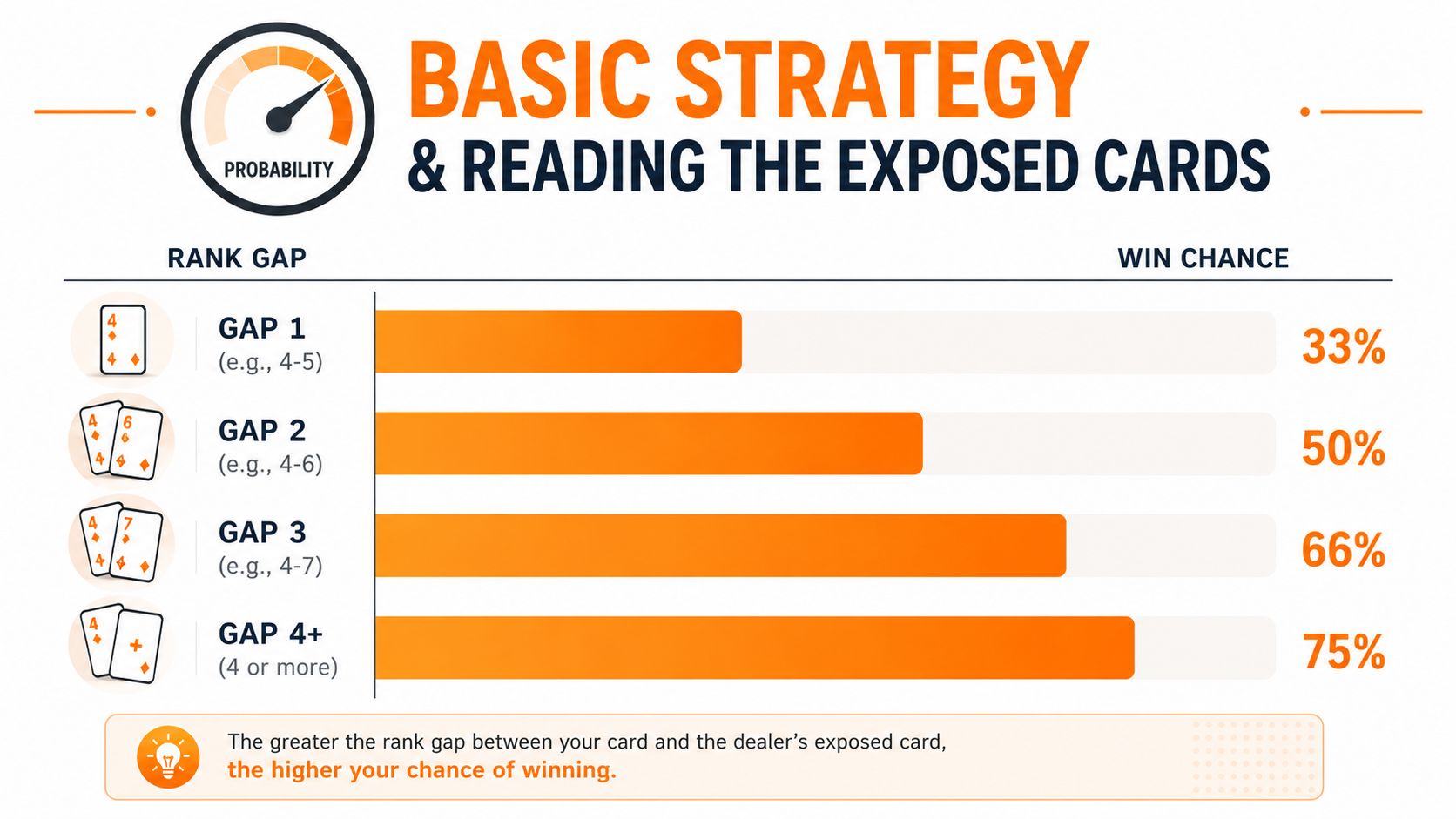
A good In Between hand starts with the visible gap, then the bet follows. If the first exposed cards are Ace–King, the board gives the player a very strong chance to land in between. A narrower spread such as Ace–Queen or Ace–Jack leaves less room to work with, and the matching-card risk stays part of the picture in the probability guide linked earlier. That is why the ranks on the table matter more than gut feel, and why a small gap should usually make you cautious rather than eager.
Bigger gaps justify more confidence
A wider rank gap usually gives you more room to land in between. It is a bit like stepping stones across a stream, the stones farther apart are still a crossing, but you can see at a glance which path is safer. That does not mean the biggest stake belongs on every wide spread, because bankroll size still matters, but it does mean narrow gaps deserve more restraint. Some strategy discussions use a simple filter of only betting bigger when there are seven or more full ranks between the exposed cards, and that works better as a personal guide than as a fixed rule for every table.
Don't chase the last hand
The common mistake is emotional, not mathematical. A player loses a hand, feels the sting, then raises the next bet just to win back what was lost. The cards did not change because of that feeling, but the betting pattern did. Once a player starts reacting to the last result instead of reading the next gap, the session turns into a test of impulse control, and that is where money tends to slip away.
For Filipino players who want another clear example of disciplined card play, the Tongits how-to-play guide is a useful comparison. Different card games ask for different tactics, but they all reward players who stay calm and follow the rule set carefully.
My practical rule: if the exposed gap does not give you a clear reason to size up, stay small and keep the session steady.
A steady approach usually works best. Read the ranks, choose the stake, and do not build a bigger bet out of frustration or hope alone. That habit keeps the table friendly and makes the decisions easier to repeat, whether the game is live or online.
Etiquette, House Rules, and Playing Online
Good table manners save more arguments than people think. At a live game, declare your bet clearly, keep the cards visible, and ask about the rule set before the shoe starts moving. If you're playing in a friendly home setup, write the agreed rules down or save a screenshot so nobody has to rely on memory halfway through the session.
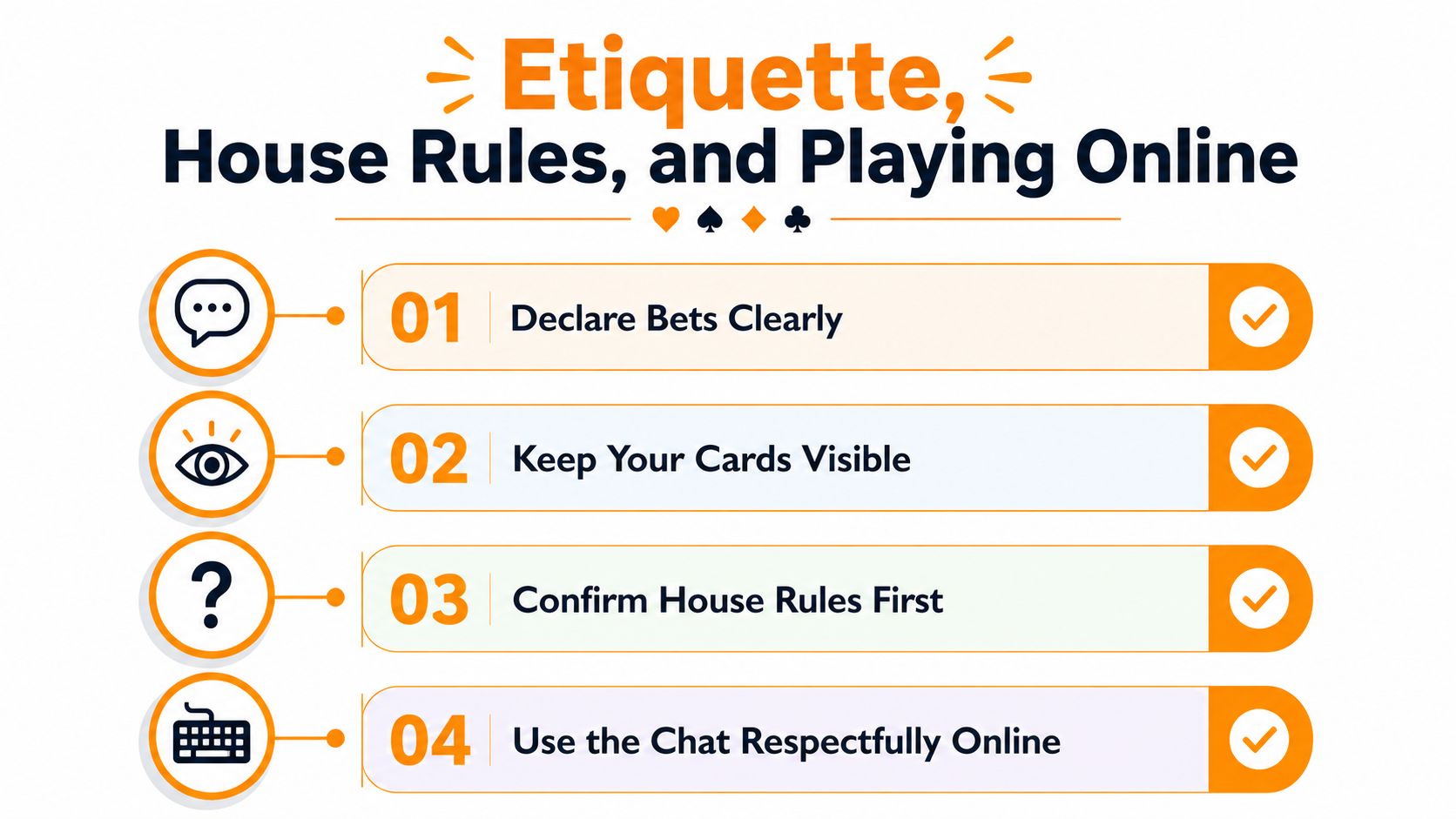
The live-table habits that prevent friction
Keep it simple:
- Declare bets clearly so the dealer and the table hear the stake.
- Keep your cards visible so there's no confusion about what ranks are showing.
- Confirm house rules first before the first hand.
- Stay calm when the table disagrees, then settle the rule question before the next deal.
These habits matter more when the group plays regularly, because memory gets slippery and “how we usually do it” becomes a moving target.
What online players should check
Online play solves one problem, the missing physical deck, but creates another, inconsistent rule displays. Read the in-game help screen, check the payout table, and confirm whether the platform shows the match penalty, the pair handling, and the exact deck format. On a PAGCOR-licensed platform, players should also look for clear game information and responsible-play tools, because those details make the experience easier to follow and easier to trust.
The digital format suits players who like fast round-by-round decisions, but it also rewards attention. If the rule variant is unclear, don't assume the lobby uses the same version as last week's table. A few seconds of checking can save a whole session of disputes.
Quick Reference, Common Mistakes, and Next Steps
In Between runs on a single 52-card deck, with Aces high in the casino-style set. The third card wins only if it falls strictly between the first two ranks, exact matches can cost double, and the most common rule twist is how tables treat pairs and consecutive cards. The biggest beginner mistake is betting harder on a narrow gap because the last hand failed, which is emotion talking, not the table.
Write one rule set down, play a short low-stakes session, and learn the flow before you raise anything. If you want more card-game explainers and practical updates, the broader Insta Play content hub is a useful place to keep reading.
If you want a trusted place to keep learning card games in a clean, player-friendly format, visit Insta Play Online Casino. You'll find more guides like this one, along with a local platform built for Filipino players who want clear information before they sit down to play.





Join thousands of gaming professionals receiving the latest iGaming news, regulatory updates, and market insights.
