

In online casino customer support, 90% of iGaming customers expect a live-chat response within five minutes, while live chat is the preferred contact channel for 67% of bettors, according to iGaming customer-experience research. Those expectations have changed the commercial meaning of support. A delayed withdrawal explanation, unresolved KYC request, or vague bonus response can influence whether a player remains active, files a complaint, or questions the operator's legitimacy.
For players, the practical issue is knowing which channel to use, what evidence to preserve, and when a failed support interaction should move into a formal complaint. For operators, the challenge is more demanding. Support must combine speed, documentation, responsible-gambling safeguards, payment expertise, and a credible escalation route.
Table of Contents
- Why Online Casino Customer Support Matters More Than Operators Admit
- Online Casino Customer Support Channels and Response Expectations
- How to Prepare and Document a Support Case
- Escalating Unresolved Complaints and Using Regulator Guidance
- Trust Signals and Red Flags for Licensed Online Casinos
- Practical Scripts and Tips for Contacting Insta Play Support
- When AI Support Helps and When It Hurts Player Trust
Why Online Casino Customer Support Matters More Than Operators Admit
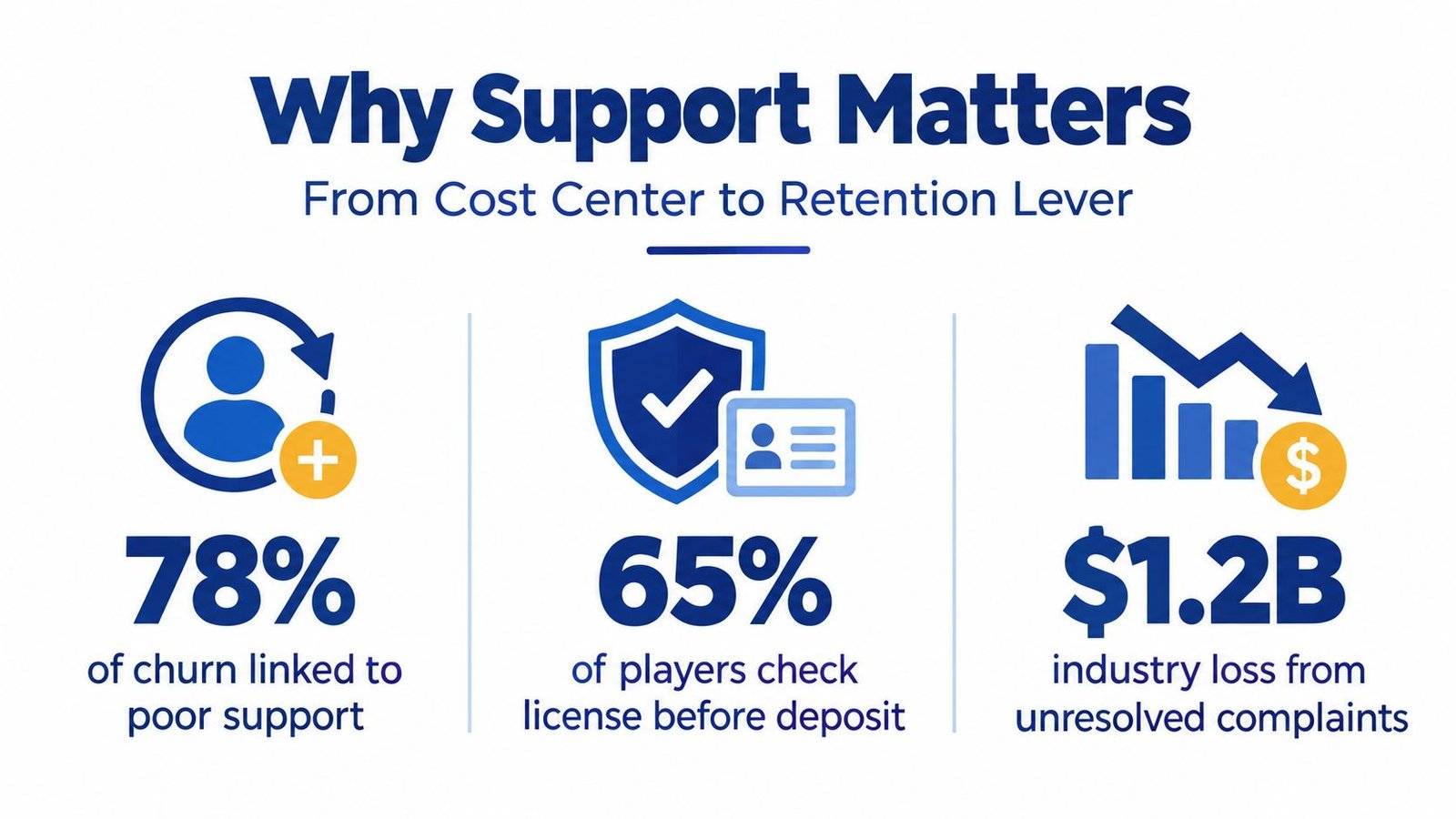
A 2026 survey of sportsbook and iGaming operators found a clear mismatch between budget decisions and commercial priorities. Only 5% named customer support as their top budget priority, while 35% ranked it as their lowest, according to Comm100's iGaming support survey. The same survey found that 70% viewed fast issue resolution as a major contributor to retention, and 65% identified personalized care for high-value players.
That gap matters because support is the point where an operator's promises meet account reality. Marketing may secure a registration, but the response to a failed deposit, delayed withdrawal, identity check, or bonus dispute often determines whether the player continues to trust the platform. Support therefore affects retention, complaint volume, payment risk, and the quality of the operator's compliance record.
Where support creates operational value
The most sensitive cases involve money, identity, or the interpretation of contractual terms:
- Withdrawals: Players need a specific explanation when a payment is pending, rejected, or subject to further verification.
- KYC checks: Agents must identify the required documents clearly, while avoiding contradictory instructions or disclosures about internal controls.
- Deposit failures: Support must separate an operator-side fault from an issue involving a bank, wallet, or payment provider.
- Bonus disputes: Terms should be applied consistently, with the decision and relevant conditions explained in plain language.
- VIP concerns: High-value players often need continuity and context rather than a generic script.
Fast handling has limited value if the answer is inaccurate. A mistaken explanation of withdrawal conditions or responsible-gambling options can create a second complaint and leave compliance staff to correct the record later.
Support quality also affects escalation planning. Players in regulated markets should know which entity holds the licence, which jurisdiction governs the account, and whether an unresolved complaint can be referred to an approved dispute route or regulator. That information is particularly relevant in markets such as the Philippines, where a support failure may become a compliance and consumer-risk issue rather than a routine service delay. Operators should give agents the authority and documentation needed to identify that route accurately.
Budget behavior reflects a partial change in priorities. The Comm100 survey found that only 10% of operators would cut support spending first during a budget squeeze, compared with 40% who would reduce paid acquisition. Support may not lead the planning agenda, but operators increasingly protect it as a revenue and risk-control function.
Operational rule: Measure a support desk by more than closed chats. Its record should show whether the operator protects funds, explains controls, documents decisions, and preserves trust under pressure.
Online Casino Customer Support Channels and Response Expectations
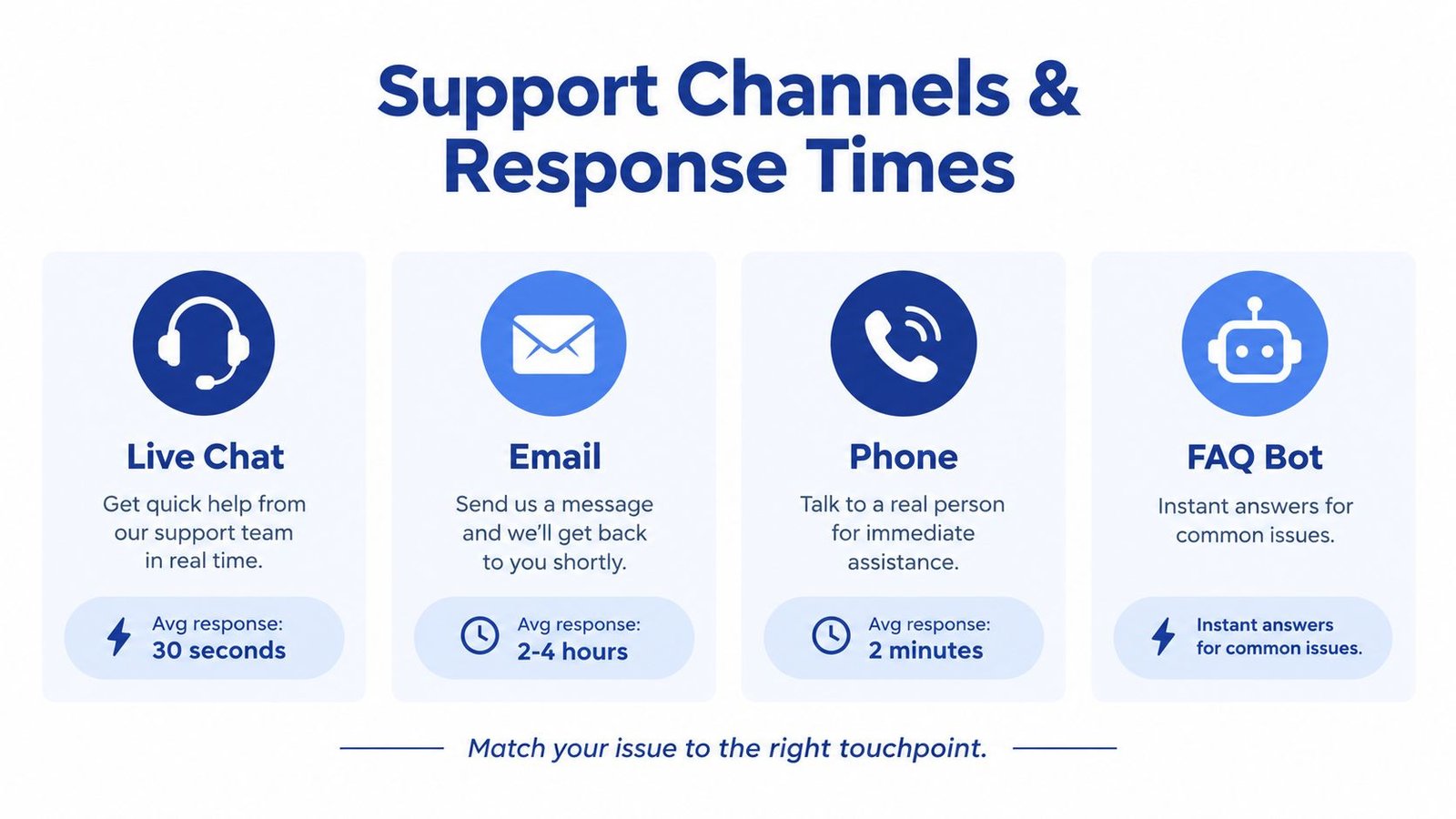
Each channel solves a different type of problem. Live chat is generally suited to time-sensitive questions, email creates a stronger documentary record, phone support can help with complex explanations, and social channels are best treated as routing points rather than places to disclose account information.
| Channel | Best use | Main limitation |
|---|---|---|
| Live chat | Deposit errors, account access, withdrawal status, urgent clarification | A short interaction may not create a complete evidence trail |
| KYC documents, formal complaints, bonus disputes, transaction records | Responses may take longer and require careful follow-up | |
| Phone | Complex explanations, accessibility needs, sensitive conversations | Verbal promises are difficult to prove without written confirmation |
| Social media | Finding the correct support route or reporting a public service failure | Public channels shouldn't receive personal or financial details |
The benchmark is demanding. Research on iGaming customer experience reports that live chat resolves issues about 40% faster than email in one gambling-industry comparison, with an average of 12 minutes for live chat versus 20 minutes for email. The same source describes live-chat openings at regulated online casinos ranging from under a minute to about 5.77 minutes, depending on the operator.
That range helps separate an ordinary queue from a service breakdown. Players may reasonably expect a near-immediate acknowledgement for an active payment or account-access problem, but the first response isn't the same as final resolution. The agent may still need to obtain records, consult payments staff, or route the case to compliance.
The workload behind fast responses
Support performance also depends on staffing. An iGaming support benchmark from Comm100 reports an average of 1,540 chats per agent per month, an average chat duration of 6 minutes and 12 seconds, and an average wait time of 20.2 seconds. It places iGaming first-response time at 40.6 seconds, compared with a cross-industry average of 44.6 seconds.
Those figures point to a less obvious conclusion. Operators may gain more by managing queue peaks and routing urgent issues correctly than by removing a few seconds from every conversation. Deposits, withdrawals, and account-access requests concentrate urgency, so a technically fast desk can still feel unresponsive if its triage rules place a payment failure behind routine promotional questions.
For Philippines-facing players comparing support options, a PayMaya hotline and support guide can help identify the appropriate route for payment-related concerns. The principle applies across markets: use live chat for immediate orientation, then move to a written channel when the matter requires evidence or formal review.
How to Prepare and Document a Support Case
A well-documented case gives the support agent something actionable. A vague message such as “the withdrawal isn't working” forces the agent to ask for the account, transaction, payment method, timing, and error details before investigation can begin. That exchange creates avoidable repeat contact and can push the case into a slower queue.
Players should prepare the record before opening a ticket:
- Identify the event. Record whether the issue concerns a deposit, withdrawal, verification request, bonus, game interruption, or account restriction.
- Capture the reference. Save the transaction ID, ticket number, payment reference, or the exact wording of the system notification.
- Record timing. Note the date and local time of the transaction, the time the issue appeared, and the time each support contact began.
- Preserve screenshots. Screenshots should show the relevant message, status, or error without exposing a full password, one-time code, or unnecessary payment credentials.
- State the requested outcome. A case should say whether the player wants a status explanation, document review, transaction correction, or formal complaint registration.
Documentation that helps regulated reviews
KYC and payment cases need particular care. A player should follow the operator's secure upload process rather than sending identity documents through an unverified social account. If an agent requests a document that was already submitted, the player can provide the earlier ticket number and ask the operator to confirm whether the file was received, rejected, or awaiting review.
Bonus disputes require a different record. The relevant evidence includes the promotion name, the applicable terms, the opt-in status, the qualifying transaction, and the operator's explanation for refusing or removing the benefit. The strongest complaint doesn't rely on frustration alone. It identifies the precise term in dispute and asks the operator to explain how that term was applied.
Practical rule: A support case should make it possible for a second agent, supervisor, or external reviewer to understand the event without reconstructing the entire conversation.
Players handling a GCash withdrawal issue can consult a Philippines online casino GCash withdrawal guide for context on the payment flow, but the operator's own transaction record remains the primary evidence. Support teams should also provide a ticket reference and distinguish an initial acknowledgement from a substantive resolution.
The same discipline benefits operators. A case-management system should preserve the first player-visible explanation, every handoff, the requested documents, and the reason for any delay. That record allows compliance, payments, and customer-care managers to identify whether the issue resulted from player error, a provider failure, an internal queue, or unclear instructions.
Escalating Unresolved Complaints and Using Regulator Guidance
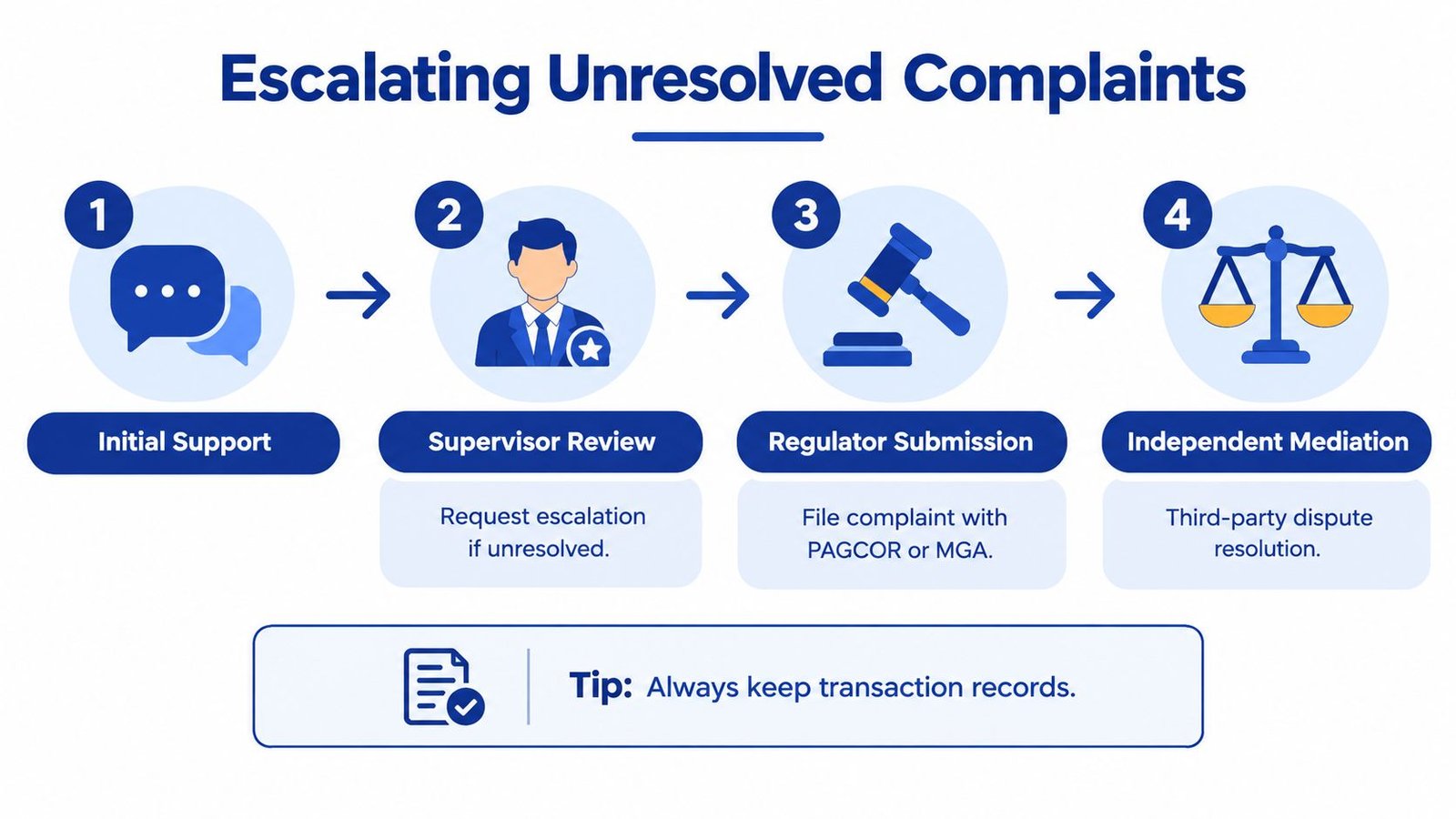
A failed complaint should not force a player to repeat the same account of events across every support channel. Effective escalation follows a controlled sequence. Each stage adds a clearer decision point, stronger ownership, or access to an external review route.
Stage one is initial support. Use the operator's published channel, describe the disputed outcome, and request a ticket or case reference. Live chat can confirm that the issue has been received, while a written record matters more for disputes involving funds, verification, bonus conditions, or account restrictions. The player should also ask what action is pending and which team owns it.
Stage two is supervisor review. Escalation is appropriate when an agent gives a generic response, closes the case without resolving the issue, or provides instructions that conflict with earlier guidance. The request should identify the existing reference, summarise the sequence of decisions, state the point in dispute, and specify the remedy sought. A supervisor should be able to determine whether the case concerns a payment control, a verification decision, a contractual term, or a service failure.
Stage three is external oversight. The available route depends on the operator's licence and the player's jurisdiction. For a Philippines-facing complaint, the player should verify the operator's regulatory representation and consult the PAGCOR complaint and licensing process. A Malta-licensed operator may direct the player to the Malta Gaming Authority or an approved alternative dispute resolution provider. The jurisdiction should be established before a complaint is submitted, because the wrong authority may have no power to review the matter.
What the evidence package should contain
An external reviewer needs a testable account rather than a general claim that support was unhelpful. The submission should contain:
- Account identification: The account email or player reference, with passwords and other sensitive credentials removed.
- Transaction evidence: Payment references, status screens, bank or wallet confirmations, and relevant timestamps.
- Communication history: Ticket numbers, emails, chat transcripts, and the names or identifiers of responding agents.
- Contractual context: The relevant terms, promotion conditions, withdrawal rules, or verification instructions.
- Requested remedy: The precise outcome sought, such as a payment explanation, account review, or correction of an alleged terms application.
New Jersey illustrates how patron protection can be built into the user journey. The New Jersey Division of Gaming Enforcement's responsible-gaming guidance requires online gaming systems to display a help message on login and logoff screens. It also requires patron-protection pages to offer password help, complaint filing routes, terms and conditions, and account and game history.
The National Council on Problem Gambling's Internet Responsible Gambling Standards state that companies should provide live customer service, including phone support and an electronic channel with a live representative. For operators, escalation design therefore forms part of responsible-gambling governance, not only customer service.
Trust Signals and Red Flags for Licensed Online Casinos
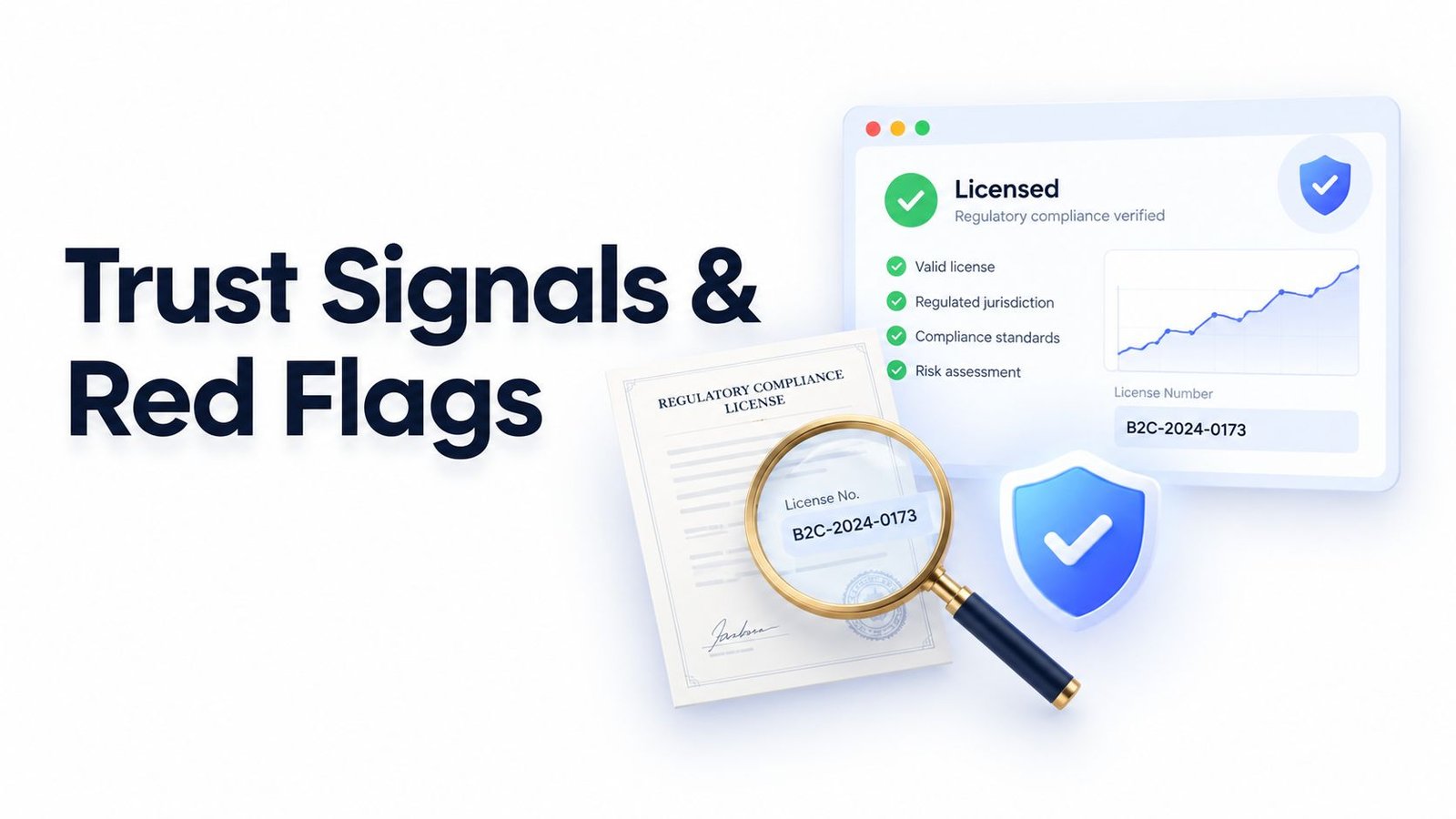
A licensing badge is a starting point, not a complete assessment of support quality. Players and business partners should test whether the operator connects its regulatory identity to observable service practices.
A credible support operation usually makes several details easy to find:
- Licensing information: The operator identifies the relevant authority and presents account or company details consistently across its website.
- Complaint instructions: Players can find a formal complaint route instead of being sent indefinitely between chat agents.
- Human access: Sensitive issues can reach a trained person, especially where responsible gambling, identity, payment, or account restrictions are involved.
- Terms visibility: Withdrawal, bonus, verification, and account rules are available before a dispute occurs.
- Record continuity: A case reference survives a channel change and doesn't disappear when a chat window closes.
The opposite signals deserve attention. A support desk that repeatedly asks for the same information may have weak case ownership. A response that says a payment is “under review” without identifying the next action or relevant record leaves the player unable to distinguish a normal control from an unmanaged delay. A chatbot that blocks every route to a human creates a particular risk when the matter involves a withdrawal, KYC decision, bonus dispute, or gambling-harm concern.
Behavior matters more than presentation
Players should also distinguish slow resolution from dishonest conduct. A regulated operator may need time to complete verification or investigate a payment. The stronger signal is whether the operator explains what is happening, identifies the responsible team, preserves the case history, and provides a credible route for review.
Operators can apply the same test internally. Mystery-shopping support with routine questions won't reveal whether a desk handles high-risk cases correctly. A more useful quality review follows a simulated withdrawal issue, identity mismatch, responsible-gambling request, and complaint escalation from first contact to final record.
For players researching a Philippines-facing platform, an explanation of phishing scams and avoidance measures is relevant to support verification. Legitimate support should never require a player to disclose a password, one-time authentication code, or full payment credentials through an unverified contact. A public social profile may help locate the official channel, but it shouldn't replace the secure account process.
The decisive trust signal is not a polished chatbot. It is a support system that remains understandable when the player's problem is costly, sensitive, or inconvenient for the operator.
Practical Scripts and Tips for Contacting Insta Play Support
Insta Play provides a concrete example for players assessing support at a PAGCOR-licensed operator. The most effective contact is short, specific, and easy for an agent to route.
For a deposit issue, a player can write:
“A deposit made through [payment method] on [date and time] is not showing in the account. The transaction reference is [reference]. Please confirm whether the payment was received, rejected, or remains pending.”
For a delayed withdrawal:
“Withdrawal reference [reference] was submitted on [date]. The account shows [status]. Please provide the current review stage, identify any missing requirement, and confirm the next support action.”
For account verification:
“The account has received a verification request. The submitted document was uploaded through the secure channel on [date]. Please confirm whether it was received and state any specific reason for rejection or resubmission.”
Live chat is appropriate for establishing the case and checking whether an urgent payment issue has been routed. A documented email is better for a complaint, repeated failure, or dispute involving terms. Social media can help locate the official support entry point, but personal data should remain inside the authenticated account or approved email process.
A player who receives no useful response should avoid opening unrelated tickets that fragment the record. The better approach is to reply to the existing case, attach the earlier reference, request supervisor review, and preserve every response. That creates a cleaner path for both Insta Play support and any later complaint reviewer.
When AI Support Helps and When It Hurts Player Trust
Automation handles routine orientation well. It can identify a forgotten-password pathway, explain where account history sits, route a deposit question to payments, or provide a link to responsible-gambling resources. It also gives agents structured information before a human takes over.
The risk appears when operators mistake containment for resolution. Recent coverage of AI and automation in casino technology reports that AI chatbots handle over 60% of customer inquiries in online casinos, while still struggling to detect frustration and complex issues. The same coverage says 100% of surveyed operators trained agents on responsible gambling, but more than half reported difficulty with basic technology integration and 27.6% identified insufficient tools as a major challenge.
A safer hybrid model
AI should answer low-risk questions and collect structured facts. Human agents should control decisions involving:
- KYC and identity disputes
- Withdrawal holds or rejected payments
- Bonus and terms disagreements
- Responsible-gambling interventions
- VIP complaints and account restrictions
A safe handoff preserves the conversation, explains why a human is taking over, and gives the player a case reference. Operators evaluating PAGCOR support service provider accreditation requirements should treat human escalation, auditability, and responsible-gambling handling as operational design questions, not merely technology settings.
Fast automation earns trust only when it knows its limits. A slower human review with a clear explanation is often safer than an instant answer that sends a high-stakes complaint in the wrong direction.
Players and operators need support systems that can prove what happened, explain what comes next, and escalate sensitive cases without losing the record. For deeper iGaming intelligence on customer operations, compliance, licensing, and market risk, follow Top 1 Rank's global iGaming coverage.





Join thousands of gaming professionals receiving the latest iGaming news, regulatory updates, and market insights.
