


Europe's gambling market generated €123.4 billion in gross gaming revenue in 2024, with online gambling contributing €47.9 billion, according to European Gaming and Betting Association market data. That split makes one point clear: iGaming industry news is no longer background reading for gambling professionals. It's an operating resource.
The most useful coverage connects regulatory pressure with commercial outcomes. A licensing announcement matters because it changes market-entry options. A safer-gambling rule matters because it affects product design, customer service, payments, and player retention. An AI launch matters only when operators and regulators can assess whether it improves intervention quality without creating unnecessary customer disruption.
This intelligence radar follows ten developments across regulation, responsible gaming, artificial intelligence, payments, consolidation, licensing, live casino, sports betting, affiliates, and esports. Each trend carries different consequences for operators, suppliers, regulators, investors, affiliates, and gaming professionals. Some developments are verified market movements. Others remain questions that require stronger evidence before the industry treats them as settled conclusions.
Primary sources also change quickly. Regulatory decisions, company filings, market reports, and enforcement notices should be checked again before publication or investment action. The strongest iGaming reporting never just repeats a headline. It identifies the jurisdiction, affected stakeholders, measurable evidence, and commercial decision behind it.
Table of Contents
- 1. UK safer gambling rules put player protection under closer scrutiny
- 2. AI risk detection needs outcomes, not just deployment announcements
- 3. Cross-border payments create access and compliance trade-offs
- 4. Consolidation shifts the value of scale toward integration
- 5. Licensing expansion creates opportunity and regulatory fragmentation
- 6. Live casino competes through experience and operational depth
- 7. Sports betting moves further toward mobile and measurable demand
- 8. Affiliates turn from traffic sources into audience businesses
- 9. Esports betting requires stronger integrity controls
- 10. Responsible gaming moves toward measurable wellbeing outcomes
- iGaming Industry News: 10-Point Comparison
- Turn headlines into operating decisions
1. UK safer gambling rules put player protection under closer scrutiny
Great Britain's online gambling market generated £7.8 billion in Gross Gambling Yield in the year to March 2025, an increase of more than £900 million year on year, according to the UK Gambling Commission's industry statistics. The commercial scale of online gambling gives safer-gambling policy direct importance for every operator, supplier, affiliate, and regulator active in the market.
The practical issue isn't whether safer-gambling controls exist. It's whether operators can demonstrate that those controls work across the customer journey. Affordability reviews, customer interactions, cooling-off features, account restrictions, and spending surveillance all depend on consistent data, documented decisions, and trained teams. A sportsbook may identify unusual spending, but the next question concerns the quality and timing of the response.
Operators should audit player-facing systems rather than treating compliance as a policy document. Product teams need to test whether safer-gambling prompts are visible, customer-service teams need clear escalation routes, and compliance leaders need records that explain why an intervention occurred.
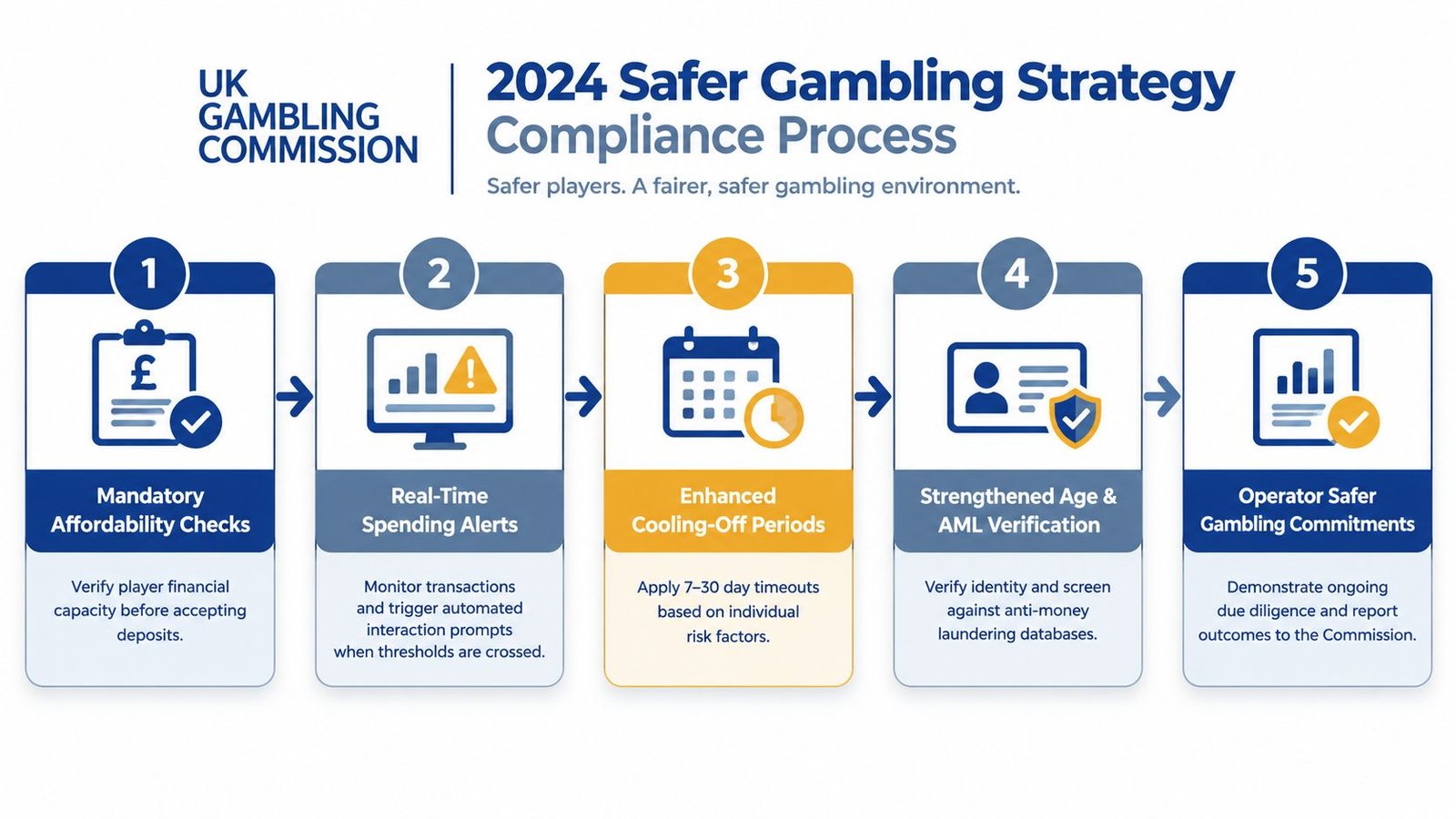
Operational question: Can the operator show what happened after a risk signal, who reviewed it, what action followed, and whether the customer received a consistent explanation?
For affiliates, the policy environment changes content responsibilities. Promotional pages that focus only on bonuses can create regulatory and reputational exposure. Publisher standards should include clear safer-gambling information and responsible partner selection. Operators serving the Philippines can also review PAGCOR online casino requirements and market context alongside local primary sources.
2. AI risk detection needs outcomes, not just deployment announcements
Artificial intelligence is becoming a central part of responsible-gambling discussions because operators can process behavioural signals at a scale that manual teams can't match. Session patterns, spending velocity, deposit behaviour, game changes, and customer interactions may help identify risk earlier. Yet the existence of a model doesn't prove that customers are safer.
The central test is evaluation. A responsible-gambling system should be assessed through intervention timing, false positives, customer complaints, account reactivation, deposit changes, and independently reviewed outcomes. These measures help distinguish a useful intervention from a system that merely produces more alerts.
A 2025 systematic review of legal and regulatory responses to online-gambling harms identifies adequate resourcing for compliance implementation as a key priority. That finding has a direct operational implication. An operator with advanced analytics but weak staffing, unclear escalation rules, or poor data quality may still fail to protect customers effectively.
How teams can test an AI intervention
A sensible deployment begins with behavioural clustering and controlled testing. Teams can establish ordinary customer patterns, classify risk signals, and compare intervention approaches without assuming that the most restrictive response is the best one.
- Set governance boundaries: Define lawful data use, retention, access rights, and privacy controls before model deployment.
- Measure customer impact: Track complaints, acceptance, restrictions, and reactivation alongside risk indicators.
- Review model bias: Test whether the system disproportionately restricts particular customer groups or misses financially vulnerable users.
- Keep human oversight: Give trained reviewers authority to challenge automated outcomes and document the reasoning.
A responsible-gaming supplier should provide methodology and evaluation access, not only an attractive product demonstration. Regulators and investors should ask whether published results include limitations, independent validation, and conflicts of interest.
3. Cross-border payments create access and compliance trade-offs
Payment infrastructure has become one of the most consequential operating layers in international iGaming. Customers expect deposits and withdrawals to work reliably, while operators must manage identity verification, fraud controls, chargebacks, geolocation, sanctions screening, tax obligations, and local payment rules.
Cryptocurrency can appear attractive where conventional banking access is fragmented, but it introduces its own risks. Volatility can affect treasury management, transaction monitoring needs to account for wallet activity, and regulatory treatment differs sharply between jurisdictions. Stablecoins may reduce price volatility, but they don't remove licensing, KYC, AML, or responsible-gambling obligations.
Brazil illustrates the scale of the opportunity and the cost of entry. The regulated online betting market launched in 2025, and the applicable gross gaming revenue tax reached 18% by October, according to SCCG Management's 2025 global gambling industry assessment. Operators entering the market need Portuguese-language customer journeys, compliant payments, verification controls, advertising governance, and tax-reporting infrastructure.
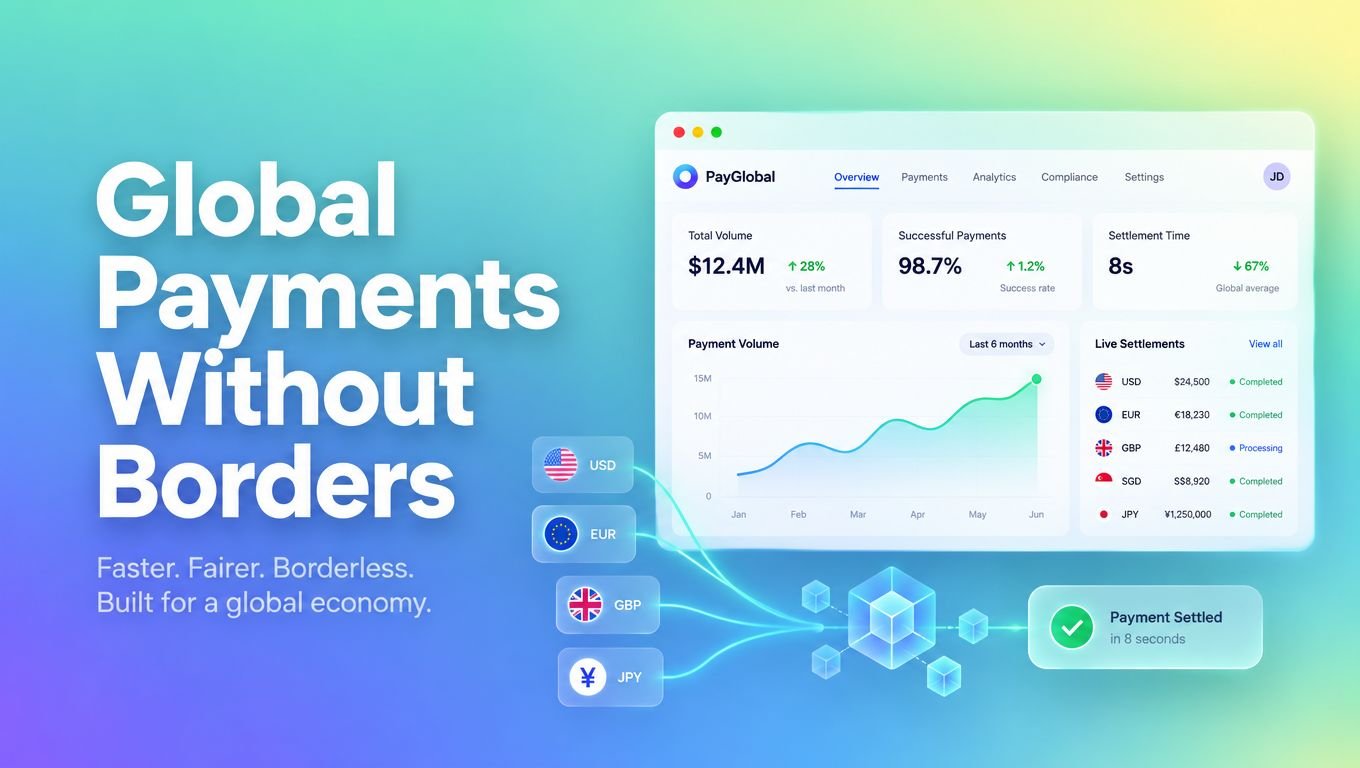
What payment teams should monitor
Payment performance should be judged beyond approval rates. Operators need a view of KYC completion, fraud losses, withdrawal timing, bonus-related behaviour, failed authorisations, and retention after a payment decision. A convenient deposit method that produces high fraud exposure may damage contribution margin.
For suppliers, modular integrations and jurisdiction-specific controls are more valuable than a single global promise. Operators evaluating the Philippines can review PAGCOR payment gateway accreditation while confirming current requirements through official sources.
4. Consolidation shifts the value of scale toward integration
Mergers and acquisitions remain a recurring theme in iGaming industry news because operators can pursue geographic reach, technology ownership, vertical expansion, or access to licences through corporate transactions. The headline deal, however, is only the beginning. Value depends on whether the buyer can integrate platforms, preserve talent, maintain compliance, and migrate customers without service disruption.
A sportsbook acquisition may provide trading capability but also introduce duplicated risk systems, incompatible wallet architecture, or different reporting practices. A game-studio purchase may expand content ownership while increasing certification, release-management, and market-approval demands. Investors should therefore examine integration plans rather than treating purchase price or revenue scale as the complete investment case.
Due diligence goes beyond financial statements
Technology audits should map identity, wallet, CRM, trading, content, payments, analytics, and regulatory-reporting systems. Legal teams need a jurisdiction-by-jurisdiction view of approval requirements before an announcement creates public expectations. Human-resources teams should identify key technical and compliance staff whose departure could reduce the value of the transaction.
Player migration also deserves its own plan. Customers may face changed terms, altered product availability, new verification requests, or different withdrawal processes. Clear communication and staged migration can reduce confusion, but the approach must respect each market's rules.
Investor lens: Scale creates bargaining power only when the combined business can operate one controlled, auditable system.
Affiliates can be affected by brand changes, tracking migrations, revised commercial terms, and changes in market availability. Acquisition analysis should therefore include partner contracts and acquisition quality, not just operator-facing metrics. Teams assessing acquisition efficiency can use user acquisition cost analysis as part of a broader due-diligence model.
5. Licensing expansion creates opportunity and regulatory fragmentation
New licences can open attractive markets, but market entry is rarely a single application. Operators must understand the permitted products, ownership structure, tax treatment, advertising rules, technical standards, payment restrictions, responsible-gambling duties, and reporting expectations in each jurisdiction.
The most important question is whether regulation channels customers into licensed products. Formal rules don't automatically guarantee strong legal-market capture if licensed products are less accessible, less competitive, or more restricted than offshore alternatives. The comparative analysis of unregulated European online gambling highlights this unresolved issue and frames channelisation as a measurable outcome rather than a legislative assumption.
Licensing should be judged by market effect
Regulators can assess payment access, licensed-market usage, enforcement capacity, advertising exposure, and customer experience alongside licence counts. Operators need to model whether compliance costs and product restrictions leave a sustainable margin. Suppliers should verify that their platform, games, payment tools, and data systems meet local technical requirements before promising rapid deployment.
Affiliates face a different risk. A site may rank for a market that changes its licensing position, but continuing to promote unavailable or unauthorised products can create legal and reputational problems. Content teams should maintain jurisdiction-specific review processes and remove outdated offers quickly.
Corporate planning also matters. An operator entering a new market may need local entities, approved vendors, local-language support, and formal reporting processes. Businesses exploring the Philippines can review the PAGCOR business-to-business provider application process while confirming current rules with the regulator.
6. Live casino competes through experience and operational depth
Live casino continues to attract attention because it combines digital access with dealer-led interaction. Streaming quality, table presentation, game pacing, language support, moderation, and customer-service design all influence the experience. The category isn't only a content decision. It requires studios, trained presenters, resilient infrastructure, security controls, and market-specific compliance.
Operators choosing between live casino and RNG content should examine the customer need rather than assume that one format replaces the other. Live tables may appeal to customers seeking interaction and ceremony, while RNG products may offer different speed, mechanics, or accessibility. A balanced portfolio can support different use cases, but it also increases integration and compliance complexity.
Regionalisation is one practical differentiator. A studio or table designed for a particular audience can address language, cultural presentation, scheduling, and payment expectations. That approach may improve relevance, but it requires local research and operating capability rather than simple translation.
Suppliers face a content and infrastructure test
Game providers need reliable streaming, clear incident procedures, responsible-gambling features, and transparent game information. Operators should assess latency, table capacity, game certification, dealer training, and integration with player controls before launch.
A casino evaluating product range can review live dealer casino games as a starting point, then validate availability and compliance for its target jurisdiction. Investors should treat studio expansion as an operational investment with staffing and technology obligations, not merely a catalogue expansion.
7. Sports betting moves further toward mobile and measurable demand
The United States commercial gaming market generated a record $71.92 billion in 2024 across traditional casino gaming, sports betting, and internet gaming, according to the American Gaming Association's State of the States 2025 report. Online gaming produced $21.54 billion, or 30.0% of nationwide commercial gaming revenue, while sports betting revenue increased 25.4% from the previous year's $11.04 billion.
The same evidence shows why mobile product strategy dominates sports betting discussion. Online sports betting revenue increased by more than 27%, while retail sports betting revenue declined by more than 23%, according to the report. That contrast affects platform design, identity verification, geolocation, live pricing, wallet performance, and customer support.
Operators still need to separate market growth from profitable growth. Promotional spend, trading risk, payment costs, taxes, compliance staffing, and customer value all affect the quality of revenue. A strong mobile interface can't compensate for weak risk controls or unreliable settlement.
Sportsbooks need differentiated product decisions
Large sports calendars can attract demand, but niche sports and specialist content may give affiliates and suppliers a more defensible audience. Esports, cricket, and regional competitions each create integrity, data, and regulatory questions that require specific treatment.
Regulators need reliable reporting around suspicious activity, advertising, underage access, and customer protection. Investors should compare state-by-state performance rather than relying on national totals. Operators should also model market entry using contribution margin, not headline handle or GGR alone.
8. Affiliates turn from traffic sources into audience businesses
Affiliate marketing is changing as search platforms, social networks, streaming services, and regulation alter how customers discover gambling products. A publisher that relies on a single search channel or a single operator commission can lose distribution quickly when rankings, terms, or licensing conditions change.
The strongest affiliate strategies focus on owned audience relationships. Email, subscriptions, video, community features, comparison tools, and specialist editorial can give publishers more control over distribution. That doesn't eliminate compliance obligations. It makes editorial standards more visible because the publisher owns more of the customer journey.
Content quality now carries commercial and regulatory weight
A sports affiliate should explain odds, markets, terms, and safer-gambling tools clearly. A casino publisher should separate independent information from commercial placement. Esports coverage needs additional attention to audience age, streamer conduct, game integrity, and the distinction between entertainment and wagering promotion.
Operators also need to evaluate affiliate quality beyond volume. Useful questions include whether traffic is licensed-market eligible, whether customers understand the offer, whether content remains accurate after a regulatory change, and whether acquisition sources create increased fraud or bonus abuse.
Publisher standard: A ranking page should remain useful even when a reader doesn't click an operator offer.
The commercial relationship works better when affiliates provide clear audience intelligence and operators provide accurate, jurisdiction-specific information. Gaming professionals monitoring this segment should watch changes in search visibility, platform ownership, disclosure practices, and the balance between affiliate independence and operator investment.
9. Esports betting requires stronger integrity controls
Esports betting sits at the intersection of game publishing, streaming, tournament operations, data rights, and gambling regulation. Its appeal comes from digital-native audiences and frequent events, but those same characteristics create additional protection challenges. Match integrity, insider information, account sharing, bot activity, age assurance, and streamer influence all require attention.
Operators can't just copy a traditional sportsbook model and apply it to esports. Game rules, patch changes, tournament formats, data feeds, and market suspension procedures vary by title. A reliable product needs relationships with rights holders, tournament organisers, integrity bodies, and specialist data suppliers.
Partnerships need clear responsibility lines
Game publishers may control branding and data access. Tournament organisers may control event rights and venue rules. Platforms may govern streaming content and advertising. Operators manage betting accounts, customer verification, market risk, and suspicious activity reporting. Contracts should define who handles incidents and how quickly markets can be suspended.
Affiliates and streamers add another layer. Betting integrations can reach audiences in an entertainment setting where commercial disclosures and responsible-gambling messages aren't always prominent. Content partners should use age-appropriate standards, clear advertising labels, and safeguards around vulnerable audiences.
A practical launch strategy starts with established titles and transparent market rules, then expands only when monitoring, data quality, and integrity procedures can support additional products. Investors should treat esports as a specialist operating category rather than a simple extension of sports betting.
10. Responsible gaming moves toward measurable wellbeing outcomes
Responsible-gambling technology is moving beyond account limits and self-exclusion toward broader questions about customer wellbeing. Operators may provide educational content, spending controls, support referrals, and direct access to specialist services. The policy debate now concerns whether these measures reduce harm or merely create visible compliance activity.
The UK Gambling Commission's quarterly data shows a complex market picture. During July to September 2025, total online GGY in Great Britain rose 8% year on year to £1.42 billion, while average monthly active accounts fell 7% to 12 million. Total bets and spins reached 26.1 billion, up 3%, according to the Gambling Commission's market overview. The figures indicate that activity and spend among engaged customers can rise even when the active-account count declines.
The next quarter provides a different signal. Online slots GGY reached £788 million during October to December 2025, up 10% year on year, while spins rose 7% to 25.7 billion. At the same time, sessions lasting longer than one hour fell 16% to 8.9 million, and average session length declined by two minutes, according to Gambling Commission data on gambling behaviour.
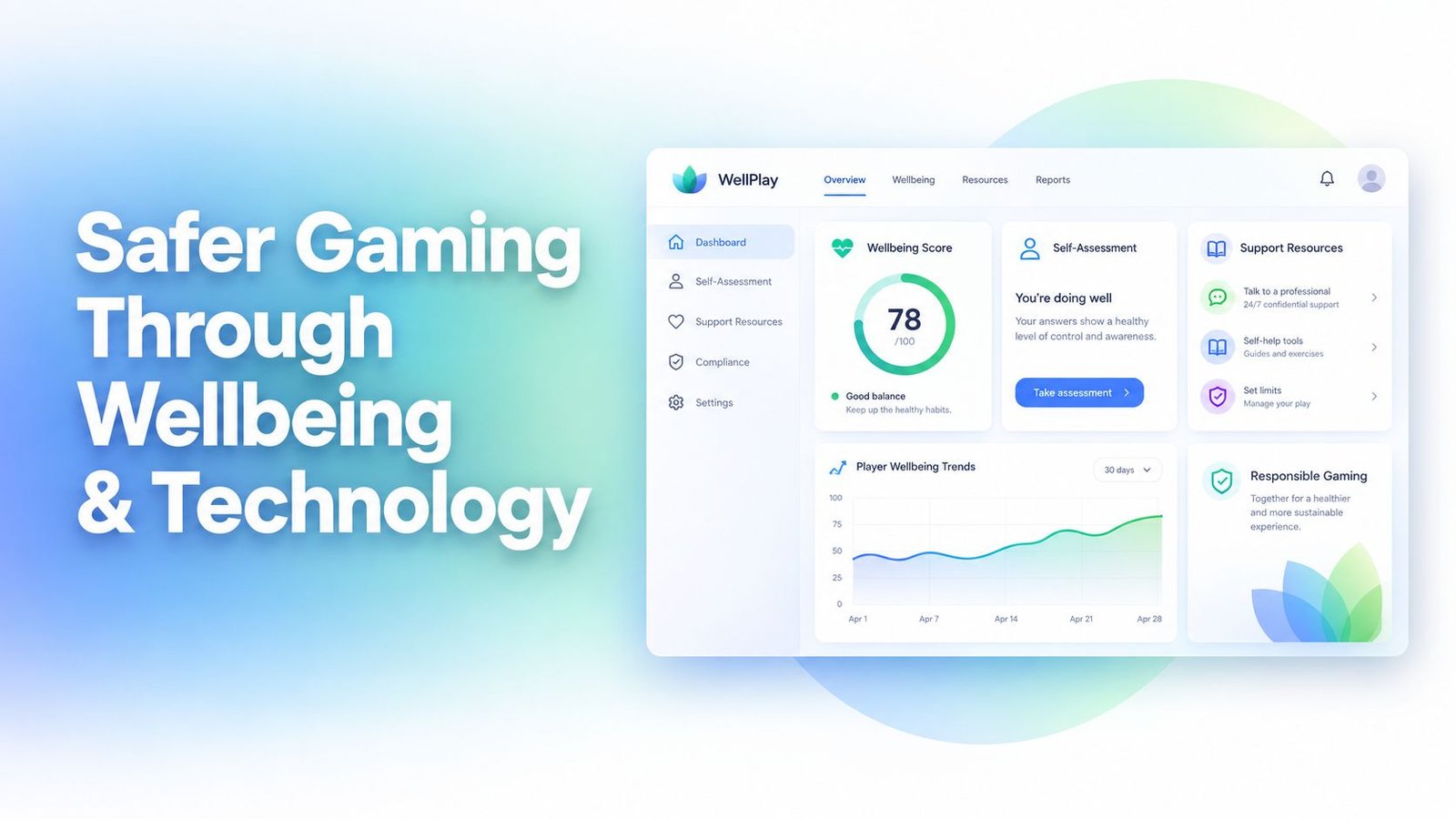
Better measurement needs transparent methods
Operators should monitor intervention timing, customer acceptance, complaints, account reactivation, deposit patterns, and outcomes after support. Regulators need access to methodology and sufficiently detailed data to assess effectiveness. Suppliers should explain model limitations rather than presenting dashboard activity as proof of harm reduction.
Mental-health partnerships can add value when organisations contribute genuine expertise and independent evaluation. They shouldn't be used as a substitute for product controls, trained staff, or enforcement. For customers, the relevant question remains simple: does the intervention provide timely, understandable support without unfairly restricting lower-risk users?
iGaming Industry News: 10-Point Comparison
| Item | Implementation complexity | Resource requirements | Expected outcomes | Ideal use cases | Key advantages | Key disadvantages |
|---|---|---|---|---|---|---|
| UK Gambling Commission Safer Gambling Strategy 2024 | High, deep system integrations and policy changes | Significant, compliance teams, IT upgrades, training; $5–15M typical | Stronger player protection, fewer fines, improved reputation | Operators in the UK/EU or highly regulated markets | Regulatory alignment, trust, sustainable player LTV | Higher operational costs, slower acquisition, integration complexity |
| AI Deployment in Player Risk Detection | High, model development, data pipelines, monitoring | High, data scientists, historical data, $2–5M+ initial build | Earlier risk detection, fewer false positives, automated interventions | Large platforms with rich behavioral data and compliance focus | Predictive detection, automation, improved compliance metrics | Privacy concerns, model drift, bias, ongoing training costs |
| Cross-Border Payments & Cryptocurrency Integration | Medium–High, wallets, blockchain, payment rails, KYC | Medium, fintech partnerships, treasury systems, compliance staff | Faster settlements, lower cross-border costs, improved conversion | Emerging markets, underbanked regions, instant-settlement needs | Instant settlement, lower fees, access to new customer segments | Regulatory uncertainty, volatility exposure, complex AML/KYC |
| Consolidation Wave (M&A & Portfolio Expansion) | Very high, tech, legal, cultural and regulatory integration | Very high, large capital outlays ($500M–$2B+), integration teams | Scale, cost synergies, expanded market reach | Tier‑1 operators pursuing rapid scale and geographic expansion | Economies of scale, combined product portfolios, market share | Very high integration cost, regulatory scrutiny, churn risk |
| Regulatory Licensing Expansion | Medium, application processes and local compliance setups | High, licensing fees ($0.5–3M), legal/compliance resources | Market access, higher revenue per player, banking/advertising access | Operators entering new jurisdictions or seeking legitimacy | Legal certainty, player trust, institutional access | High cost and time to enter, reporting burdens, potential revocation |
| Live Casino & Streamed Gaming | High, studio build, streaming infrastructure, latency control | High, studio CAPEX/OPEX ($50k–500k+/month), staffing, streaming tech | Higher retention and ARPU, larger share of casino GGR | Operators targeting APAC or markets favoring authentic dealer experiences | Strong retention, higher ARPU, product differentiation | High infrastructure and labor costs, latency and quality risks |
| Sports Betting Market Growth | Medium, odds engines, in‑play systems, mobile UX | Medium–High, trading teams, liquidity, large marketing spend | Significant revenue driver, high retention, superior LTV | Mobile‑first markets and mainstream sports audiences | High LTV, media/sponsorship integration, mass appeal | High CAC, intense competition, integrity and margin pressures |
| Affiliate Marketing Evolution | Medium, content platforms, personalization, creator partnerships | Medium, content production, creator acquisition, tech for recommendations | Diversified revenue, higher effective commissions, owned audiences | Media brands and content-first operators monetizing player intent | Multiple revenue streams, audience ownership, premium positioning | High upfront content costs, long time to monetize, platform dependency |
| Esports Betting Emergence | Medium, publisher partnerships, streaming-native integrations | Medium, product teams, integrity monitoring, streaming tools | Growth among younger players, high engagement, rapid CAGR | Operators targeting 18–35, streaming audiences, esports fans | Access to younger demographics, streaming synergy, high engagement | Match‑fixing risk, title volatility, smaller volumes vs. mainstream sports |
| Responsible Gaming Tech & Mental Health Integration | Medium–High, evidence-based tools, external integrations | Medium, partnerships, platform work, $1–3M+ implementation | Fewer problem gambling incidents, higher NPS, regulatory goodwill | ESG-focused operators and jurisdictions with strict RG expectations | Authentic welfare positioning, lower churn, investor appeal | Hard to measure ROI, player friction, implementation cost and complexity |
Turn headlines into operating decisions
The value of iGaming industry news depends on what happens after publication. An operator that reads about a licensing change but doesn't test payment access, product eligibility, advertising rules, and reporting duties hasn't completed the analysis. A supplier that sees demand for AI or live casino but ignores data governance, certification, staffing, and integration risk has only captured the headline.
Top 1 Rank's intelligence radar can be converted into a repeatable monitoring process:
- Verify the development: Check official regulators, government agencies, public company filings, industry reports, conference announcements, and other reputable primary sources before treating a claim as confirmed.
- Record the market context: Note the publication date, jurisdiction, product category, affected licence, and businesses directly involved.
- Map stakeholders: Identify consequences for operators, suppliers, regulators, investors, affiliates, customers, and gaming professionals.
- Separate evidence from interpretation: Record the underlying data, then distinguish confirmed facts from editorial analysis, assumptions, and unresolved questions.
- Assign confidence: Mark each update as confirmed, developing, disputed, or requiring further verification.
- Translate the update: Convert the finding into a compliance action, product review, market-entry decision, investment question, or content change.
- Set a refresh date: Recheck developments when regulators publish follow-up guidance, companies file new information, or market conditions change.
The commercial signals are already broad. Europe's online gambling market was forecast to reach €51.1 billion in 2025, crossing 40% of total gambling revenue, according to EGBA's market outlook. In the United States, regulated iGaming generated approximately $10.74 billion in 2025, while sports betting generated $16.96 billion. Combined online segments produced $27.70 billion, and iGaming generated approximately $2.59 billion in gaming taxes, according to Axis Intelligence's online gambling analysis. Those figures create opportunity, but they also reinforce the need to model taxes, compliance, technology, and customer protection before entering a market.
Top 1 Rank serves operators, affiliates, investors, regulators, suppliers, game providers, and gaming professionals with coverage across online casinos, sports betting, live casino, esports, fintech, AI, licensing, compliance, responsible gambling, market research, and industry strategy. Readers should revisit this briefing as new primary-source evidence emerges, because the most important development in a fast-moving market is often the follow-up decision, not the first announcement.
For regular global coverage, follow Top 1 Rank's iGaming intelligence publication and use each new regulatory, commercial, and technology update to review the decisions that affect the business. Subscribe to the publication's market, compliance, payments, product, and investment coverage, then return to the radar whenever a new source changes the evidence.





Join thousands of gaming professionals receiving the latest iGaming news, regulatory updates, and market insights.
