

PAGCOR's supplier regime is no longer a document check with a badge at the end of it. Under the 2026 B2B framework, covered providers must clear a 31 July 2026 accreditation deadline, and industry coverage says unaccredited foreign content providers face removal from licensed platforms after 31 March 2026 (PAGCOR regulatory suppliers page, industry reporting on the 2026 B2B deadline). That timeline changes the commercial equation for operators and vendors, because market access now depends on passing a sequence of probity, technical, and capital requirements, not just filing a corporate pack.
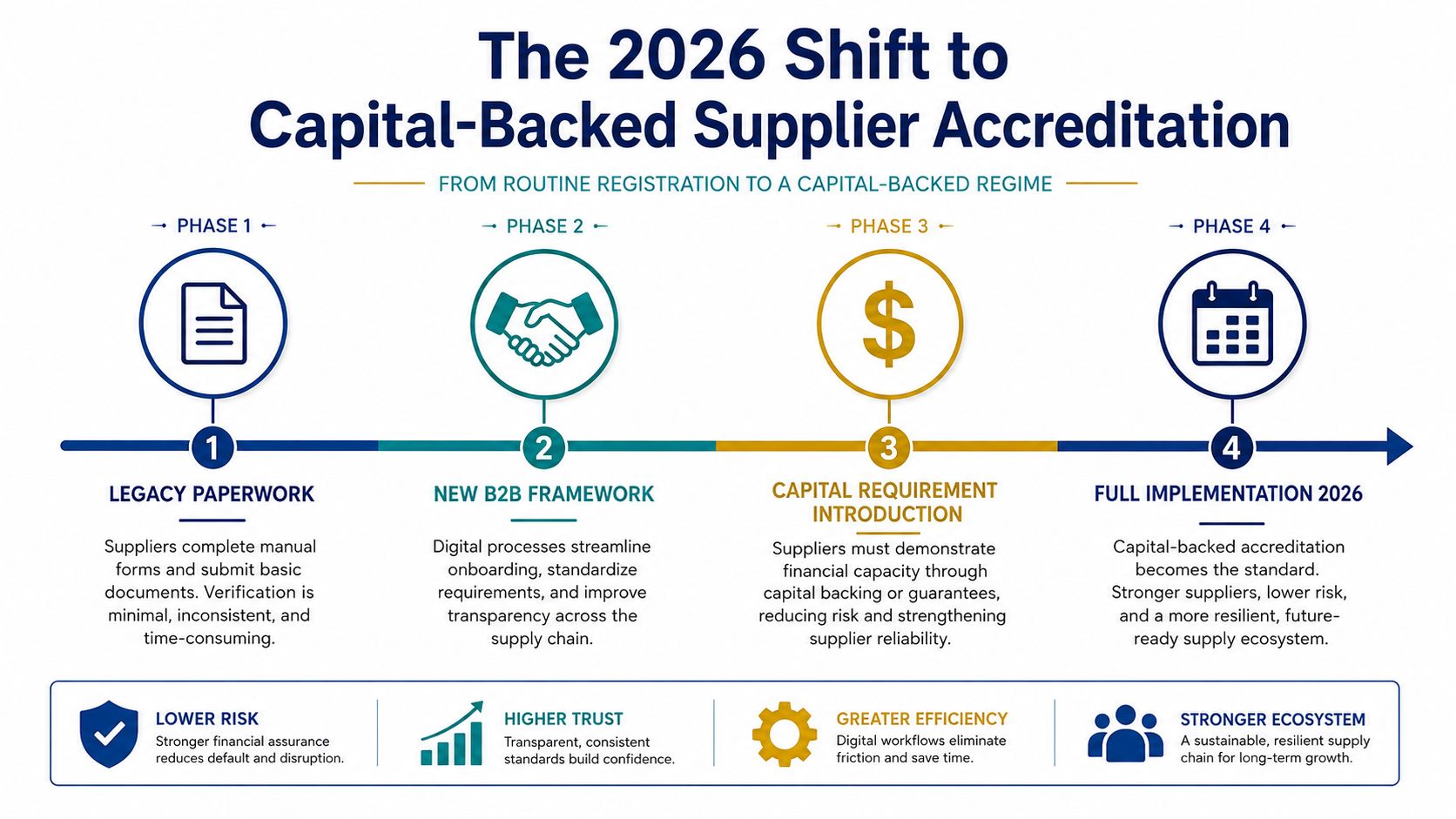
Table of Contents
- The 2026 Shift to Capital-Backed Supplier Accreditation
- Complete Documentary Checklist for Supplier Registration
- Navigating the Multi-Stage Review and Approval Process
- Financial Commitments and Category-Specific Accreditation Costs
- Foreign Supplier Eligibility and Market Entry Strategies
- Common Rejection Reasons and How to Avoid Them
- Post-Accreditation Compliance and Renewal Obligations
The 2026 Shift to Capital-Backed Supplier Accreditation
The most important change in PAGCOR supplier registration requirements is structural. PAGCOR's newer B2B framework does not treat supplier onboarding as a one-off registry exercise. It requires pre-accreditation, a defined review sequence, and a capital commitment before operations can begin, which raises the cost of entry for every provider category touched by the regime (PAGCOR regulatory suppliers page, chambers coverage of the accreditation framework).
Why the 2026 model matters
PAGCOR says suppliers must register first before doing business in the Philippines and must obtain a Certificate of Enrollment from the GLDD before supplying operators (PAGCOR regulatory suppliers page). That is already a higher bar than a basic vendor registration. The 2026 framework then adds a deadline, a performance deposit, and technical review gates, which means suppliers now have to prove regulatory fitness, operational readiness, and financial seriousness at the same time.
Practical rule: suppliers should treat the 2026 regime as a market-access test, not an administrative formality.
That distinction matters for boardrooms. A vendor that can't line up its probity file, technical evidence, and deposit commitment on time may be commercially excluded even if its products are otherwise ready. For operators, the implication is blunt, too. Vendor due diligence now has a compliance deadline attached to it, and procurement teams can't rely on informal onboarding timelines.
The hidden commercial consequence
The hardest part of the shift is not the paperwork itself. It's the sequence. PAGCOR's framework requires dossier submission, review, probity checks, technical evaluation, and Board approval before a provider can operate (chambers coverage of the accreditation framework). If any one of those stages stalls, the full commercial launch stalls with it.
That is why the new regime is best understood as capital-backed supplier accreditation. It rewards prepared entrants and penalizes anyone trying to improvise in the final months before enforcement tightens.
Complete Documentary Checklist for Supplier Registration
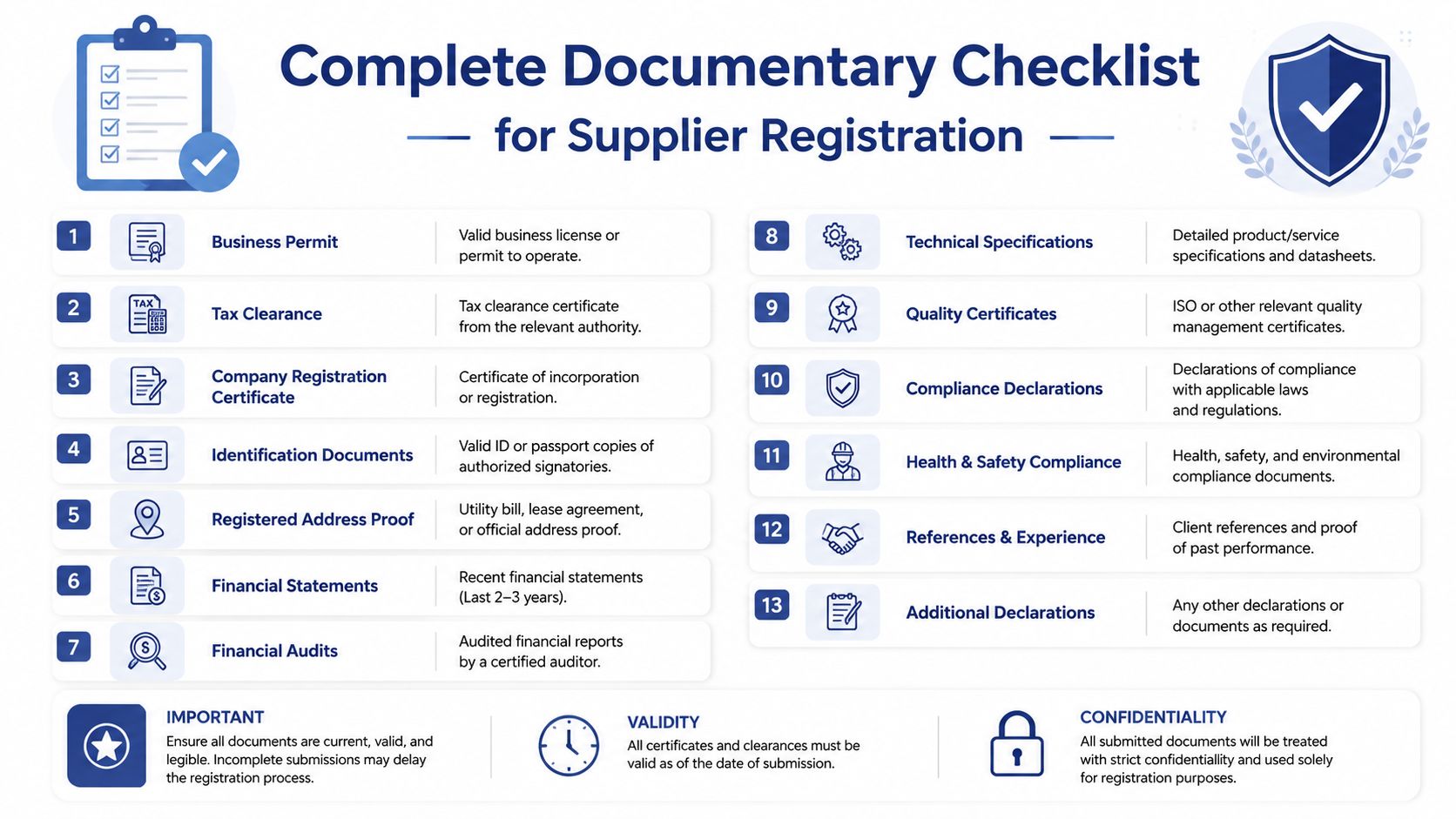
PAGCOR's documentary checklist is broader than a routine vendor file, and the official procedure points to a mix of corporate, tax, and authority documents that must line up cleanly before a file can move forward. The published procedure requires at least 10 distinct items, including a company information form, company profile, product catalogues, a detailed site sketch, SEC or DTI registration, a mayor's or business permit, BIR registration, PhilGEPS registration, the latest income or business tax returns, the latest audited financial statements, and a notarized authorization document for the company representative (PAGCOR citizens charter PDF). For suppliers aiming at public bidding, PAGCOR also requires a tax-liability certification or a valid BIR tax clearance, which turns tax standing into an entry condition rather than a back-office formality.
What each document is really proving
The company information form and profile establish identity and scope. The product catalogues and site sketch show what the supplier intends to provide and where the operation sits. The SEC or DTI registration, mayor's permit, and BIR registration prove the business exists in good standing under Philippine law. PhilGEPS registration matters because suppliers planning to join public bidding need to be visible in the government procurement ecosystem, not just in PAGCOR's own file room.
The financial documents carry equal weight. Current tax returns and audited financial statements let PAGCOR test whether the company can support the activity it wants to do. The notarized authorization document confirms that the person signing for the company has authority to do so. For foreign groups, that last point can become a weak spot when internal signatory chains are loose or local representatives lack a clean paper trail.
Operational insight: the fastest way to lose time here is to submit a file that is technically complete but internally inconsistent, especially when dates, signatories, and corporate names don't match across documents.
Where applicants usually stumble
The most common failure mode is a sequence error, not a missing page. Applicants often send outdated or mismatched versions of core documents, and that creates a rework cycle before the file can even be assessed on substance. A tax return that does not align with the audited accounts, or an authorization letter that is not properly notarized, is enough to slow the review. That matters because the checklist is already broad, so one weak document can create delays across several review points.
The other recurring issue is overconfidence about public-sector compliance. PhilGEPS registration and tax clearance are not decorative extras. They signal whether the supplier can pass procurement-level scrutiny, which is why PAGCOR's checklist treats them as core entry evidence.
For operators comparing internal readiness against regulator expectations, a simple test helps. If a document would fail a lawyer's cross-check, it probably will not survive a regulator's cross-check either.
Related operational context on payment-gateway accreditation
Navigating the Multi-Stage Review and Approval Process
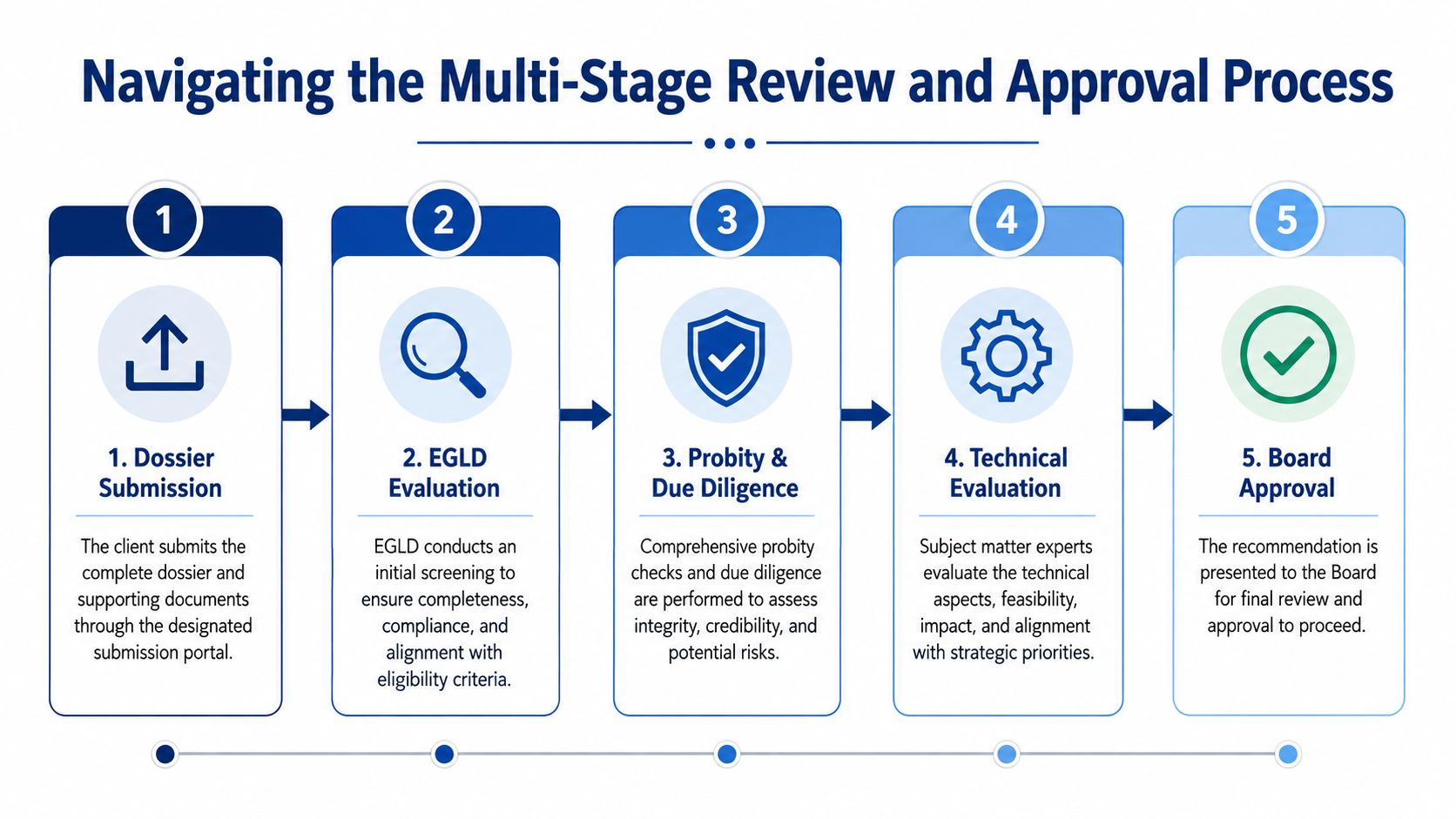
PAGCOR's supplier approval path is no longer a simple filing exercise. Applicants first submit a dossier to the EGLD, then move through probity and due-diligence checks, technical evaluation, and only after that seek Board approval before operating. Accreditation runs for two years from Board approval, and providers must post a Performance Cash Deposit before they can begin operations. That sequence is why filing order now matters as much as document quality, as described in the chambers coverage of the accreditation framework.
The sequence matters more than the paperwork stack
PAGCOR's newer framework is built to catch applicants who treat accreditation as a single submission event. A file can be complete on paper and still stall if the probity review is unfinished or the technical package does not match the product being proposed. That is the hidden failure point in the current regime, because the regulator is checking whether each stage supports the next one, not just whether the folder is full.
The technical side also has to line up with the exact service being offered. Independent reporting on the 2025 to 2026 regime says suppliers are typically expected to show RNG certification, documented game mathematics and RTP configurations, platform-security controls, and sandbox or on-site technical review, as outlined in Process context for B2B providers. Those items are evidence of operational control, not decorative compliance items. PAGCOR uses them to decide whether a supplier's product can run inside a controlled gaming environment.
Where sequence failures happen
The most common delay starts between corporate completeness and technical clarity. A company may have every statutory document in place and still fail to advance because its probity file is thin, its service description is vague, or its technical certification does not align with the exact product category it wants approved.
That mismatch is often overlooked. The framework is not only asking whether a company is reputable. It is asking whether a specific product, service, or platform can operate safely within the approved architecture. Board approval becomes the final filter because the regulator has already tested the file against both corporate and technical requirements.
Financial Commitments and Category-Specific Accreditation Costs
The financial burden now sits at the center of supplier strategy. Industry reporting says PAGCOR's B2B framework introduced a PHP 1 million performance cash deposit per accredited provider, with some market commentary describing the same burden as applying per service category depending on provider type (industry reporting on the 2026 B2B deadline, chambers coverage of the accreditation framework). That changes budgeting from a single-entry cost to a portfolio decision.
The key commercial issue is category scope. Recent coverage says the framework now applies per offering or service category, which means diversified vendors can face more than one accreditation track if they supply multiple regulated functions (chambers coverage of the accreditation framework). For a supplier with several product lines, that can multiply the compliance workload even before renewal planning starts.
| Provider Type | Performance Cash Deposit | Accreditation Validity | Application Scope |
|---|---|---|---|
| Accredited provider under the B2B regime | PHP 1 million reported in industry coverage | Two years from Board approval | Per offering or service category, depending on provider type |
| Supplier seeking public bidding access | Tax-liability certification or valid BIR tax clearance required | Not specified in the verified data | Documentary gateway for procurement participation |
| Foreign manufacturer, supplier, distributor, or contractor | Equivalent home-country documents may be used where applicable | Not specified in the verified data | Depends on category-by-category eligibility and supporting documentation |
The table shows why finance teams need to be in the room early. A supplier can't price market entry correctly if it treats accreditation as a one-time admin fee. It also can't assume one approval covers every service line. That's a mistake in a regime that is moving toward category-specific oversight.
Budgeting rule: the right question isn't “Can the business afford Philippine entry?” It's “How many regulated categories will it need to cover to operate legally and profitably?”
Accreditation validity also matters. A two-year approval cycle means suppliers need a renewal calendar from day one, not after launch. That is especially important for vendors with long sales cycles or staged product rollouts, because the renewal window can arrive while the business is still expanding its first footprint.
Cost context for B2B accreditation fees
Foreign Supplier Eligibility and Market Entry Strategies
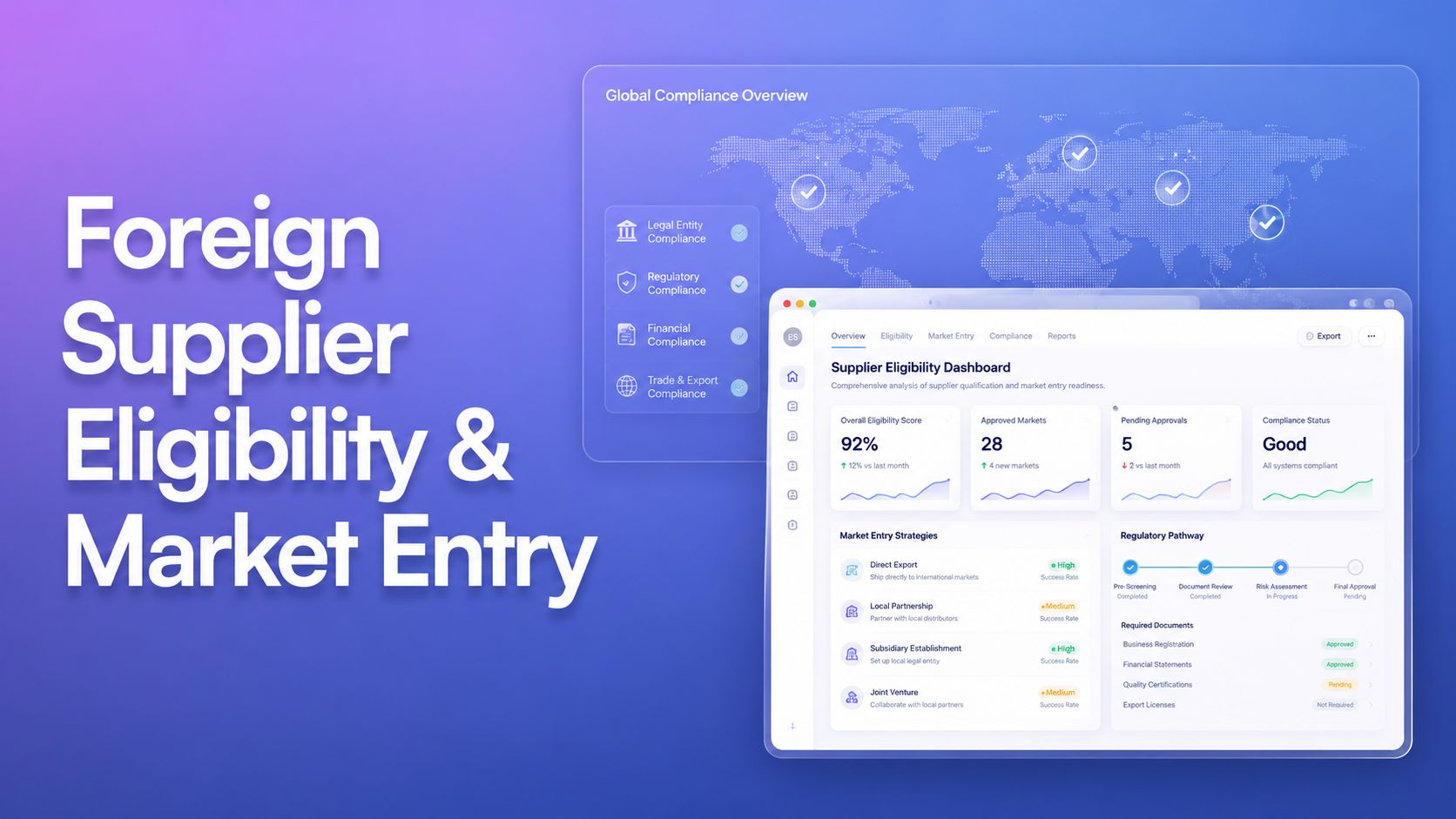
Foreign suppliers face a different problem from domestic applicants. PAGCOR notes that foreign manufacturers, suppliers, distributors, and contractors may substitute equivalent home-country documents in English translation, or provide a sworn statement if a document is not issued locally (PAGCOR bidding page). That flexibility helps on paper, but it does not remove the strategic gap around equivalency, local presence, or category eligibility in practice.
Eligibility is a structural question
International groups usually ask whether they can just translate documents and file from abroad. That is too narrow. The more important issue is whether a foreign vendor needs a Philippine entity, an accredited local counterpart, or a specific distribution arrangement before it can operate legally in a category-specific regime. Current guidance also points to accreditation that may be required per offering or service category, which raises the bar for multi-jurisdiction groups trying to enter efficiently.
Many foreign applicants misread the market. They assume a documentation workaround will solve an eligibility problem. It will not. If the product category requires a local operating model or a specific counterpart relationship, the file can be perfectly translated and still be non-qualifying.
Foreign game content provider accreditation context
What foreign groups should test before filing
The best entry strategy is to map the legal structure first, then the supporting documents. That means checking whether the business will be presented as a direct supplier, a distributor, a local partner arrangement, or some other category permitted under PAGCOR's framework. Public guidance suggests this is not a one-size-fits-all process, especially when the regulator expects technical and probity reviews to match the exact service offering.
Foreign suppliers should also verify how equivalency proofs are assembled. A sworn statement may solve the absence of a local document, but it does not answer the broader question of whether the underlying business model is permitted. That distinction matters because the Philippines market is shifting from generic registration language to category-specific accreditation language.
The strongest filings will show three things at once, a clean translation set, a defensible local operating structure, and a category-specific explanation of why the applicant qualifies. Anything less leaves too much room for delay at the review stage.
Common Rejection Reasons and How to Avoid Them
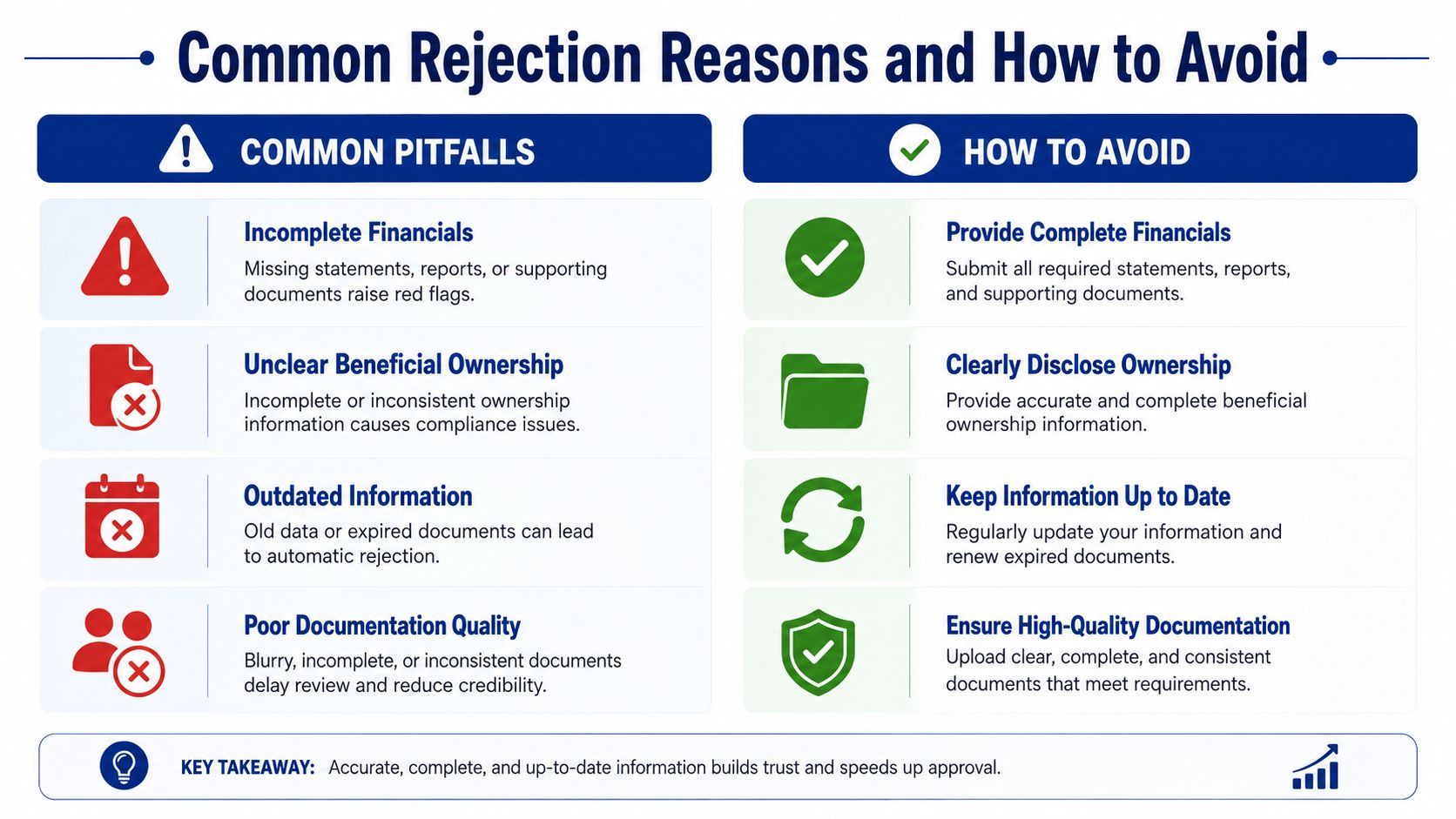
Most files fail because the sequence is wrong. PAGCOR's newer framework makes that visible, since a technically sound applicant can still stall on probity, category definition, or certification alignment, as noted earlier in the regime discussion. A pre-submission audit should test the order of the file, the fit of the category, and the evidence behind each representation before anything is lodged.
The predictable failure points
A weak probity pack can slow the file even when the corporate documents are polished. Missing technical certifications create a second bottleneck, especially where the product needs RNG evidence, game mathematics documentation, or platform-security proof. Unclear service categorization is another common problem, because PAGCOR appears to be applying the regime more narrowly by offering or service category rather than treating all suppliers the same.
Another mistake sits on the documentary side. Tax clearance and filing evidence need to be current, consistent, and aligned with the rest of the submission. If the financials, tax returns, and authorizations point in different directions, the reviewer is likely to stop and ask for clarification.
How to reduce rejection risk
- Audit the whole file against the business model: the application should match the exact service category, not a generic corporate profile.
- Cross-check every certification: technical documents need to line up with the product being accredited, not just the parent company's broader capabilities.
- Verify signatory authority early: notarized authorizations should match the entity structure and the person signing the file.
- Reconcile tax and finance records: tax returns, audited statements, and clearance documents should tell the same story.
- Treat foreign equivalents carefully: translated or substituted home-country documents still need to support clear eligibility in the Philippine framework.
Rejection often starts before the reviewer reaches the substance of the application. A file can look complete and still fail if the category is wrong, the supporting proof arrives in the wrong order, or the certifications do not match the service being offered. The strongest internal review is one that checks whether each document supports the next step in the approval path, not just whether each document exists.
Post-Accreditation Compliance and Renewal Obligations
Accreditation is not a finish line. Once approved, suppliers have to maintain the conditions that justified approval in the first place, because PAGCOR can continue to scrutinize technical, operational, and compliance posture during the life of the accreditation. The two-year validity period means renewal planning has to start well before expiry, not after a reminder lands in someone's inbox (chambers coverage of the accreditation framework).
What ongoing discipline looks like
Accredited providers should keep their technical controls, company records, and probity disclosures aligned with the accredited service scope. If the provider changes ownership, expands into a new category, or alters its technical architecture, the original approval basis may no longer reflect the current business model. That's where renewal or reassessment risk starts to build.
The broader lesson is that accreditation works more like a controlled relationship than a static license. A supplier that treats it as a one-time achievement may pass the first gate and still fail the next one. That's especially true in a regime that has already introduced deposit requirements, technical checks, and category-specific oversight.
Ongoing governance context for gaming system administrators
What to prepare before renewal
- Maintain a live evidence file: keep financials, tax standing, and authorizations current throughout the accreditation period.
- Track technical change management: any system update that affects the accredited offering should be logged and assessed before it becomes a compliance issue.
- Review category scope regularly: growth into a new product line may require a fresh application path rather than a simple amendment.
- Plan for re-accreditation early: the renewal calendar should run in parallel with commercial planning, not behind it.
The right operating model is conservative. Suppliers that build compliance into product, legal, and finance workflows are far less likely to lose time when the next review cycle starts. For operators, that same discipline reduces third-party risk, which is now part of the business case for choosing one supplier over another.
Top 1 Rank will continue tracking PAGCOR supplier accreditation, category-level enforcement, and the Philippine market's transition from registration to capital-backed oversight. For operators and suppliers entering or expanding in the Philippines, the next step is a full pre-application review of documents, technical evidence, and deposit readiness, then a live monitoring plan that keeps the file clean through renewal.





Join thousands of gaming professionals receiving the latest iGaming news, regulatory updates, and market insights.
