

The U.S. regulated sportsbook market processed $165.58 billion in total handle in 2025, generated $16.80 billion in gross gaming revenue, and produced $3.66 billion in state tax revenue, according to Regulatory Governance's U.S. market statistics. That scale changes the procurement question. A sportsbook platform isn't merely a branded betting interface. It's the operating architecture responsible for pricing, risk, payments, compliance, settlement, and market expansion.
The leading brands also show how concentrated performance can become. DraftKings held 36.7% of U.S. handle, compared with FanDuel at 31.8%, while BetMGM, Fanatics, bet365, and Caesars held 9.0%, 7.1%, 5.4%, and 4.8%, respectively, in the same market data. For executives evaluating a sportsbook platform providers comparison, the implication is direct: small differences in trading quality, uptime, localization, and integration control can affect very large betting volumes.
Table of Contents
- Why Sportsbook Platform Choice Is Now an Architecture Decision
- Deployment Models and Operator Stage Fit
- Feature Matrix Across Leading Sportsbook Platforms
- Compliance, Jurisdiction, and Security Requirements
- Pricing Models and Margin Impact Under Live Betting
- Provider Recommendations by Operator Use Case
- RFP Checklist and Decision Framework for Operators
Why Sportsbook Platform Choice Is Now an Architecture Decision
A vendor ranking based on feature count misses the main source of operational differentiation. Sportsbook suppliers increasingly occupy different layers of the stack, including odds feeds, trading and risk management, full-stack platforms, front-end delivery, payments, and affiliate attribution. A provider that is ideal for a pre-license entrant may be unsuitable for an incumbent that already owns its player account management, wallet, trading workflows, and data infrastructure.
The market is also broadening. One 2026 sportsbook software market report estimates that the sector will grow from $6.58 billion in 2025 to $7.26 billion in 2026, a 10.4% year-over-year increase. The report identifies Sportradar, Playtech, Softswiss, Kambi, Altenar, BtoBet, EveryMatrix, and Digitain among major vendors. It also projects cloud deployments to represent 62.5% of the market by 2034, while North America accounts for 38.2% of global revenue, or approximately $5.4 billion in 2025.
The comparison should begin with operating ownership
The relevant question isn't “which sportsbook platform has the most features?” It is:
Which provider exposes the event, market, wallet, settlement, and risk functions required by the operator's growth plan without creating unacceptable deployment or compliance complexity?
A turnkey supplier may reduce engineering demands, but it can limit control over trading, product differentiation, and data flows. A modular provider can give a scaled operator more ownership, although the operator then carries greater integration, staffing, and regulatory responsibility.
The Philippine gaming system administrator requirements illustrate why platform architecture must be evaluated alongside jurisdictional obligations. A system that works in one regulatory environment may require different routing, reporting, controls, or operational ownership elsewhere.
Market concentration doesn't eliminate supplier fragmentation
The major U.S. brands are concentrated, but the supplier market isn't represented by one universal technology model. Operators entering second-tier or emerging jurisdictions may need local payment methods, retail support, flexible market configuration, or a managed trading service rather than the infrastructure built for a large U.S. incumbent.
| Provider Tier | Share of Licensed Operator Integrations | Avg. Live Handle Share |
|---|---|---|
| Tier 1 providers | Not provided in verified data | Not provided in verified data |
| Specialist and regional providers | Not provided in verified data | Not provided in verified data |
| Emerging and niche providers | Not provided in verified data | Not provided in verified data |
The table is intentionally non-quantified because verified data doesn't establish integration shares or average live-handle shares by provider tier. Procurement teams should replace those fields with evidence from vendor references, audited reporting, and target-market performance data rather than relying on unsupported industry averages.
Deployment Models and Operator Stage Fit
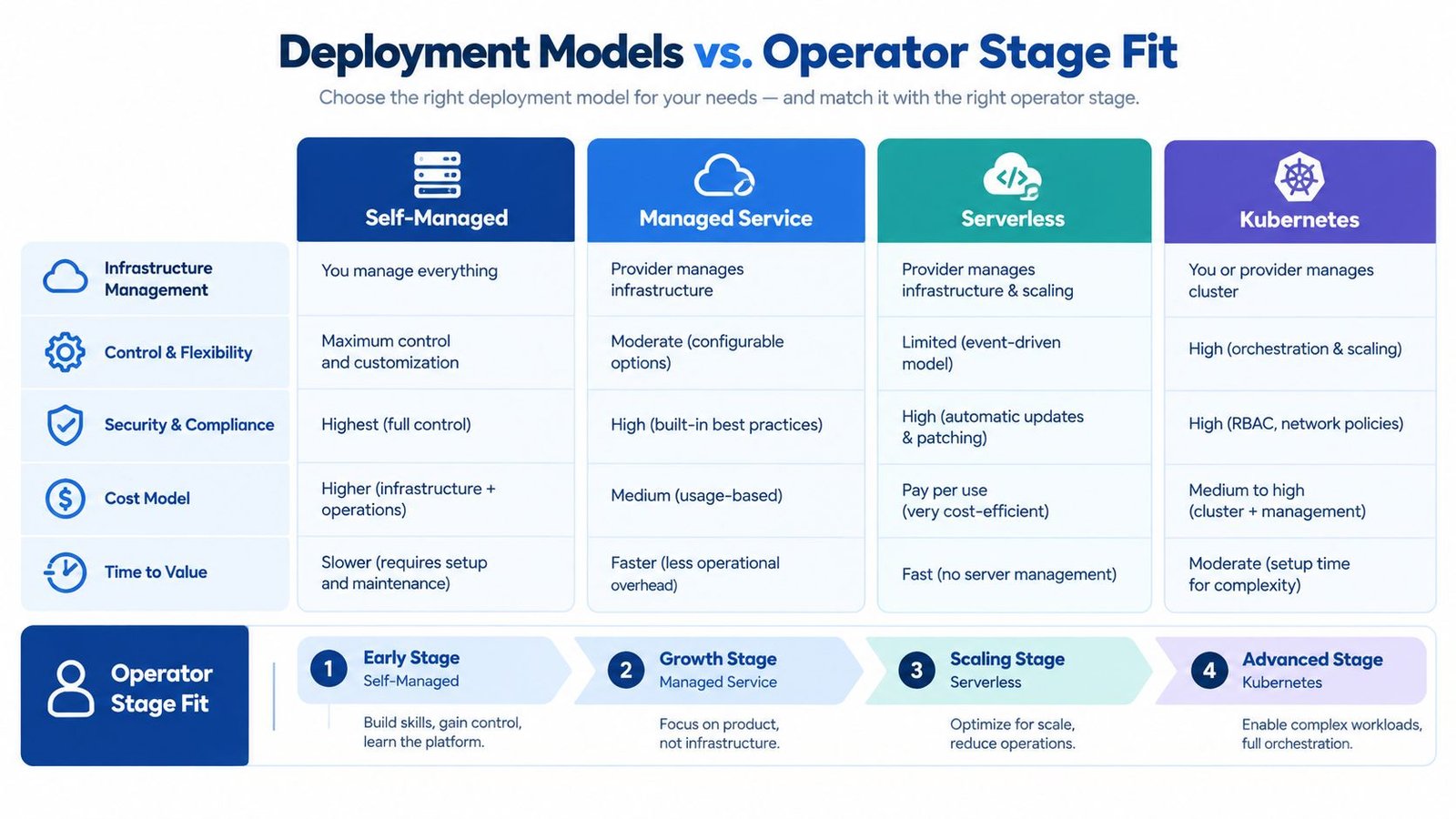
The deployment model determines who owns the technology, who operates trading and risk, and how much of the product can be changed without vendor intervention. Three broad models dominate operator discussions: turnkey, white-label or iFrame, and modular/API-based delivery.
Turnkey platforms bundle much of the betting infrastructure, often including the engine, feeds, trading support, back office, payments, and compliance functions. White-label and iFrame products go further toward speed by presenting a ready-made sportsbook through a hosted or embedded experience. Modular/API platforms expose services that an operator can combine with its own front end, wallet, player account management, CRM, trading tools, and reporting layer.
Match the model to the operator's starting position
A pre-license entrant generally values speed and operational completeness. A turnkey or hosted model can reduce the number of systems that must be assembled before launch, but the operator should examine the commercial trade-off, data ownership, market coverage, and exit provisions before signing.
A licensed challenger may prefer white-label or iFrame delivery when capital preservation and fast validation matter more than full product ownership. The Philippine game aggregator accreditation requirements show why even a rapid deployment needs jurisdiction-specific documentation and governance. A hosted interface doesn't remove the operator's responsibility to understand how certification, reporting, payments, and player protection are handled.
Scaled incumbents usually require modular/API architecture. They may want to retain proprietary trading logic, integrate internal risk workflows, control the customer experience, and reuse existing wallet or omnichannel infrastructure. The additional engineering burden can be justified when technology itself is part of the operator's differentiation.
Use deployment evidence, not sales language
Verified market coverage identifies a meaningful architectural contrast. Sportradar is described as using microservices and a unified API, with a full implementation taking 3 to 4 months, compared with weeks for basic feeds. GR8 Tech is positioned for rapid entry, with an iFrame option available in as little as 1 week and API access for deeper integration, according to Pulse Sports' 2026 sportsbook software comparison.
Those timelines aren't interchangeable. A one-week iFrame launch may be appropriate for a controlled market test, while a multi-month API implementation may better serve an operator that needs ownership of data flows, UX, risk controls, and future channels.
A procurement team should classify the operator before contacting suppliers:
- Pre-license entrant: prioritize launch completeness, regulatory support, and predictable operational ownership.
- Licensed challenger: prioritize brand control, integration flexibility, and a path away from hosted delivery.
- Scaled incumbent: prioritize API maturity, trading independence, observability, resilience, and portability across markets.
Feature Matrix Across Leading Sportsbook Platforms
A feature matrix is useful only when it reflects operational consequences. Sports coverage, front-end templates, and promotional tools matter, but they shouldn't outweigh live-pricing depth, risk-control latency, settlement reliability, and API exposure for an operator competing at scale.
The supplier environment includes providers such as Kambi, Altenar, BetBy, OpenBet, Light & Wonder, Sportradar, GR8 Tech, Digitain, and Soft2Bet, with different combinations of platform ownership, managed trading, feeds, widgets, APIs, and full-stack services. Their presence in industry market maps doesn't make any provider a universal winner. Each candidate requires validation against the operator's licensed markets and priority sports.
| Criterion | Turnkey Vendors | White-Label Vendors | Modular/API Vendors |
|---|---|---|---|
| Odds engine depth | Preconfigured engine and trading service | Usually abstracted behind hosted delivery | Greater control over engine, feeds, and workflows |
| Pre-match coverage | Broad packaged coverage, subject to vendor scope | Coverage depends on the underlying supplier | Configurable through feed and trading integrations |
| Live betting | Managed capability may be included | Speed and market control depend heavily on supplier | Strongest opportunity for custom pricing and risk workflows |
| Risk management | Vendor-managed or configured tools | Limited operator control | Can integrate proprietary or specialist risk systems |
| Third-party integrations | Common integrations are prebuilt | Often restricted to approved options | Broadest integration surface, with greater engineering demand |
| Payment orchestration | Frequently bundled | Usually bundled or vendor-controlled | Operator can retain more payment and wallet ownership |
| UX framework | Branded templates and configured components | Hosted or embedded experience | Operator controls front end and customer journeys |
| Native mobile performance | Depends on vendor apps or responsive layer | Often constrained by hosted framework | Operator can optimize native applications directly |
Weight the criteria by economic importance
For a smaller entrant, a ready-made back office and managed trading service may be more valuable than full API access. For a larger operator, limited access to event data, bet acceptance decisions, settlement records, or liability signals can become a structural constraint.
Live betting deserves a separate test rather than a tick-box review. Vendors should provide evidence on pricing updates, suspended-market behavior, rejection handling, settlement reconciliation, and performance during major events. Operators evaluating MPBL betting odds or other fast-moving competitions should test the exact markets they intend to offer, not rely on a generic sports list.
Integration depth is a strategic variable
API exposure affects more than engineering convenience. It determines whether the operator can connect sportsbook events to CRM, affiliate attribution, fraud tools, payments, customer support, and financial reporting. A platform that exposes only a finished interface may launch quickly, but it can make later migration or internal optimization more difficult.
The strongest shortlist therefore separates breadth from control. Turnkey suppliers may win on completeness. White-label suppliers may win on launch efficiency. Modular/API vendors may win on ownership and long-term adaptability. The procurement decision should record which advantage matters most for the operator's stage and target jurisdictions.
Compliance, Jurisdiction, and Security Requirements
Compliance should eliminate unsuitable vendors before product demonstrations begin. A sportsbook platform must support licensing, market access, mobile and retail betting, product restrictions, responsible gambling, advertising controls, anti-money laundering procedures, sports integrity, data use, tax obligations, and enforcement requirements, as outlined in the International Masters of Gaming Law overview of sports betting law.
The U.S. market demonstrates why jurisdictional coverage is not a simple country-level label. Sports betting is legal in some form in 39 states plus Washington, D.C. and Puerto Rico, while statewide online betting is live in 31 of those jurisdictions plus D.C. and Puerto Rico, according to CBS Sports' betting market overview. Other legal jurisdictions restrict activity to retail, tribal, or location-limited models, creating different requirements for geolocation, routing, account controls, and reporting.
Treat jurisdiction fit as a hard gate
New York provides a particularly clear example. Wagers must be made electronically from inside New York and transmitted to equipment located at a licensed commercial casino gaming facility. The New York Gaming Commission also controls the wagering menu and limits the sports and leagues that may be offered, as set out in the New York Gaming Commission's sports wagering requirements.
A supplier licensed in one jurisdiction doesn't automatically satisfy another jurisdiction's obligations. Procurement teams should verify market-by-market approvals, technical certifications, reporting responsibilities, player verification, geolocation, responsible gambling controls, and data retention.
Security must be evidenced operationally
Security reviews should request documentation for encryption, web application firewalls, access control, infrastructure segregation, incident response, disaster recovery, audit logs, and relevant ISO 27001 or SOC 2 certifications. The operator should also establish how player funds are segregated, how privileged access is monitored, and how the vendor communicates and contains incidents.
Responsible gambling capabilities belong in the same gate. Deposit caps, time-outs, affordability signals, self-exclusion checks, and jurisdiction-specific player protections need to function across the account, wallet, bonus, and betting layers.
| Provider Archetype | U.S. States Licensed | EU/UK Coverage | Certifications (ISO/SOC) | RG Tooling Depth |
|---|---|---|---|---|
| Turnkey provider | Must be verified by market | Must be verified by market | Must be evidenced by vendor | Must be tested |
| White-label provider | Must be verified by market | Must be verified by market | Must be evidenced by vendor | Often dependent on supplier configuration |
| Modular/API provider | Must be verified by market | Must be verified by market | Must be evidenced by vendor | Depends on integrated controls |
The 2026 PAGCOR regulatory updates are a useful reminder that regulatory conditions change and can affect technical configuration. A vendor that cannot provide current certification records, audit trails, and market-specific control documentation should be rejected before feature scoring begins.
Pricing Models and Margin Impact Under Live Betting
The headline licence price rarely captures a sportsbook's total cost. Operators typically encounter revenue share, fixed per-player fees, or a hybrid model that combines setup charges, active-user fees, and revenue participation.
Revenue share aligns vendor compensation with operator performance, but reduces retained economics as betting volume grows. Per-player pricing is easier to forecast, yet can become costly as the customer base expands. Hybrid contracts may balance those effects, although their complexity makes definitions of active users, net gaming revenue, deductions, minimum commitments, and termination rights important procurement terms.
Model economics before comparing percentages
Verified information does not provide contractual share rates, per-player fees, live-betting hold assumptions, or operator cost examples. Those figures should not enter a procurement model as generic market facts. Each vendor should submit a complete schedule covering platform fees, odds feeds, managed trading, payment processing, compliance support, support tiers, localization, migration costs, and user acquisition cost drivers.
For a hypothetical operator reporting €5 million in GGR, the comparison should remain formula-based until vendor terms are confirmed:
- Revenue share: €5 million multiplied by the contracted share percentage, plus fixed platform or service fees.
- Per-player model: the contracted fee multiplied by the number of billable players, plus transaction, feed, and support costs.
- Hybrid model: setup fee plus active-user charges plus the contracted share of the defined revenue base.
This method avoids false precision and exposes sensitivity. Per-player pricing can penalise growth when active-user definitions are broad. Revenue share can reduce margins when the calculation base includes revenue before agreed deductions. Hybrid structures may appear cheaper at launch while creating larger obligations after adoption accelerates.
Live pricing requires direct operational evidence
Current industry coverage associates machine-learning pricing with sharper live prices and fewer rejections, while microbetting requires fast pricing and clearly defined bet rules, according to Digitain's sportsbook software provider analysis. The procurement question is operational: can the vendor evidence low-latency risk control, update frequency, rejection behaviour, and settlement accuracy under pressure?
Microbetting also changes the cost profile of feeds, trading, monitoring, and infrastructure. The operator should establish whether the vendor prices these markets internally, relies on third parties, or permits integration with specialist data and trading services. That choice affects both margin attribution and the internal capabilities required after launch.
A three-year total-cost model should vary the live-betting mix, market depth, player growth, payment costs, and trading responsibility. A contract that looks attractive under a pre-match-heavy scenario may become expensive once live activity becomes central.
The final comparison should include audited invoices or reconciled reporting from a comparable deployment, not only a commercial proposal. Margin protection depends on the complete operating chain, from feed arrival and price generation to bet acceptance, settlement, reporting, and deductions.
Provider Recommendations by Operator Use Case
There is no defensible universal winner in a sportsbook platform providers comparison. The appropriate shortlist depends on the operator's jurisdiction, stage, capital profile, internal trading capability, and willingness to exchange margin for speed or control.
The U.S. market entrant
A U.S. entrant needs a supplier that can support state-by-state geolocation, account verification, market configuration, payment controls, responsible gambling, and regulator-facing reporting. The operator should prioritize an architecture capable of meeting controlled routing requirements in jurisdictions such as New York, rather than selecting a platform solely for its sports catalogue.
Providers with proprietary technology stacks and established trading operations may be better suited to buyers seeking deeper operational control. The trade-off is greater implementation and governance complexity. A pre-license operator should avoid assuming that an attractive front end can compensate for missing certifications or incomplete state coverage.
The European incumbent
A European incumbent expanding across markets may value a managed platform or trading ecosystem that reduces internal compliance and operational burden. Kambi, Entain-linked technology environments, and other established supplier models can be assessed for multi-market capability, trading depth, data ownership, and the degree of front-end control available.
The central question is whether managed trading protects enough operational quality and launch efficiency to justify the margin shared with the vendor. An incumbent with an experienced desk may prefer modular components, while an operator prioritizing expansion may accept less control for a more integrated service.
The Latin American or African greenfield operator
A greenfield operator often benefits from white-label or iFrame delivery when launch speed, localized payments, and managed operations outweigh the need for proprietary technology. Altenar, Pragmatic Play, and similar full-service or agile platform profiles can be evaluated for target-market licensing, language support, payment orchestration, trading coverage, and migration options.
The accepted trade-off is usually reduced control over the stack in exchange for lower integration burden. That trade-off remains acceptable only if the contract preserves data access, reporting portability, and a credible path to deeper API integration.
The crypto-native operator
A crypto-native operator may need API-first modularity, specialized wallet flows, transparent settlement logic, and feeds compatible with its product model. BetDEX, BetDEX-backed partners, and AlphaX-style providers can be considered as architectural profiles, but the operator must verify licensing, responsible gambling, sanctions screening, payment controls, and the legal treatment of the intended markets.
The best recommendation is therefore conditional. Operators should shortlist the provider archetype that matches their operating constraints, then test named vendors against the same evidence gates. Brand recognition should influence the starting list, not determine the final award.
RFP Checklist and Decision Framework for Operators
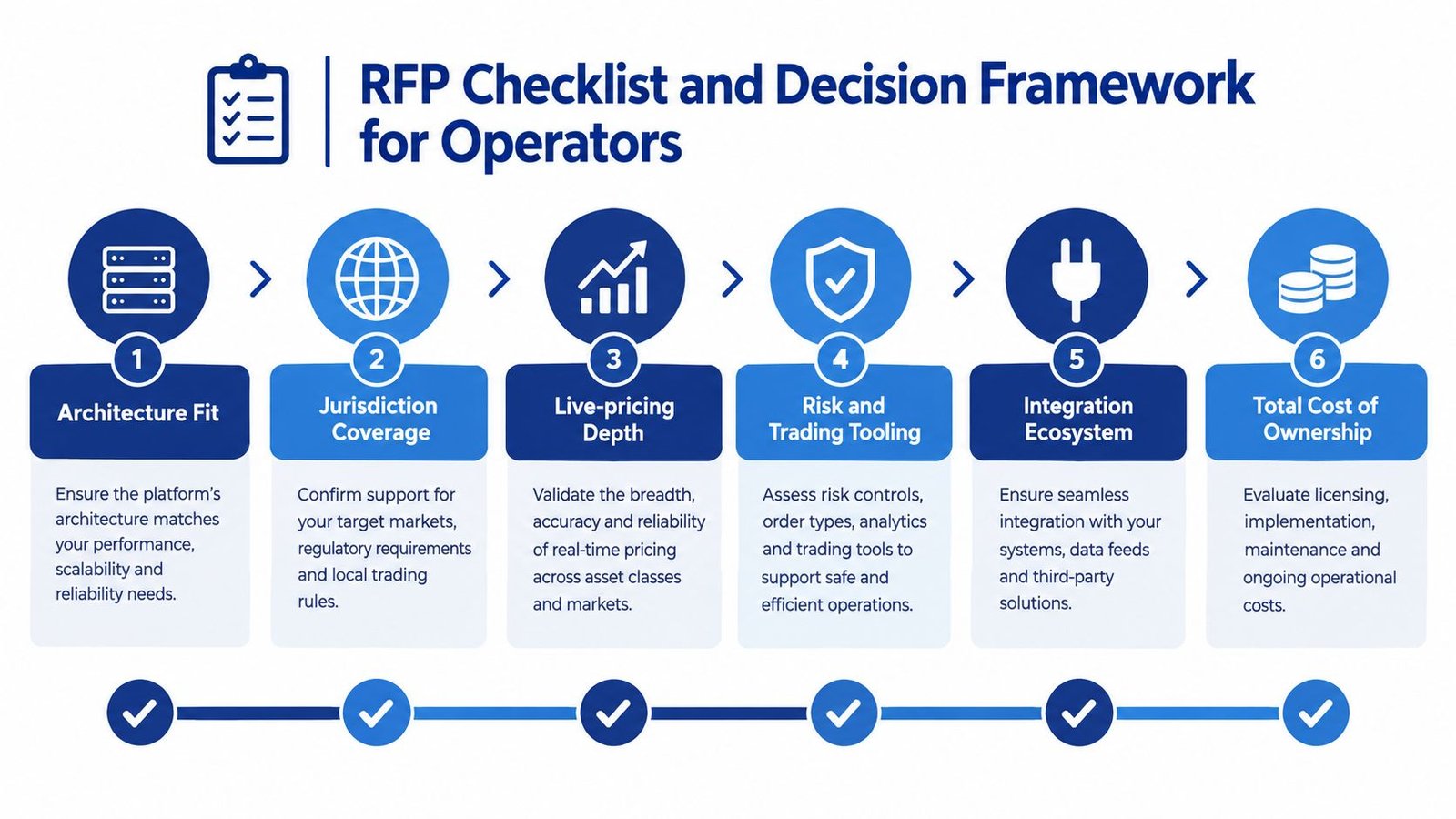
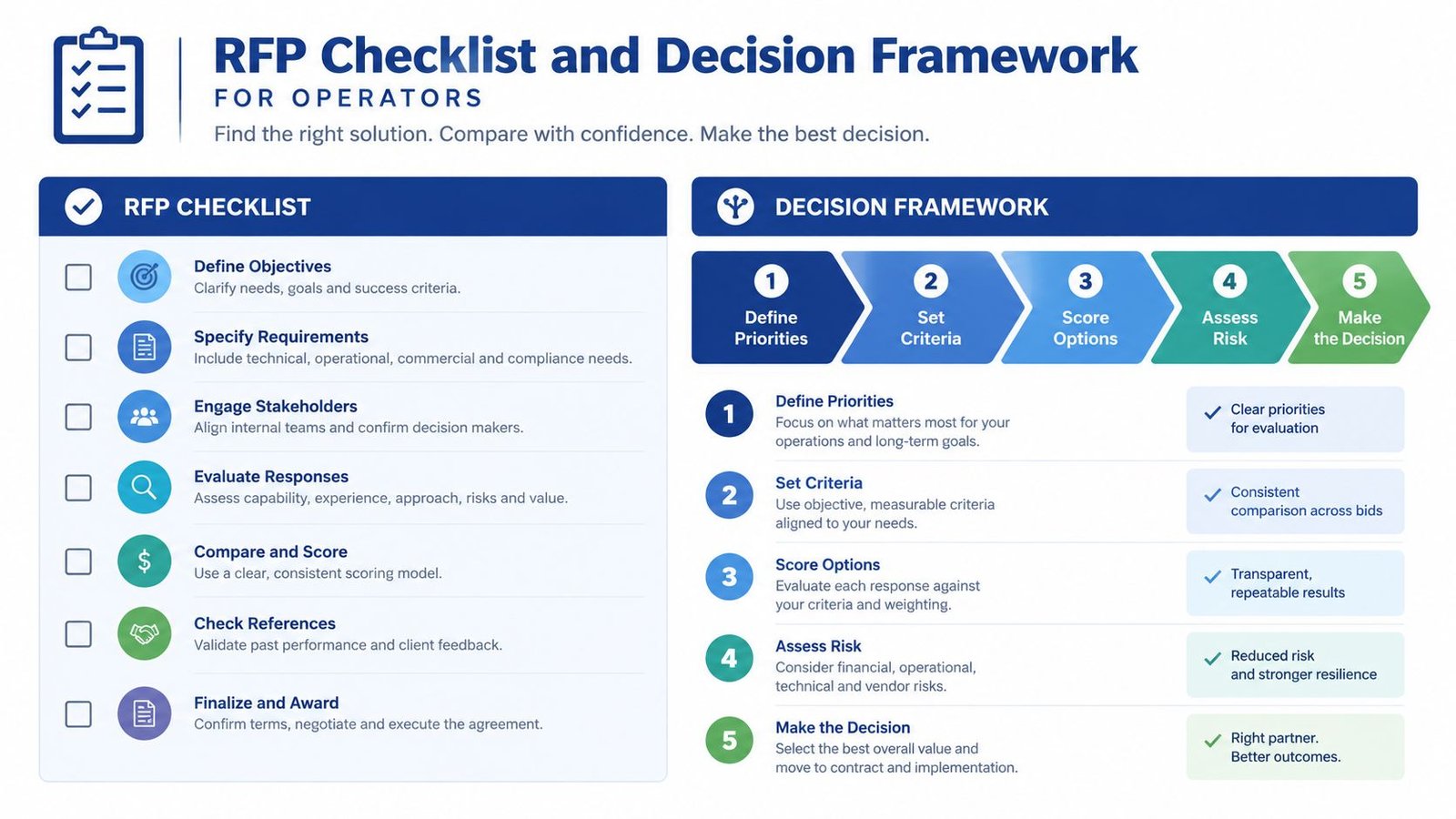
A strong RFP replaces a feature inventory with six evaluation gates. Each gate should receive a score from 1 to 5, with weighting determined by the operator's stage and target jurisdictions. A compliance failure should override the total score rather than being averaged away by a polished user interface.
Six gates for a defensible shortlist
- Architecture fit: Confirm whether the supplier supports turnkey, hosted, modular, or API delivery required by the operating plan. Request system diagrams, ownership terms, data-flow documentation, and migration provisions.
- Jurisdiction coverage: Require evidence of certifications, approvals, geolocation capability, player verification, market restrictions, reporting, and responsible gambling support for every intended jurisdiction.
- Live-pricing depth: Request latency benchmarks under load, market suspension behavior, rejection metrics, update frequency, settlement timing, and coverage for the operator's priority sports.
- Risk and trading tooling: Establish who owns pricing, liability, customer profiling, integrity monitoring, manual intervention, and escalation. Ask for operating procedures, not only product screenshots.
- Integration ecosystem: Review API documentation, event schemas, wallet interfaces, payment connectors, CRM support, affiliate postbacks, reporting exports, and test environments.
- Total cost of ownership: Model setup, license, revenue share, active-user charges, feeds, trading, payments, compliance, support, infrastructure, migration, and exit costs across the planned operating horizon.
Apply the scoring consistently
A score of 5 should mean the vendor has supplied independently verifiable evidence and a strong operational fit. A score of 3 should indicate conditional suitability, with material dependencies or implementation work. A score of 1 should indicate insufficient evidence, poor fit, or a significant unresolved risk.
The decision matrix can then classify vendors as follows:
- Shortlist: Strong evidence across all mandatory gates, with no unresolved licensing or security issue.
- Conditional pass: Acceptable architecture and commercial fit, subject to a defined remediation plan or contract protection.
- Reject: Missing certification, unclear ownership, weak auditability, undocumented pricing logic, or an inability to support required markets.
Immediate red flags: Undocumented margin calculations, unclear settlement ownership, missing independent RNG certification where applicable, unsupported responsible gambling controls, opaque subcontracting, and refusal to provide load-tested latency evidence should end the evaluation.
Reference deployments deserve the same scrutiny as sales demonstrations. Procurement teams should speak with operators using the proposed model in comparable jurisdictions, verify uptime and incident history, inspect reconciliation processes, and confirm that API behavior matches the documentation.
The final award should explain not only why the selected provider won, but also which trade-offs the operator accepted. That record gives executives, compliance teams, and regulators a defensible basis for the decision and makes future platform migration less disruptive.
Operators assessing sportsbook technology need more than a vendor list. Top 1 Rank provides market intelligence, regulatory analysis, supplier coverage, and executive-level iGaming reporting to support informed procurement. Visit Top 1 Rank to follow the latest sportsbook platform developments and build a better evidence base for the next technology decision.





Join thousands of gaming professionals receiving the latest iGaming news, regulatory updates, and market insights.
